Triathlon Swim Start Positioning: Where to Line Up and Why
Where you line up for the swim start in a triathlon is a strategic decision that affects your entire race. Get it wrong and you will spend the first 400m fighting traffic, swallowing water, and burning energy you need for the rest of the day. Get it right and you will settle into rhythm faster, exit the water calmer, and carry more energy into T1.
Types of Triathlon Swim Starts
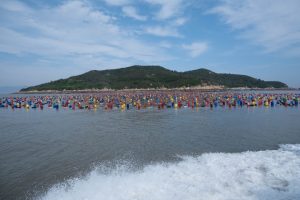
- Mass start: All athletes start simultaneously. Common at IRONMAN and Challenge events.
- Wave start: Athletes start in groups by age, gender, or predicted time. Reduces initial contact but groups can merge mid-course.
- Rolling start: Athletes self-seed and enter continuously by predicted swim time. Growing in popularity at WTC events.
- Time-trial start: Athletes start individually at 5–10 second intervals. Rare but growing at smaller events.
Where to Position in a Mass Start
Strong Swimmers
Line up in the front third, ideally 1–2 rows back from the absolute front. Being on the front row exposes you to the most contact at the gun. If you can legally draft (open water drafting is permitted in most age-group races), position slightly behind and to the side of a swimmer faster than you and sit in their wake for the first 300m.
Intermediate Swimmers
Aim for the middle third but choose a lateral position rather than directly centre. The absolute centre of most mass starts is the most congested point — everyone uncertain of their speed ends up there. Position slightly to the side of the course: either towards the first buoy side for a tighter line, or the far side for cleaner water and less contact.
Slower or Anxious Swimmers
Start at the back and to the side. This is not a failure — it is smart racing. You will swim in cleaner water with far less physical contact. Yes, you exit slightly later, but the energy saved and the psychological benefit of a calm swim start can result in a better overall race. Many athletes who panic in triathlon swims started too far forward and were overwhelmed by contact.
The First Buoy
The biggest bottleneck in most triathlon swims is the first turn buoy. Regardless of your starting position, expect congestion. Approach on the outside to avoid the melee if you are not a strong swimmer. If you are fast, take an inside line before the buoy rather than at it to minimise turn distance.
Sighting in a Crowd
Surrounding swimmers can make sighting easier — follow the group when buoys are obscured. But if the group swims off course (which happens regularly), trust your own sighting. Practise sighting independently and do not assume the crowd is right.
Pre-Race Checklist
- Walk or swim the course morning of the race — note buoy colours and shore landmarks
- Arrive in your wave early enough to choose your position, not just join the back
- Know your predicted 400m, 750m, and 1500m swim times before seeding yourself
- Put goggles on under your swim cap — harder to dislodge in contact
- Zip up your wetsuit before queuing — not in the water