Open Water Swimming Safety: What Every Triathlete Should Know
Why Open Water Safety Matters
Open water swimming is one of the great joys of triathlon and outdoor sport — but it carries real risks that pool swimming does not. Every year, preventable accidents occur in open water due to cold shock, overestimation of ability, poor preparation or failure to use basic safety equipment. This guide covers everything you need to swim safely in lakes, reservoirs, rivers and the sea as a triathlete.
Never Swim Alone
The most important open water safety rule is also the simplest: never swim alone. If you get into difficulty in cold water, incapacitation can happen within minutes — too fast for you to self-rescue if no one is present. Always swim with at least one other person, join an organised open water swim group, or swim at a venue with a lifeguard. If you are training at a supervised venue, make sure the lifeguard knows you are in the water before you start.
Always Use a Tow Float
A bright-coloured inflatable tow float is the single most important piece of safety equipment for open water swimming. It serves two purposes: it makes you highly visible to boats, paddleboards and other water users; and it provides something to rest on or cling to if you need to catch your breath or get into difficulty. Tow floats add negligible drag and weigh almost nothing when packed. There is no good reason not to use one.
Understanding Cold Water Shock
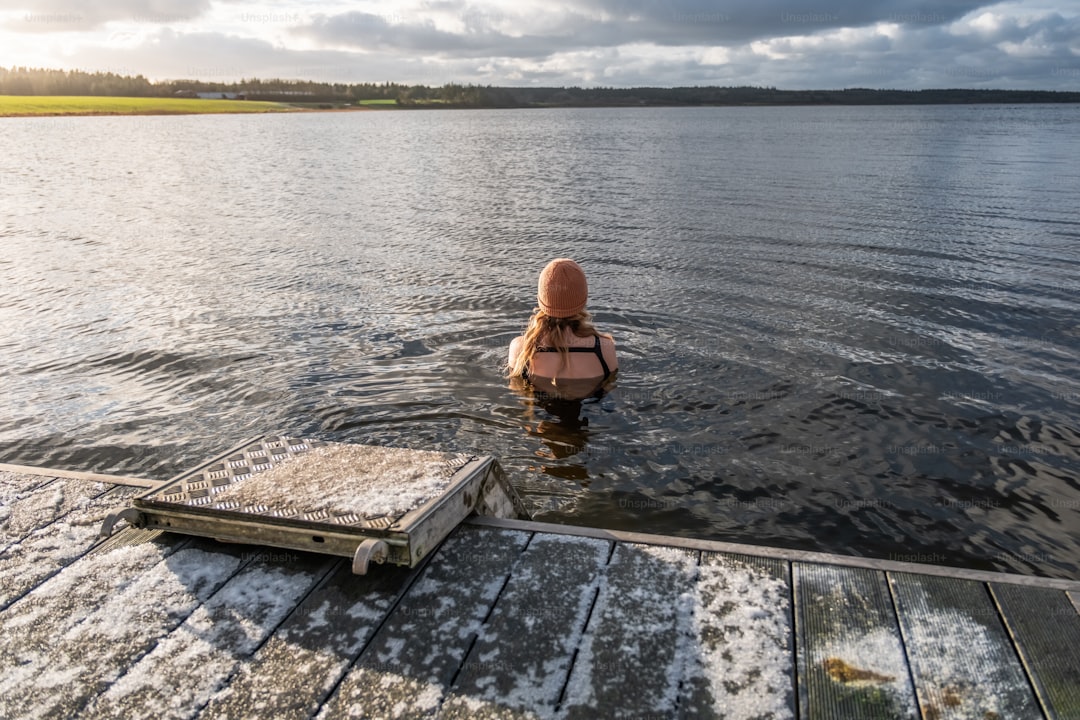
Cold water shock is the body’s response to sudden immersion in cold water and is the biggest single killer of open water swimmers in the UK. It can cause an involuntary gasp reflex, hyperventilation, and rapid muscle incapacitation — all within the first 30-90 seconds of entering cold water. To reduce the risk, enter the water slowly and let your face and neck adjust before putting your head under. Acclimatise gradually at the start of the season rather than jumping in after months away from open water.
- UK open water temperatures peak at 16-20 degrees Celsius in summer — still cold enough to cause cold shock without preparation
- Wear a wetsuit: it significantly reduces cold water shock and adds buoyancy
- Enter slowly and splash water on your face and neck before submerging fully
- Never dive or jump into cold open water — always wade in gradually
Know Your Location and Exit Points
Before entering any open water, identify where you will exit. This sounds obvious but in open water — especially in poor visibility, poor weather or if you become disoriented — knowing your exit point is critical. Swim parallel to the bank or shore rather than away from it. Do not swim near boat channels, weirs, lock gates or outflow pipes. Check local water authority guidance for your specific location before swimming.
Weather and Water Quality
Wind creates waves; waves make sighting harder and increase the risk of swallowing water. If conditions are beyond your experience level, do not enter. Check weather forecasts before every open water session and have a threshold at which you will not swim — for most recreational swimmers this is Beaufort Force 3 or above on open water. Water quality is also important: avoid swimming within 48 hours of heavy rain in rivers or the sea, when agricultural runoff and sewage overflow risk is highest. Use Swim England’s Swim Wild water quality map to check your location.
Open Water Safety Checklist
- Always swim with a buddy or at a supervised venue
- Wear a bright tow float on every open water swim
- Enter cold water gradually — never dive in
- Tell someone onshore your planned route and expected return time
- Know your exit points before you enter
- Check weather and water quality before every session
- Wear a wetsuit when water temperature is below 18 degrees Celsius
- Know the signs of cold water incapacitation and have a plan for getting help