How to Acclimatise to Cold Open Water: The Complete Guide for UK Triathletes
For most UK triathletes, the biggest psychological hurdle of the season is not the run or the bike — it is the first open water swim of the year. Cold water triggers a powerful physiological response that can overwhelm even experienced swimmers if they are not prepared for it. The good news is that cold water acclimatisation is a trainable adaptation, and with the right preparation you can control the shock response and swim your best in temperatures that scare other athletes off.
Understanding Cold Water Shock
When you enter water below about 15°C, your body triggers a cold shock response: a sharp involuntary gasp, rapid uncontrolled breathing, and a spike in heart rate. This is not weakness — it is your autonomic nervous system doing its job. The danger for triathletes is that this response peaks in the first 30-90 seconds of immersion, right when you are trying to establish your breathing rhythm and get your stroke going. Acclimatisation blunts this response so that by your first race you can control the initial shock and settle into your stroke quickly.
Start Early, Go Regularly
The most effective acclimatisation strategy is simple: get in cold water regularly, starting several weeks before your first race. UK open water temperatures in early April sit around 8-10°C. If you aim to be race-ready for the Triathlon England Championship season opener at Oulton Park on 29 March, you should be in open water by early March at the latest. Short sessions of 10-15 minutes, two or three times per week, are far more effective than one long session per week for triggering the adaptive response.
The Wetsuit Check
For UK race temperatures, you will almost certainly be wearing a wetsuit, and your wetsuit is your primary defence against cold water. Before your first open water session, check that your wetsuit still fits correctly — a wetsuit that has stretched or no longer seals at the neck and wrists will allow cold water flushing that dramatically accelerates heat loss. Take 30 seconds at the water’s edge to splash water on your face and the back of your neck before entry. This primes your cold receptors and significantly reduces the shock response.
Entry and Breathing
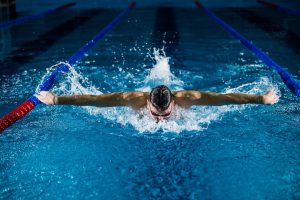
Never dive in for your first cold water session. Wade in steadily, pausing at waist depth to let your core temperature adjust slightly before you submerge your chest. Once you are fully immersed, focus entirely on slowing your breathing before you begin to swim. Take four or five deliberate, slow exhales before your first stroke. This breathing control overrides the cold shock response and is the single most effective technique for managing the first 60 seconds. Once your breathing is controlled, begin swimming — movement generates body heat and accelerates acclimatisation.
Build Duration Gradually
In your first cold water sessions, 10-15 minutes is enough. Over three to four weeks, build to 20-30 minutes at race intensity. The adaptation you are seeking is specific to the temperature you train in, so if your race is in 12°C water, train in 12°C water. Training in a heated outdoor pool and then jumping into a reservoir on race morning will still trigger a shock response. Use temperature logs from your chosen open water venue to plan your sessions around realistic race conditions.
Post-Swim Warming
After cold water swimming, your core temperature continues to drop for 10-20 minutes after you exit the water — this is called “afterdrop.” Have dry clothes, a warm drink, and ideally a changing robe ready before you get in. Change immediately after exiting, eat something warm, and avoid standing around in wet kit. For early season sessions where air temperature is also cold, a warm car with heated seats is genuinely valuable recovery tool. Shivering is normal and indicates your body is working to rewarm — it passes quickly once you are dressed and warming up.
Race Day Strategy
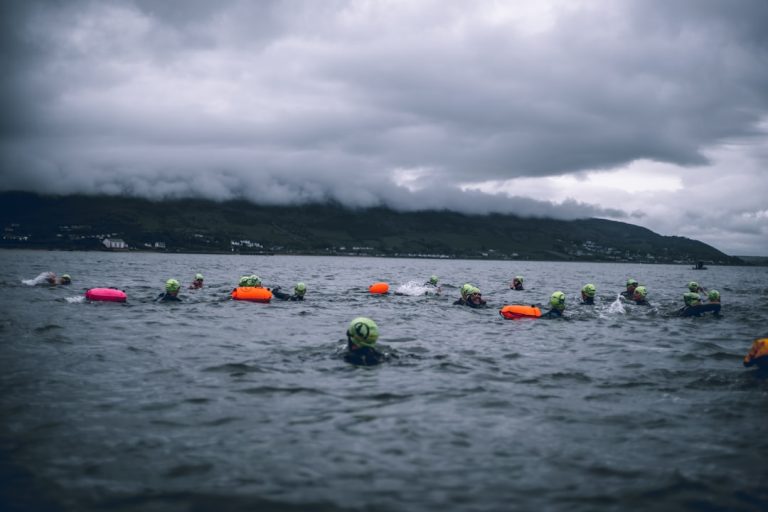
On race morning, if the opportunity exists to warm up in the water before the start, take it. Even 5 minutes of easy swimming primes your cold response and means the race start is your second cold water entry of the day, not your first. Position yourself slightly away from the front if you are not a strong swimmer — the mass start surge in cold water is a chaotic environment to manage the shock response in. Once you are underway, focus on the first 200m as a pure breathing control exercise. If you can swim those 200m with controlled breathing, the rest of the swim will take care of itself.