What Is Swimrun? A Beginner’s Guide for Triathletes
If you’ve spent enough time around open water swimming and trail running content, you’ve probably run into swimrun without quite knowing what separates it from triathlon. It’s one of the fastest-growing endurance formats in the sport, and enough of the skills overlap with triathlon that it’s worth understanding — even if you never enter a race.
What Swimrun Actually Is
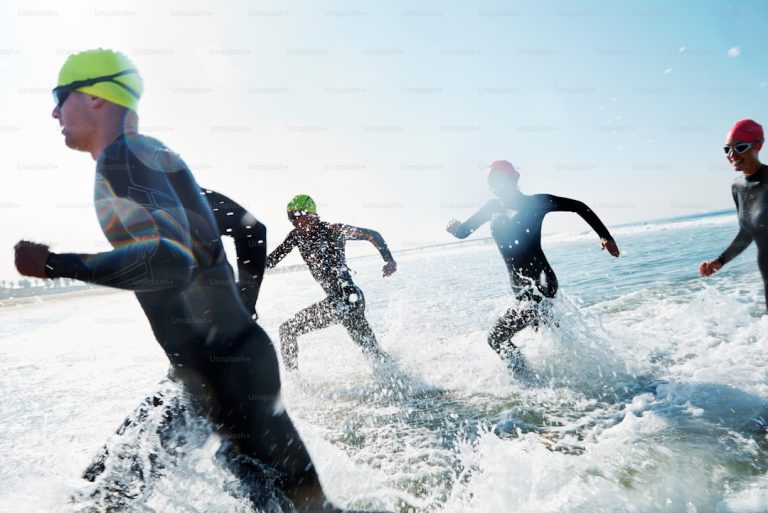
Swimrun is a team endurance sport, almost always raced in pairs, that alternates open water swim legs and trail run legs across a course — most commonly island to island. There’s no transition zone and no kit change between disciplines: you run in your wetsuit and swim in your trail shoes, carrying everything you need for the entire race from start to finish. That single rule — no dropping gear, no support crew handing you fresh kit — is what defines the sport more than anything else.
Where It Came From
The sport traces back to ÖTILLÖ (“island to island” in Swedish), which started as an informal bet between friends in Sweden’s Stockholm archipelago and grew into the ÖTILLÖ World Championship — now the sport’s best-known race. The format spread from there, and dedicated swimrun events now run across Europe, the US and beyond, most following the same core structure ÖTILLÖ established.
Race Distances
- Experience races — entry-level, around 8km total (roughly 6.5km running, 1.5km swimming), designed as a genuine first introduction to the format.
- Sprint races — a shorter, faster format for athletes who want a quicker race or a stepping stone before a full-distance event.
- World Championship / long-course races — the ÖTILLÖ World Championship itself covers around 75km total across 26 islands, split between multiple swim and run legs — a full-day effort for elite teams and considerably longer for most age-groupers.
Key Rules That Make It Different From Triathlon
- Pairs, not individuals — most swimrun races are raced as a team of two, and many require you to stay within a set distance of your partner (commonly around 10 metres) throughout, sometimes tethered together with a bungee cord.
- No transition zone — you carry or wear all your gear the entire race. There’s no bag of dry kit waiting for you between legs.
- Same gear, both disciplines — you run in a wetsuit (usually a specific swimrun cut, shorter in the leg and arm than a triathlon wetsuit for freer running movement) and swim in trail running shoes designed to drain water quickly.
- Age minimum — most major swimrun events, including ÖTILLÖ’s Experience, Sprint and World Series races, set a minimum age of 18.
The Gear Differences From Triathlon
This is where swimrun diverges most from what a triathlete already owns. A standard triathlon wetsuit is built for maximum swim speed and buoyancy, and its length and thickness make running in it uncomfortable and slow. Dedicated swimrun wetsuits are shorter (often sleeveless or with removable arms), thinner in the leg for running freedom, and sometimes include a built-in pull buoy or storage pocket for whatever you’re carrying between legs. Shoes are trail running shoes rather than triathlon race shoes — good grip on wet rock, and importantly, ones you don’t mind swimming in.
Should a Triathlete Try It?
If you already swim and run regularly, the fitness crossover is significant — you’re not starting from zero. What’s genuinely new is pacing a team effort rather than racing solo, and getting comfortable with the logistics of carrying gear through both disciplines. An Experience-distance race is a reasonable, low-risk way to try the format before committing to anything longer. If open water confidence is a limiting factor, build it first with our open water swimming safety guide.
See also: Best Open Water Swimming Gloves for Cold Water · Open Water Swimming Safety: A Triathlete’s Guide.