How to Swim Faster in Open Water: 7 Technique Fixes for Triathletes
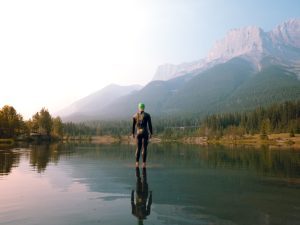
Most triathletes swim significantly slower in open water than in the pool — not because the water is harder, but because they haven’t practised the specific skills that open water demands. The good news: the fixes are learnable, and most of them don’t require a coach. Here are seven technique changes that will make you faster the next time you enter murky water.
1. Fix Your Sighting Without Breaking Stroke Rhythm
The most common mistake is lifting your head completely out of the water to sight, which drops your hips and costs you three or four strokes of momentum every time you do it. Instead, use the “crocodile sight” — roll your head fractionally forward during your normal breath, just enough to peek at the buoy line, then complete the breath to the side as normal. Done right, a good sight costs you barely half a stroke. Practise in the pool first by trying to sight a mark on the wall every 8 strokes without altering your stroke count.
2. Draft Off Feet, Not Off Hips
Drafting saves 15–25% of energy expenditure in open water, but position matters. Sitting directly behind a swimmer’s feet (0.5m back) gives the best draft. Drafting at hip level forces you to swim slightly sideways and increases turbulence. To find feet in open water, pick a swimmer 5–10 seconds faster than you, let them open a small gap off the start, then settle in. Your job is to maintain exactly that gap — not catch them, not fall further behind.
3. Build a Longer, Quieter Stroke
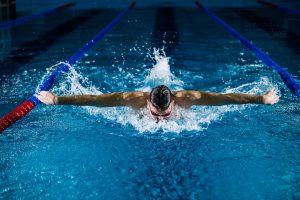
High stroke rate in choppy water creates inefficiency — short, splashy strokes that fight the water rather than moving through it. Open water rewards a longer, quieter stroke with a strong catch and a full arm extension at entry. Count your strokes per length in the pool: if you’re above 22–24 per 25m, work on extending your glide phase and improving the reach at entry before pulling through.
4. Use Bilateral Breathing (But Know When to Break It)
Bilateral breathing (breathing to both sides on a 3-stroke cycle) creates a symmetrical stroke and helps you sight more easily — but it halves your breathing frequency, which can spike effort when the pace goes up. In training, always work bilateral to build a balanced stroke. In racing, if the effort is high, switch to breathing every 2 strokes on your dominant side for the mass start, then return to bilateral once the pack settles.
5. Know What to Do With Your Kick
A full six-beat kick is exhausting over race distances and burns through leg glycogen you’ll need on the bike. Most triathletes do better with a two-beat kick — one kick per arm pull — which maintains hip rotation and body position without taxing the legs. Practise kick-only drills in the pool to feel the difference between a hip-rotation kick and an energy-expensive knee-bent splashing kick.
6. Enter the Water Controlled, Not Panicked
The first 50–100m of an open water swim is where most amateurs lose the most time — panicked breathing, broken stroke, and a heart rate spike that takes 3 minutes to come down. Before every open water session, spend 3–4 minutes face-down at the edge or in the shallows, controlling your breathing rate. In races, seed yourself slightly to the side of the main pack and let the washing machine settle before committing to your draft position.
7. Practise Your Exit Before Race Day
Standing up too early in shallow water creates drag and wastes energy. Wait until your hand scrapes the bottom — typically waist depth — before standing. As you rise, dolphin dive through any remaining shallow water rather than trying to run through it. Practise this in every open water session: swim hard to shore, hit the bottom with your hand, stand, and run — don’t wobble and look for your footing. Done enough times, it becomes automatic.
Put It Into Practice
These seven fixes work best when you practise them one at a time in your pool sessions first, then layer them into open water. Pick one fix per week, drill it in the pool, then test it on your next open water swim. Within a month, your open water pace will be noticeably closer to your pool time — and that gap is free speed you haven’t trained for yet.