How to Improve Your Triathlon Bike Split Without Buying a New Bike
You don’t need to spend thousands on a new triathlon bike to go faster on the bike leg. Most age-group athletes are leaving significant time on the course through factors entirely within their control — things that cost nothing but attention and training time. Here’s how to find free speed before you consider any hardware upgrade.
1. Fix Your Aero Position First
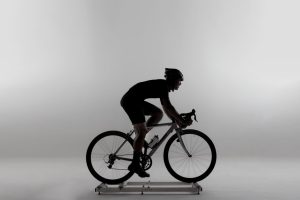
Aerodynamics accounts for approximately 80% of the resistance you’re fighting at speeds above 30km/h. A professional bike fit — typically £150–250 from a qualified fitter — will almost always deliver more free speed than any component upgrade. Focus on reducing your frontal area: elbows in, torso flat, head low and neutral. Even a small drop in your front end can save multiple minutes over a 70.3 bike leg.
2. Nail Your Pacing Strategy
Most age-group athletes overcook the first 20km and pay for it heavily on the run. A negative-split or even-split strategy — riding the first half fractionally easier than the second — consistently produces faster overall race times than going out hard. If you have a power meter, target 95–100% of your race power, not your training peak power. If you don’t, use perceived effort and check yourself on every climb.
3. Train Specifically in the Aero Position
Holding an aero position for three to five hours requires specific muscular conditioning — particularly through the lower back, hip flexors, and core. If all your training rides are done sitting upright on a road bike, you’ll struggle to hold position in a race. Dedicate at least 30–40% of your longer outdoor rides to your actual race position, especially in the final 10 weeks before your target event.
4. Upgrade Your Tyres
Rolling resistance and puncture risk are two of the most overlooked variables in triathlon bike performance. Switching from a standard training tyre to a fast-rolling race tyre — Continental GP5000 S TR or Vittoria Corsa N.EXT are the benchmark options — can save 10–20 watts at race speeds without any changes to fitness or position. Set them at the correct pressure for your weight and road surface using an online calculator from Silca or Vittoria.
5. Practise Your Race Nutrition on the Bike
Fuelling problems cause more lost time on the bike leg than poor fitness. If you struggle to eat and drink while maintaining an aero position, or if you’re under-fuelling in the first hour, you’ll suffer on the run regardless of how well trained you are. Practise your exact race nutrition strategy — same brands, amounts, and timing — on every long training ride. Your gut needs the same training as your legs.
6. Build Race-Relevant Volume
The single biggest performance lever for most age-groupers is riding more time at race-relevant intensities. Extended sweet spot work (88–93% FTP), over-under intervals, and long rides at Zone 3 all build the aerobic and muscular capacity to hold power for race duration. Two structured bike sessions per week — one interval session and one long endurance ride — will deliver meaningful results within 8–12 weeks.
The Bottom Line
A new triathlon bike can deliver real aerodynamic gains. But for most athletes, the combination of better position, smarter pacing, faster tyres, good nutrition, and more specific training will produce improvements that easily outweigh what a new frame would offer. Optimise the fundamentals first — then the hardware conversation becomes genuinely worthwhile.