How to Build Triathlon Speed Without Adding More Training Volume
More training hours is not the only path to faster race splits. For most age-group triathletes — especially those fitting training around work, family, and other commitments — the answer isn’t adding another session per week. It’s making the sessions you already have more effective. Here’s how to get faster with the time you’ve already got.
1. Replace Grey-Zone Effort With Genuine Quality
The single highest-return change most triathletes can make is identifying the medium-effort sessions in their week — the steady 45-minute run, the moderate Sunday ride — and converting one of them into a genuinely hard quality session. One VO2max interval session per week on the bike, or one structured threshold run, typically produces more aerobic adaptation than three additional hours of moderate zone 3 work. You don’t need more volume if you’re deliberately under-stimulating your cardiovascular system during the sessions you do have.
2. Add Strides to Your Easy Runs
Strides — 20-second accelerations to roughly 5km race pace, with full recovery — take 6 minutes at the end of an easy run and produce outsized neuromuscular benefits. They teach your legs to turn over fast without the fatigue cost of a full interval session. Add 4–6 strides to two of your easy runs per week and you’ll notice within 4–6 weeks that your race pace feels more accessible at the same effort level.
3. Fix Your Swim Technique, Not Your Swim Volume
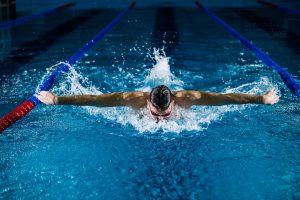
Swimming is the most technique-dependent of the three disciplines. Adding more pool hours with poor mechanics just reinforces inefficiency. For most age-groupers, an hour per week with a coach reviewing stroke mechanics — or even recording yourself from underwater and watching it back — will produce more speed than doubling weekly swim mileage. Target one technique-focused session per week with drill work, and measure your CSS pace monthly to track genuine improvement.
4. Improve Transitions
Transition time is pure free speed — it doesn’t require fitness to improve, just practice. The average amateur triathlete loses 30–90 seconds per transition compared to a trained athlete. Set up your kit in the garden and practise T1 (wetsuit removal, helmet on, shoes on) and T2 (rack bike, remove helmet, running shoes on) 5–10 times in a single session. The first three attempts will be chaotic; by the tenth, it’ll be automatic. Do this twice before your next race.
5. Build Bike-Specific Strength With FTP Work
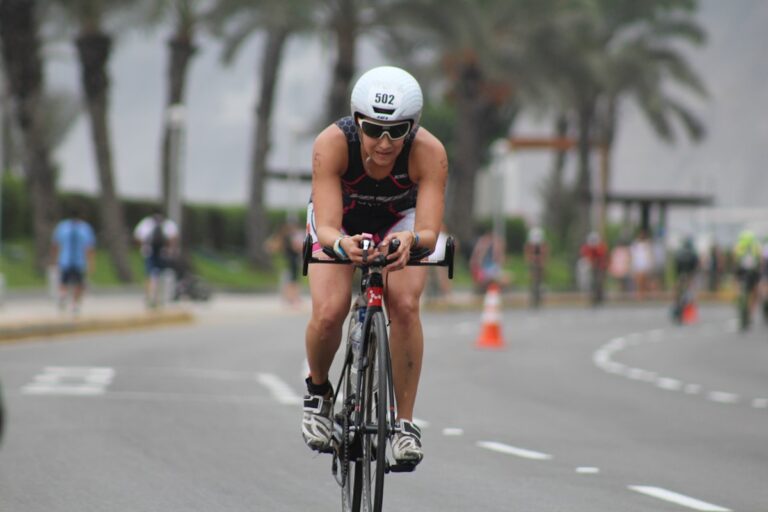
Cycling speed is highly correlated with FTP (Functional Threshold Power) — the power you can sustain for approximately an hour. Even one structured FTP-focused session per week (sweet-spot intervals at 88–93% FTP, or 2 x 20 minutes at threshold) will raise your FTP within 6–8 weeks if you’re currently doing mostly unstructured riding. The bike leg is often the largest time-saving opportunity for age-groupers who have run background but not cycling background.
6. Sleep and Recover More Intentionally
Recovery is when adaptation happens, not during the sessions themselves. If you’re training 8–10 hours per week on 5–6 hours of sleep, the limiting factor on your progress is not training volume — it’s recovery. Prioritising 7–8 hours of sleep, consistent fuelling immediately post-training, and at least one full rest day per week will allow you to absorb the training you’re already doing more effectively than adding another session will. Speed is built in the rest, not the work.
Where to Start
Pick one of the six strategies above — just one — and apply it consistently for 4 weeks before adding another. Trying to implement all six simultaneously is the training equivalent of a fad diet: overwhelming to maintain and impossible to attribute any improvement to. The athletes who improve most consistently are the ones who make one well-chosen change and stick with it long enough to see the results.