Open Water Swimming: A Complete Beginner’s Guide for Triathletes
Why Open Water is Different from the Pool
If you’ve only ever trained in a pool, your first open water swim can feel like a different sport entirely. There are no lane ropes to hold onto, no black line on the bottom to follow, no wall to push off every 25 metres — and depending on conditions, you might not see more than a few feet ahead. Understanding what makes open water different, and how to prepare for it, will transform your confidence before race day ever arrives.
Essential Kit for Open Water Swimming
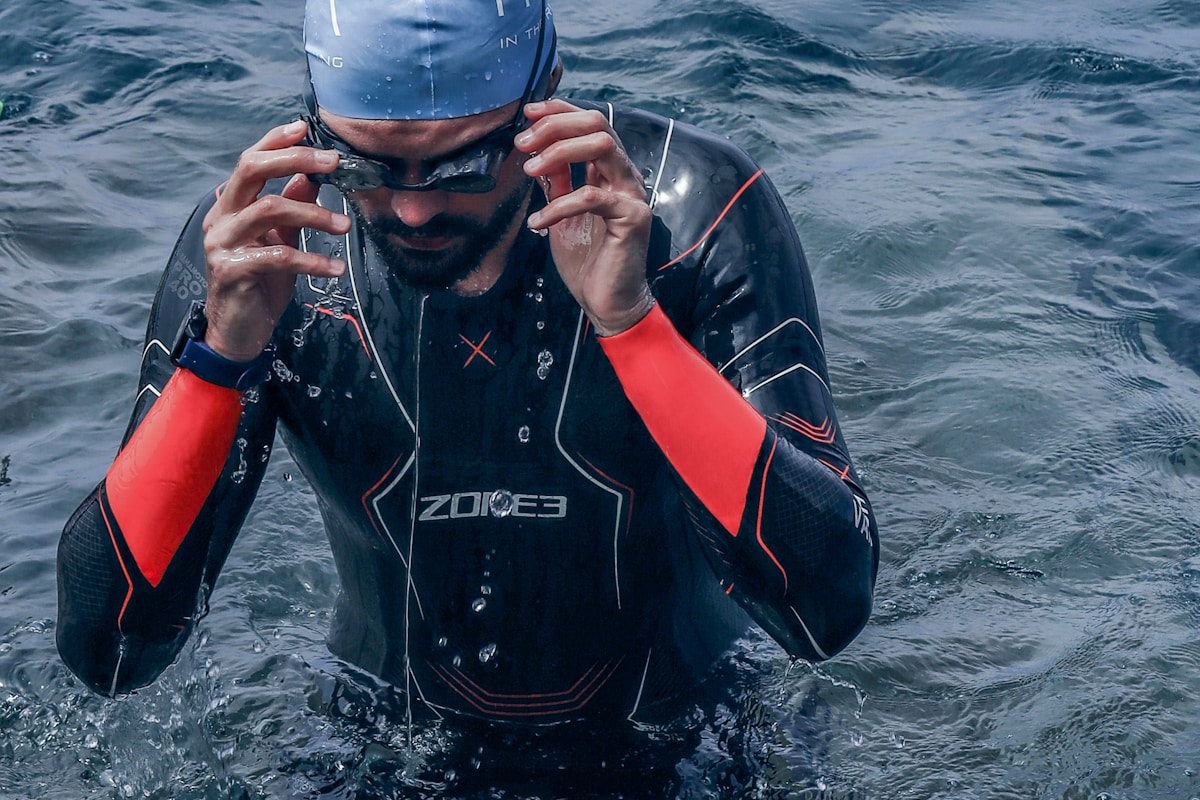
- Wetsuit — A triathlon wetsuit provides buoyancy, thermal protection and drag reduction. UK open water temperatures require a suit even in summer, typically 3–5mm neoprene depending on the venue.
- Swim cap — Bright colours improve your visibility to other water users and safety crews. Most organised open water events will supply a race cap.
- Goggles — Tinted lenses suit sunny mornings; clear lenses work better for overcast British conditions. Look for anti-fog coating and a secure, non-leaking seal.
- Tow float — A bright inflatable float attached to your waist increases your visibility and gives you something to rest on if needed. Essential for solo open water swimming.
Managing the Cold Water Shock
Cold water triggers an involuntary gasp reflex — a sharp intake of breath that can feel like panic, even for experienced swimmers. It’s your body’s natural response, not a sign that something is wrong. At the water’s edge, submerge your face and breathe out slowly two or three times before you begin swimming. Once your breathing normalises, start with easy, controlled strokes. Never dive straight in and sprint — let your body adjust first.
Sighting: How to Swim Straight
Without a lane line to follow, even strong swimmers naturally veer off course. Sighting — briefly lifting your eyes above the water every 6–10 strokes to check your direction — is the single most important open water skill to develop. Pick a fixed landmark on the far shore (a buoy, a tree or a building), and check it regularly. Don’t lift your whole head out of the water. Instead, raise your eyes just above the surface, spot your target, then exhale into your next stroke. Practise this from your very first open water session — it becomes natural quickly.
Pacing in Open Water
Without the reference point of pool walls every 25m, it’s easy to misjudge your pace in open water. Most beginners go off too hard and blow up after 200m. In your early open water sessions, start slower than feels natural. Use your breathing as a gauge — if you can’t settle into a comfortable breathing rhythm within the first 100m, ease off. Build your open water confidence over several sessions before attempting race-pace efforts.
Safety Rules for Open Water
- Never swim alone — always have a buddy, kayaker or safety cover watching from the shore.
- Check water quality before every swim — the Swim England Open Water portal lists safe venues across the UK.
- Tell someone on land where you’re swimming and for how long before every session.
- If you feel cold, anxious or fatigued at any point, exit the water immediately — it’s never worth pushing through discomfort in open water.
- Build your distance gradually — from 200m up to your race distance over several weeks, not in one session.
Your First Open Water Session: A Simple Plan
Choose a supervised open water venue (a reservoir, lake or lido) for your first attempt. Swim a short loop of 200–300m, practising sighting every 8 strokes. Exit, rest, and go again if you feel comfortable. Aim for 2–3 short swims in the first session rather than one long effort. Focus entirely on breathing and direction rather than pace — speed comes with confidence, and confidence comes with familiarity. Most triathletes find that open water becomes their favourite element after just a few sessions in the right environment.