
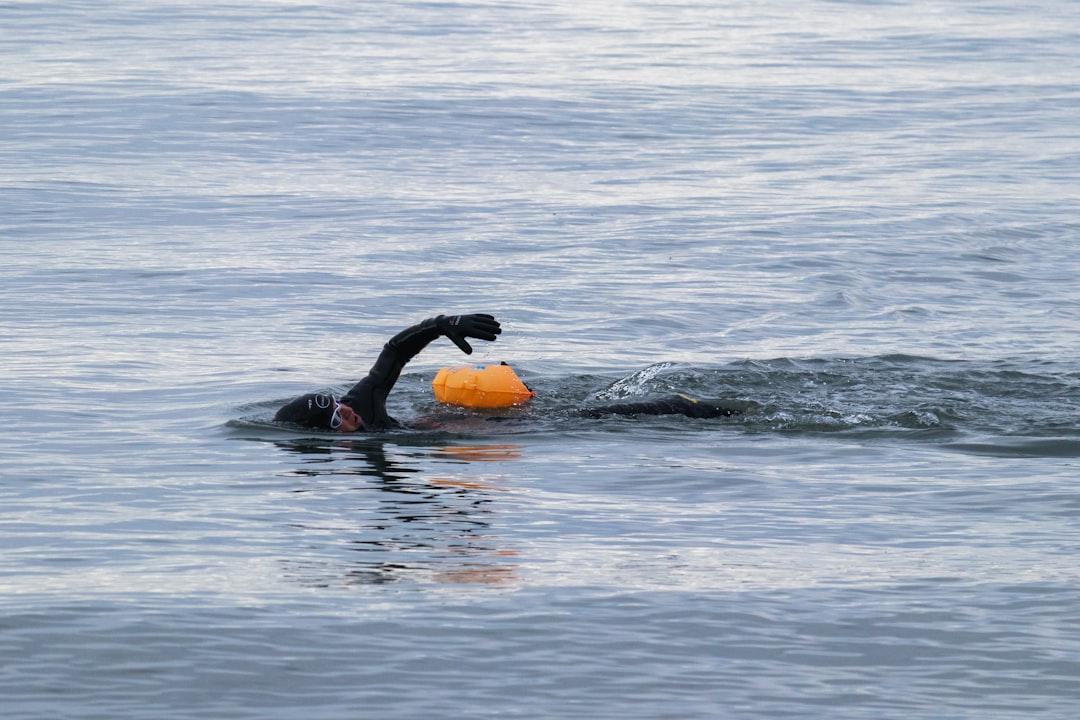
Open Water Confidence Swim: Beginner Acclimatisation Session
For many beginner triathletes, the open water swim is the most daunting part of the race. Moving from the calm, lane-guided environment of a pool into open water — where you cannot see the bottom, the water is darker and colder, and there are other swimmers around you — requires specific preparation. This acclimatisation session is designed to build confidence progressively.
Session Overview
- Duration: 45 minutes
- Location: Open Water
- Type: Technique / Confidence
- Level: Beginner
- Safety requirement: Always swim with a buddy or supervised venue. Use a tow float.
Before You Enter the Water
- Check water temperature — below 15°C requires a wetsuit for most swimmers
- Attach your open water tow float (now required at many UK venues)
- Acclimatise to the temperature by splashing water on your face and neck before entering
- Take 3 slow, controlled deep breaths before putting your head in
Phase 1: Water Entry and Breathing (5 minutes)
Wade in to waist depth. Stand still and focus on your breathing — slow inhale through the nose, slow exhale through the mouth. Cold water triggers the mammalian diving reflex and can cause sharp involuntary gasping — learning to control your breathing here is the most important skill in open water swimming.
Once breathing is steady, gently float on your back. Feel the wetsuit buoyancy supporting you. Stay here until calm and comfortable.
Phase 2: Short Swims Near the Shore (15 minutes)
Begin short 25–30m swims parallel to the shore, staying in water you can stand in. Focus on:
- Exhaling fully underwater with each stroke (do not hold your breath)
- Keeping your stroke controlled — open water often triggers a faster, more panicked stroke rate
- Practising bilateral breathing (every 3 strokes) to prepare for sighting
Phase 3: Sighting Practice (10 minutes)
Choose a fixed landmark (a buoy, dock, or tree) and practise sighting while swimming towards it. The technique: lift your eyes just above the waterline (crocodile eyes), spot the landmark, drop your head back into the water, take 2 strokes, lift again.
Good sighting adds minimal drag but is essential for navigating an open water course. Aim for one sight every 6–8 strokes once confident.
Phase 4: Continuous Swim (10 minutes)
Complete 2–3 continuous swims of 100–200m, incorporating sighting every 6–8 strokes. The focus is on maintaining relaxed, controlled technique rather than speed. If anxiety rises at any point, roll onto your back and float — this is a legitimate recovery technique in open water and in races.
Cool-Down and Exit (5 minutes)
Swim gently to the shallows, stand up slowly (cold water can cause dizziness on standing). Dry off and warm up quickly — bring a warm layer and hot drink for after cold water sessions. Monitor yourself for afterdrop (continued cooling after exiting the water) for 20–30 minutes post-swim.
Building to Your Race
Repeat this session weekly as the water warms through March, April and May. Gradually increase your continuous swim distance. By the time your race arrives, open water will feel familiar — not frightening.
You Might Also Like



Training at your own risk. The information provided is for general guidance only and is not a substitute for professional medical advice. Please consult a doctor before starting any new exercise programme, especially if you have any pre-existing health conditions.