Triathlon Performance Tracking: How to Measure Your Progress
Most triathletes train hard without ever objectively measuring whether they’re improving. Tracking your performance over time — through benchmark tests, repeatable workouts, and simple metrics — transforms guesswork into evidence-based training. Here’s how to build a performance tracking system that works across all three disciplines.
Why Tracking Matters
Without benchmarks, it’s almost impossible to know if your training is working. Fitness gains can be subtle month to month, and without objective data, it’s easy to lose motivation or overtrain without realising it. A simple quarterly test protocol catches both progress and stagnation early.
Swim: CSS Test and 400m Time Trial
Critical Swim Speed (CSS) is the single most useful swimming metric for triathletes. Calculate it by performing a 400m time trial and a 200m time trial in the same session with full recovery between. Your CSS pace is the difference in those times expressed per 100m. Retest every 6–8 weeks and track the number over time — improvements of 2–5 seconds per 100m are significant.
For a simpler benchmark, record your straight 400m time trial result. A 6-minute 400m (1:30/100m) is a solid target for most sprint and Olympic distance triathletes.
Bike: FTP and 20-Minute Test
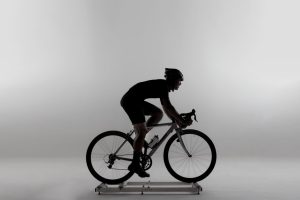
Functional Threshold Power (FTP) is the gold standard for cycling fitness. You don’t need a power meter — a 20-minute maximum effort on a consistent course or turbo trainer gives you a repeatable benchmark. Record your average power or average heart rate and perceived effort. Retest every 6–8 weeks on the same route and conditions.
Without power, use average speed on a flat 20-minute loop. Seeing that improve from 28 kph to 30 kph over 12 weeks is genuinely motivating and objectively meaningful.
Run: 5km Time Trial or Parkrun
Parkrun is the simplest and most reliable run benchmark for UK triathletes. Run your local Parkrun at maximum effort every 4–6 weeks and track your time. Results are logged automatically, giving you a permanent record. Alternatively, use a flat 5km route consistently at the same time of day.
For longer distance athletes, a 10km time trial every 8 weeks gives a better read of your aerobic running fitness. Aim for even or slightly negative splits.
Track These Numbers in a Simple Log
- CSS pace (swim) — in seconds per 100m, tested every 6–8 weeks
- 20-min FTP effort (bike) — power in watts or average speed on a set course
- 5km run time — via Parkrun or consistent flat route
- Resting heart rate — tracked daily on waking; a downward trend over months indicates aerobic gains
- Weekly training hours — a broad proxy for load; dramatic drops often precede fitness stagnation
Don’t Track Everything
The biggest mistake triathletes make is over-measuring. Choose two or three metrics per discipline, test consistently, and focus on the trend over 3–6 months rather than individual data points. Fitness is not linear — one bad test result proves very little. What you’re looking for is a clear upward trajectory across your season.