Hot Pavement Burns in Triathlon Transition: How to Protect Your Feet
A growing safety issue in warm-weather triathlon is causing unexpected injuries: athletes arriving in T1 or T2 barefoot are suffering burns, blisters, and skin damage from hot transition surfaces baking in the sun. In 2026, UK and international events have seen an uptick in post-race reports of painful sole blisters, and at least one US race received safety scrutiny after a competitor suffered burns from an unshaded transition lane.
Why Transition Surfaces Get So Hot
Tarmac and concrete in direct sun can reach 50–70°C (122–158°F) on warm summer days — well above the threshold for contact burns to unprotected skin. Transition areas are set up on hard standing with minimal shade, and athletes spend 30–90 seconds barefoot during wetsuit removal, helmet buckling, and pulling on race shoes. That contact time is enough to cause blisters on the plantar surface, especially in races held between 10am and 2pm when pavement temperature peaks.
How to Protect Your Feet
- Use a transition mat — A thin silicone or foam mat under your rack space creates a cooler, softer surface. Place your run shoes directly on the mat so you step from the mat straight into footwear without touching bare tarmac.
- Race with elastic laces — The faster you get into your shoes, the less time your feet touch the ground. Elastic laces and heel-pull loops can cut shoe transitions from 20 seconds to under 5.
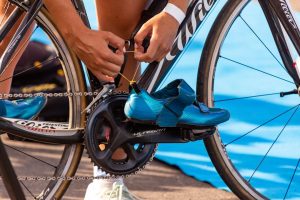
- Pre-mount bike shoes on the pedals — On the bike leg, clip-in shoes left on the pedals in T1 means you leave transition running to your bike in bare feet or socks. Get into your shoes within the first hundred metres of the ride to avoid prolonged contact with hot ground or abrasive pedal clips.
- Check the race brief for mat lanes — Some events now provide a shaded or matted walkway from T1 wetsuit strippers to the bike racks. If available, use this lane rather than cutting across bare tarmac to save time and protect your feet.
- Apply petroleum jelly to the soles pre-race — A thin coat does not prevent burns but reduces friction-related blistering from brief tarmac contact, providing minor protection during those unavoidable seconds of ground contact.
Hot Weather Race Day Planning
Arrive early on race morning to check the transition layout. If your rack space is in direct sun without mat coverage, place your own transition mat before the area fills. Carry a small water bottle in your transition bag to pour on your mat and shoes on particularly hot days — a brief cool-down soaks into the surface and drops local temperature by several degrees before you arrive at T1.
What to Do If You Get a Burn
Minor heat blisters on the sole should be treated like any burn: cool the area immediately under running water for 20 minutes, cover with a non-adhesive sterile dressing, and do not burst the blister. Seek medical tent support at the venue if the burn covers more than a small area or is visibly deeper than superficial redness. Running through serious burns can cause significant post-race tissue damage — if your soles are genuinely compromised, withdrawing is the right call.