How to Pace Your Ironman Bike Leg: Watts, RPE and Race Strategy
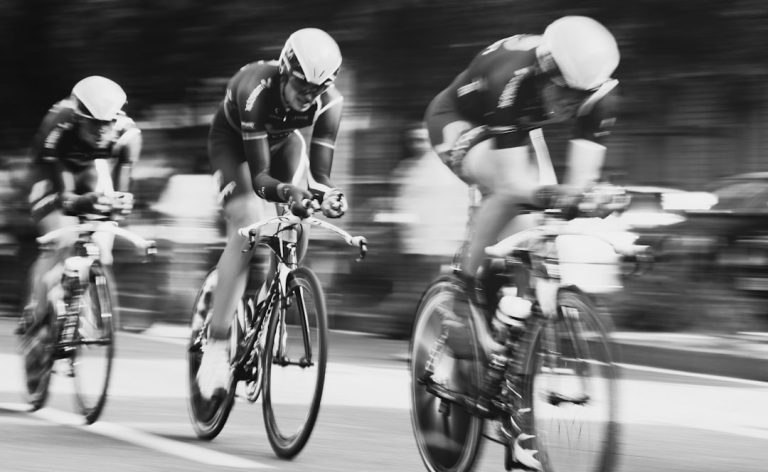
The Ironman bike leg decides more races than any other discipline. Swimmers can rescue a poor swim; runners can hold on after a mediocre run. But go too hard on the bike in a full-distance Ironman and the marathon becomes a survival march. Get the bike right and the run becomes the race it was always supposed to be. Pacing strategy on the bike is where athletes — even experienced ones — most commonly make expensive mistakes.
The Power-Based Approach
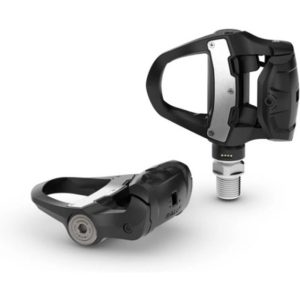
If you train with a power meter, you have the most precise pacing tool available. The standard guideline for full Ironman bike pacing is 65–70% of your Functional Threshold Power (FTP) as a normalised power (NP) target. This is conservative by design: it accounts for the energy you expend in the swim, the fade that accumulates over 180km, and the marathon waiting at the end.
Variability Index (VI) is as important as the average power number. VI is normalised power divided by average power — a measure of how smoothly you paced. Aim for a VI of 1.05 or below on a flat Ironman course, and 1.06–1.08 on a hilly one. A high VI means you were surging and recovering rather than holding even effort, which costs far more energy than the data suggests when viewed in isolation.
For 70.3 Racing
For a 70.3 Ironman, the sustainable power target moves up: 75–82% FTP is the commonly cited range, depending on your individual physiology, course gradient, and race conditions. The shorter distance means less total fatigue accumulation, but you still have a 21km run off the bike — the same principle applies, just with slightly more margin to push.
RPE-Based Pacing (Without a Power Meter)
If you don’t train with power, RPE (Rate of Perceived Exertion) gives you a workable framework. On a scale of 1–10, target RPE 5–6 for the Ironman bike leg: comfortably hard, conversational if pushed, but not easy. The key check: you should be able to hold a brief sentence at any point on the bike. If you can’t, you are above Ironman bike pace. If the effort feels trivially easy for more than 20 minutes, you may be under-fuelling rather than over-pacing — check your nutrition as a first response.
The Critical First Hour
The first 30–45 minutes out of T1 is the most common place where Ironman bike legs fall apart. You are glycogen-loaded, your legs feel fresh after a relatively short swim, and the athlete who hammered past you in T1 is setting a pace that looks very achievable from directly behind. Ignore all of it. Your goal power or RPE is the only signal that matters. Athletes who leave the first hour at their target effort almost always negative-split or at least run their planned marathon pace. Athletes who spike the first hour invariably run slower than they planned, often significantly so.
Adjusting for Conditions
- Wind — Ride to power, not to speed. A headwind that slows you to 28 km/h at 70% FTP is correct; the speed drop is the wind’s problem, not yours. Chasing speed in a headwind is one of the most common Ironman bike errors.
- Heat — Drop your target power by 3–5% in temperatures above 28°C and prioritise hydration. Core temperature management becomes a limiter before cardiac output does in extreme heat.
- Hills — Allow power to rise on climbs (up to 80% FTP for short climbs), but recover the surplus on descents. The VI target is your guide — stay within the allowable variability range rather than holding flat power on a course that doesn’t allow it.
Practise Race Pace in Training
Ironman bike pace should not be a guess on race day. Build race-pace blocks into your long rides: 3×30 minutes at target power within a longer endurance ride teaches your body the effort level and your mind the discipline to hold it. The closer you can simulate the combination of sustained power output, nutrition execution, and mental steadiness in training, the more reliably you will reproduce it over 180km in a race.