How to Choose the Right Crank Length for Your Triathlon Bike Fit
Most riders never think about crank length beyond whatever came stock on their bike — usually 170mm or 172.5mm. But for triathletes, crank length is one of the most overlooked bike fit variables, and getting it wrong can be the difference between holding an aero position comfortably for five hours or fighting your own hips the whole way round.
Why Crank Length Matters More on a Tri Bike
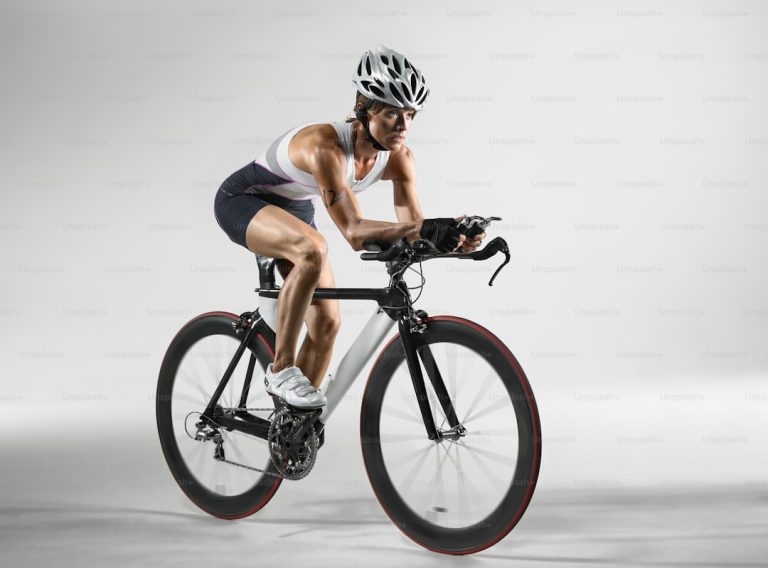
On a road bike, your hip angle is relatively open — you’re sat more upright, so the top of the pedal stroke doesn’t bring your knee particularly close to your chest. On a triathlon or TT bike, you’re rotated forward into a much steeper, more aero position. That closes your hip angle significantly, and a long crank makes it worse: at the top of each pedal stroke, your knee travels further upward, compressing your hip flexors right when you need them open to breathe and generate power.
This is why bike fitters increasingly recommend shorter cranks for triathletes than they would for the same rider on a road bike — often 5-10mm shorter. A shorter crank reduces the vertical travel of your knee at the top of the stroke, which opens up your hip angle and lets you rotate further forward into a lower, more aero torso position without your knees fouling your chest or your hip flexors seizing up on the run leg.
What Length Should You Actually Ride?
There’s no single formula that works for everyone — inseam-based calculators exist, but they’re a rough starting point at best, not a prescription. What actually matters is your hip angle in your aero position, your flexibility, and how your power responds to the change. As a general guide:
- Under 5’6″ / 168cm — often suits 165-167.5mm on a tri bike, even if riding 170mm on the road bike.
- 5’6″-5’10” / 168-178cm — commonly 165-170mm, again typically 2.5-5mm shorter than the road bike setup.
- Over 5’10” / 178cm — usually 170-172.5mm, with taller riders sometimes staying at their road length if hip angle allows.
- Very aggressive aero positions (elite/long-course) — some riders go as short as 150-160mm specifically to open the hip angle further, though this is a bigger adaptation and works best with a professional fit guiding the change.
These are starting ranges, not rules — the only way to know your ideal length is to test it, ideally with a fitter who can measure your hip angle in your actual aero position.
The Trade-Off: Gearing
Going shorter reduces your leverage slightly, which can make hard efforts feel marginally harder at the same cadence. Most riders compensate by running a slightly larger chainring or adjusting cadence upward — a 5mm reduction in crank length is a small enough change that most people adapt within a few rides, but it’s worth knowing before you make the swap so you’re not caught out on a hilly course.
When to Change It
- You’re buying a new tri/TT bike and can spec crank length at purchase — this is the cheapest time to get it right.
- You struggle to hold a low aero position without your hips rocking or your lower back arching.
- You get hip flexor tightness or lower back pain specifically on the tri bike but not the road bike.
- You’re chasing the last few percent of aero gain and have already dialled in saddle height, setback and reach.
If none of those apply and you’re comfortable and producing good power, there’s no need to chase a theoretical optimum — crank length is one variable among many, and a fit that already works is worth more than a spec-sheet number.