How to Improve Your Run Off the Bike in Triathlon
Running off the bike is the defining skill that separates triathletes from runners doing a triathlon. No matter how strong your standalone run is, the combination of cycling-specific muscle fatigue, blood pooling, and metabolic stress creates a unique challenge that can only be trained through specific preparation. Here’s how to improve your T2 run split.
Why the Run Off the Bike Feels So Hard
When you step off the bike, your body faces several competing demands: your cardiovascular system is still working at bike-pace intensity, your legs have been locked in a cycling-specific position, and your gait pattern needs to switch from circular pedalling mechanics to the forward propulsion of running. The “brick legs” sensation — heavy, unfamiliar running gait — is caused by blood pooling in the lower extremities and a temporary disconnect in muscle recruitment patterns. The good news is it adapts quickly.
5 Ways to Improve Your Run Off the Bike
- Do more brick sessions — the most effective adaptation comes from simply running after cycling regularly. Even 10-minute runs off the bike accelerate neuromuscular adaptation significantly. Start with two brick sessions per month and build from there.
- Spin up cadence on the final bike stretch — in the last 5–10 minutes of every bike leg, lift your cadence to 95–100 rpm. This activates the muscle fibres used in running and reduces the heavy-leg feeling in T2. Make it a habit in every ride, not just race day.
- Strengthen your hip flexors — hip flexor fatigue is a major contributor to poor running mechanics off the bike. Add single-leg hip flexor raises, high knees, and reverse lunges to your strength sessions to build the endurance your run form needs.
- Hold back in the opening kilometre of the run — adrenaline and race momentum often mask the true level of fatigue. Use a GPS watch to enforce discipline: run 15–20 seconds per kilometre slower than your target pace for the first kilometre, then build into race effort.
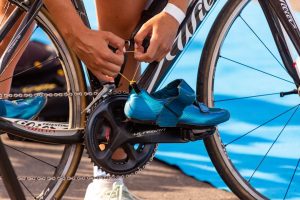
- Practise T2 under fatigue — set up a mock T2 and practise racking your bike, changing shoes, and getting moving when tired. The decisions you make fluently in training are the ones you execute under race day pressure.
Fuelling for the Transition Run
Your fuelling strategy in the final 15–20 minutes of the bike leg directly affects how your legs feel coming off the bike. Taking a gel 15–20 minutes before T2 ensures a steady glucose supply as you start the run. Don’t underestimate electrolytes — cramping in the early run kilometres is frequently a sodium issue, not a fitness one. Carry a salt tablet or sodium-rich gel for runs over 5km.
The Training Session to Build It
Build this into your weekly routine: ride at Zone 3 effort (RPE 6–7) for 40–60 minutes, then immediately run 2–4km at your target run split pace. Track each kilometre split. Over 6–8 weeks of consistent brick training, your transition run splits should improve measurably — not because you’re fitter on the run, but because your body has learned to switch disciplines efficiently.