
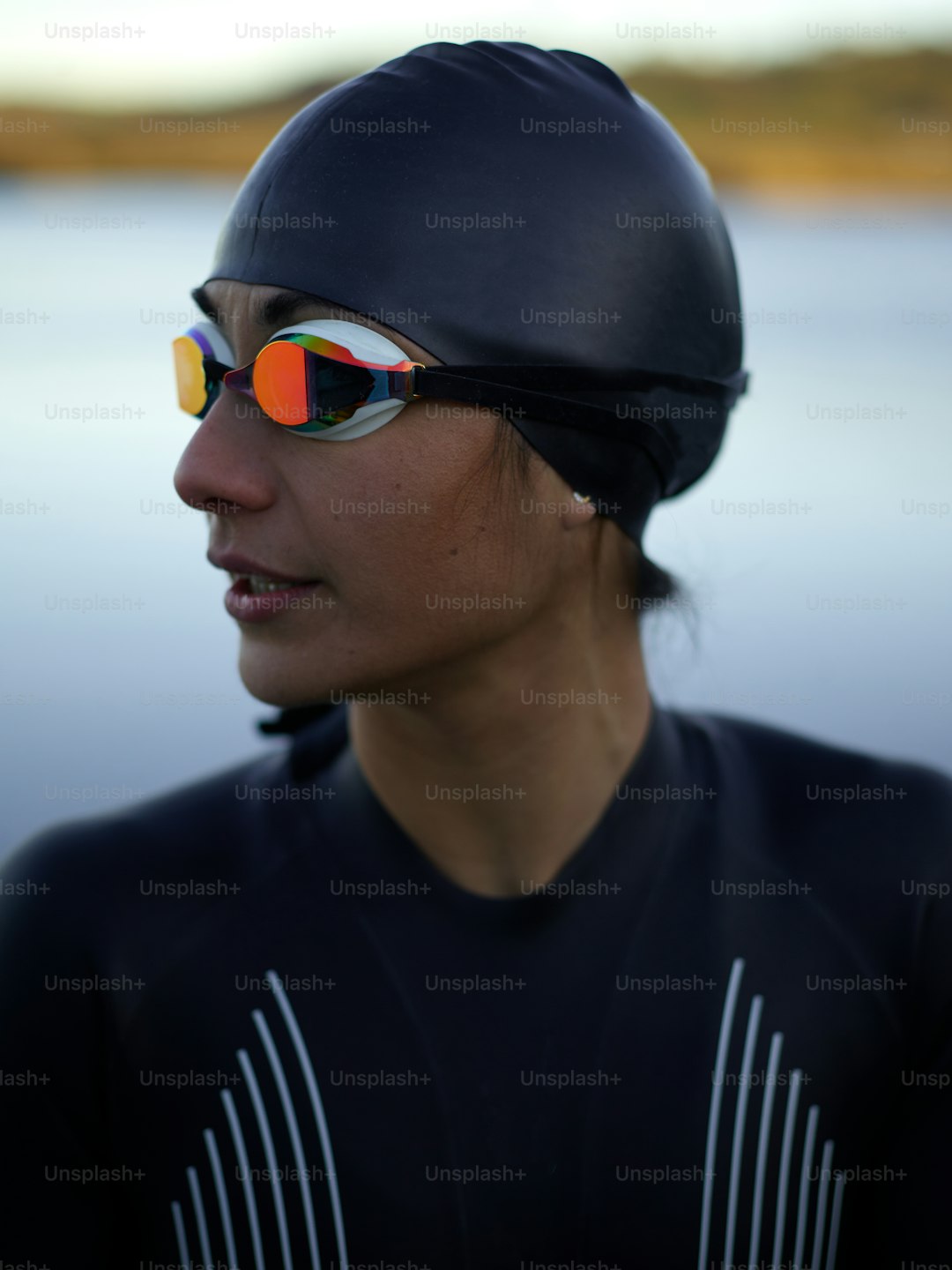
Open Water Skills Assessment Swim Session
Session Overview
Before race season begins, an open water skills assessment gives you clear benchmarks across the three core competencies every triathlete needs: sighting accuracy, sustainable open water pace, and comfort in a non-pool environment. This 60-minute session is ideal for athletes returning after winter pool training or completing their first open water swims of the year.
What You’ll Need
- Supervised open water venue (lake, lido, or safe coastal location)
- Wetsuit if water temperature is below 18°C
- Tow float for safety and visibility
- Swim buddy or lifeguard present — never swim open water alone
Warm-Up (10 minutes)
Enter the water and acclimatise for 2–3 minutes, focusing on slow controlled breathing through any initial cold-water shock. Then swim 300m at very easy pace with deliberate sighting every 10 strokes — no speed requirement, just getting used to the visibility and environment.
Main Set — Three Skills Benchmarks
Work through three blocks with 2–3 minutes of easy swimming between each. Record your observations after each block — these become your baseline for the season.
- Block 1 — Sighting drill: Swim a 200m loop around visible buoys. Count how many times you needed to correct your line. Target: fewer than 3 course corrections per 100m
- Block 2 — Paced effort: Swim 400m at your intended race pace. Note your heart rate immediately on finishing. Target: HR settled within 60 seconds of stopping
- Block 3 — Continuous swim: Swim 600m non-stop at comfortable effort. Focus on relaxed breathing and consistent stroke rhythm throughout
Cool-Down (5 minutes)
Exit the water carefully and walk or float gently for 5 minutes. Note any areas of discomfort — wetsuit chafing points, goggle leaks, breathing anxiety. These are exactly what to address before race day, not on it.
Coaching Notes
- If anxiety builds, float on your back and breathe slowly — there is no shame in a pause, it is far better than panicking
- Sighting every 10 strokes is more efficient than every 5 — train the skill consciously rather than reacting
- In choppy water, practice bilateral sighting (alternating left and right) to manage the waves
- Repeat this assessment mid-season to measure your open water improvement
You Might Also Like
Training at your own risk. The information provided is for general guidance only and is not a substitute for professional medical advice. Please consult a doctor before starting any new exercise programme, especially if you have any pre-existing health conditions.