Triathlon Swim Safety: Understanding Panic, Risk Factors, and How to Stay Safe
The Risk Is Real — But Manageable
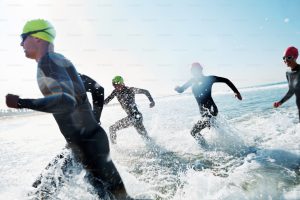
The mass swim start in triathlon is one of the few endurance sporting scenarios where participants face genuine, immediate physical risk from environmental and physiological factors beyond simple fitness. Open water incidents do occur, and understanding the mechanisms behind them — and what to do about it — is essential knowledge for every triathlete, regardless of experience level.
Understanding Swim Panic
Swim panic is the leading cause of non-contact swim incidents in triathlon. It can happen to strong, experienced swimmers and is not simply a reflection of fitness or ability. Panic occurs when the body’s fight-or-flight response overrides rational function — triggered by cold water immersion, physical contact from other swimmers, poor visibility, wave action, or a surge of adrenaline at the race start.
The physiological cascade is rapid: breathing becomes shallow and fast (hyperventilation), rational decision-making partially disengages, arm and leg movements become inefficient and frantic, and buoyancy decreases as the swimmer works harder with less effect. In extreme cases, a panic spiral can lead to a complete loss of swimming function within seconds.
Warning Signs to Watch For
- Stopped forward progress — a swimmer treading water or becoming stationary may be in distress, not just resting
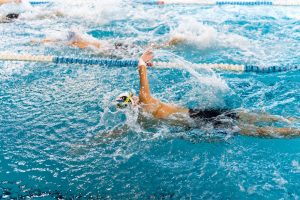
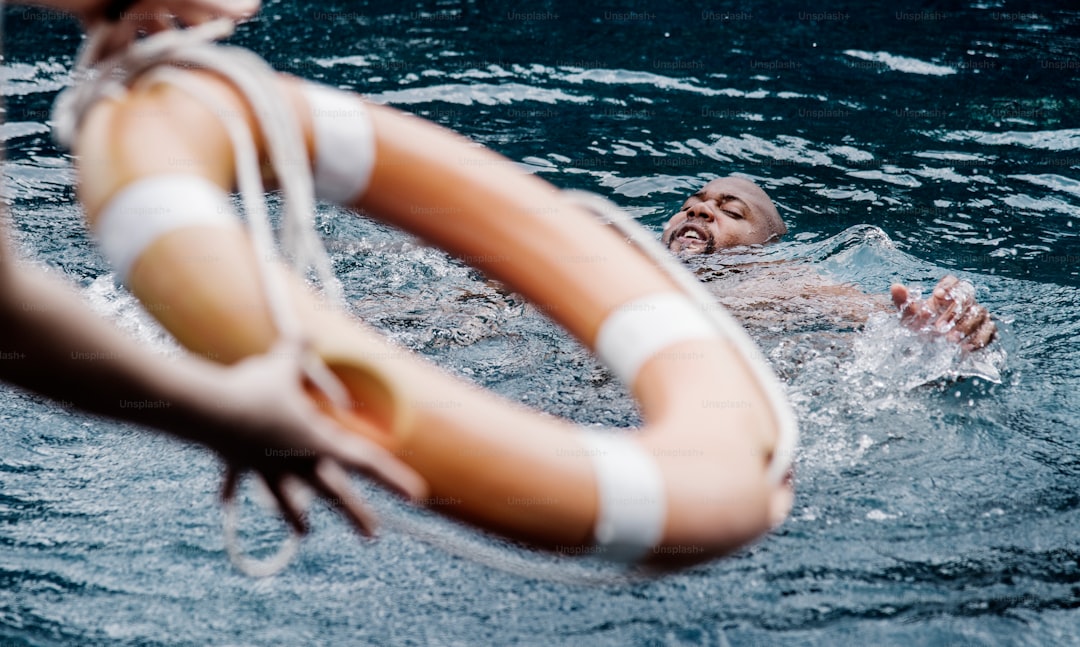
- Irregular arm movement or splashing without progress — a classic early sign of panic
- Head held high in the water — instinctively lifting the head sinks the hips and reduces buoyancy, accelerating the problem
- Audible gasping or calling out — verbal distress signals should always be acted on immediately
- Not responding to communication from safety staff — a swimmer in full panic may not register calls from kayakers or officials
Prevention: What You Can Do Before Race Day
- Practise cold water entry in training — cold shock is the primary panic trigger; acclimatise in training sessions, ideally at or near the race venue temperature
- Warm up before the start — enter the water 5–10 minutes before your wave and swim gently to adjust body temperature
- Start conservatively — the first 200m of any open water swim is the highest-risk window; seed yourself at the back or outside of your wave if you have any anxiety
- Use a wetsuit — buoyancy dramatically reduces the energy cost of keeping your head above water and provides passive reassurance if you need to stop swimming
- Know your exit options — before every swim, identify the nearest kayak, safety boat, or shore exit. Knowing you can get out reduces anxiety considerably
- Signal for help early — raise one arm and wave it clearly the moment you feel you need assistance. Don’t try to swim on in distress
What to Do If You Get Into Difficulty
- Roll onto your back immediately and float — a wetsuit will keep you effortlessly afloat on your back with minimal effort
- Breathe slowly and deliberately — counter hyperventilation by extending your exhale: breathe in for 4 counts, out for 6
- Signal for help (single arm raised and waving) once you are floating safely
- Do not try to swim hard to catch up — get safe first, race second. Your safety is non-negotiable
A Note for Race Organisers and Fellow Competitors
Adequate water safety coverage — kayakers, safety boats, and trained lifeguards — is the non-negotiable foundation of a safe triathlon swim. Athletes can also play a role: if you see a fellow swimmer in distress, signal to the nearest safety official immediately and stay with them if you can do so safely. Triathlon is a community, and looking out for each other on the water is part of what makes it one.