Triathlon Open Water Swim Pacing Strategy: How to Nail Your Swim Split
Why Swim Pacing Matters More Than You Think
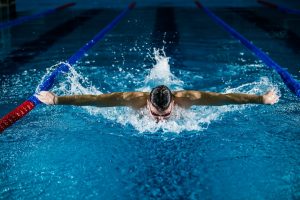
Most triathletes treat the swim as something to survive rather than race strategically. But how you pace your open water swim has a direct impact on your bike and run performance. Go too hard in the first 200 metres, and you’ll burn through glycogen, spike your heart rate, and spend the first 10 minutes of the bike leg recovering. Get the pacing right, and you’ll exit the water feeling strong, composed, and ready to race.
The Problem with Going Out Too Fast
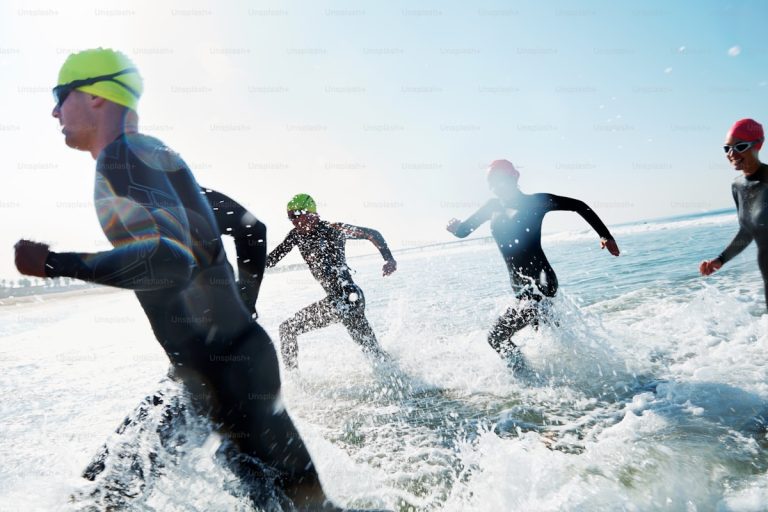
The adrenaline of race day, the mass start, and the instinct to fight for position all conspire to make triathletes swim far too hard at the beginning. Research consistently shows that negative-split swimming — where the second half is faster than the first — leads to better overall race outcomes. Yet most age-group triathletes positive-split their swim, meaning they slow down in the second half and arrive at T1 with elevated cortisol and depleted energy stores.
The fix isn’t just to swim slower early — it’s to manage intensity deliberately. Here’s how.
How to Pace Your Open Water Swim by Distance
- Sprint triathlon (750m): Start at 85–90% effort for the first 100m to get clear water, then settle to a controlled 80% for the middle 550m. With 100m to go, you can build again if you have anything left
- Olympic distance (1500m): Use the first 200m to settle into your rhythm and find feet to draft off. Aim to hold a consistent 75–80% effort throughout — this is the distance where negative splitting is most achievable
- 70.3 (1900m): Treat the first 400m as your warm-up. Keep your effort below 70% until you’ve found your group and your breathing is under control. Build gradually in the second half
- Ironman (3800m): Start easy — 65–70% effort — and build only when you’re past the first buoy turn. Consistent, relaxed swimming beats any attempt at speed early on
The Role of Drafting in Swim Pacing
Drafting behind another swimmer can reduce your energy expenditure by up to 15–20% for the same speed. This means that if you can position yourself on the feet or hip of a slightly faster swimmer, you effectively get a free speed upgrade at a lower cost. To do this well, you need to be aware of the swimmer ahead, maintain a consistent stroke cadence without surging, and sight regularly to stay on their line without drifting wide.
If you find a good drafting partner, match their pace rather than pushing beyond it. The energy savings will pay dividends on the bike.
How to Know If You’re Going Too Hard
In the open water, you won’t have your usual pace clock or lane rope to guide you. Instead, use these in-race cues to judge intensity:
- Breathing: If you can’t complete a smooth bilateral breathing pattern (every 3 strokes), you’re going too hard
- Stroke rate: A frantic, choppy stroke with very short glide is a sign of panic or excess effort — slow down your stroke rate and lengthen it
- Tension: Clenched fists, hunched shoulders, and a held jaw are signs of too much tension and typically too much effort — consciously open your hands and relax your shoulders
- Sighting: Frequent sighting errors (constantly off course) often indicate a racing heart rate causing cognitive fog — settle your effort before your navigation suffers further
Practical Tips for Race Day
- Practise pacing in training: do 400m CSS efforts in the pool and note how they feel — this is your race-effort reference point
- Seed yourself correctly at the start — don’t join a wave that will make you sprint to keep up or dawdle to avoid being swum over
- Use the first buoy as a reset point: check in with your effort and breathing as you round it
- If you’re gasping after 200m, roll to your back for three strokes and catch your breath — this is better than spiralling into panic
The single best thing you can do to improve your swim pacing is to rehearse it in open water training. Sessions that specifically practice holding controlled effort over 400–800m blocks will teach your body what sustainable race-day swimming feels like — so on the day, it becomes instinctive rather than guesswork.