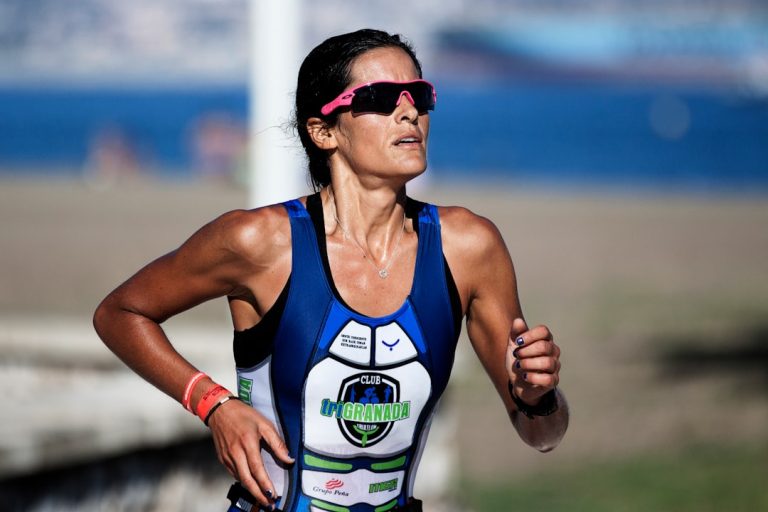
How to Find Your Triathlon Race Pace: RPE, Heart Rate and Power Explained
Pacing is the discipline that separates athletes who hold form through the run from those who walk the last 2K. Getting it right requires knowing your effort ceiling for each leg — not just on fresh legs, but after the swim and bike have already loaded your system. Here’s how to find your race pace using RPE, heart rate and power.
Why Triathlon Pacing Is Harder Than Single-Sport Racing
In a standalone 5K or Olympic-distance run, you know what your body can sustain. In triathlon, each discipline changes the physiological state you carry into the next one. A swim that felt comfortable can elevate HR by 10–15 bpm, making the first kilometres of the bike misleading. The bike leg depletes glycogen and fatigues the quads in a way that makes run pace feel harder than your watch suggests. Effective triathlon pacing accounts for accumulated fatigue, not just current effort.
RPE: The Foundation
Rate of Perceived Exertion (1–10 scale) is the most practical tool when heart rate is unreliable early in a race. Target effort levels by leg for Olympic distance:
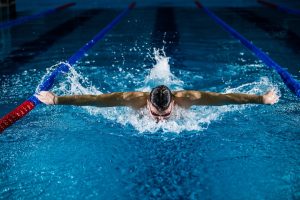
- Swim: RPE 6–7. Enough to position well; hard enough to go fast, easy enough not to spike HR before the bike
- Bike: RPE 7–8. Sustainable, not redlined. If you feel like you could go harder, you’re probably right — don’t
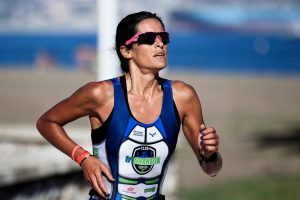
- Run: RPE 8–9+. This is where you can empty the tank. If you have gas left at 4K in a 10K run, you went too easy on the bike
Heart Rate: Useful After the First 5 Minutes
HR is unreliable for the first 3–5 minutes of each leg due to cardiovascular drift — your HR hasn’t yet caught up with your actual effort. Use it as a check once you’re settled. General targets for Olympic distance by fitness level:
- Swim: ignore HR until you’re on the bike
- Bike: 75–85% of max HR — the top of Zone 3 to bottom of Zone 4
- Run: 85–90%+ of max HR — Zone 4 and into Zone 5 in the final kilometre
Establish your true maximum HR in each discipline separately — triathlon-specific testing (a hard 400 m swim TT, a 20-minute bike FTP test, a 5K running time trial) gives more accurate numbers than formula-based estimates.
Power on the Bike: The Most Objective Metric
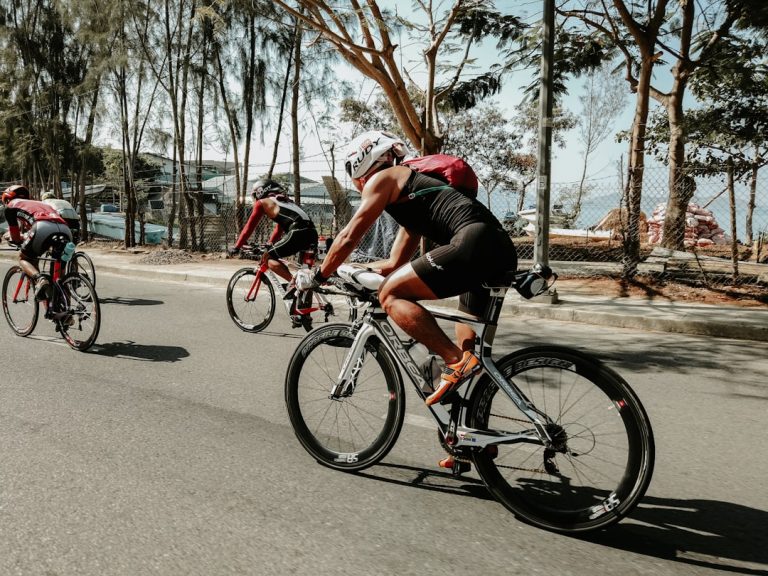
If you have a power meter, use it. Target 70–78% of your 20-minute FTP for Olympic distance; 65–72% for 70.3. Staying under your FTP ceiling is the single most effective way to arrive at T2 with legs capable of running well. The temptation to surge on descents or in drafting-legal packs should be resisted — power spikes above 90% FTP cost disproportionate glycogen and take minutes of lower effort to recover from.
Building Your Race Pace in Training
- Brick workouts: long bike immediately followed by a 20–40 minute run at race pace teaches your legs what T2 feels like — and reveals whether your bike pace is sustainable
- Race simulations: once per training block, do a B-race or training race at full effort; use it to calibrate your pacing model against real competition conditions
- Pacing data review: after each training race, compare your splits by leg — even splits or a slight negative split on the run means you paced correctly; a blowup on the run means you went too hard on the bike