Understanding Heart Rate Zones for Triathlon Training
Why Heart Rate Zones Matter in Triathlon
Training by heart rate zones is one of the most powerful tools available to triathletes. Instead of simply going as hard as possible every session, zones allow you to target specific physiological adaptations — building aerobic base, improving lactate threshold or developing VO2 max — without overtraining. Understanding and using your zones transforms random training into a structured, progressive system.
The 5-Zone System Explained
Most triathlon coaches use a five-zone system based on a percentage of your maximum heart rate (max HR). You can estimate max HR as 220 minus your age, though a field test (a hard 3km run effort or ramp test on the bike) gives a more accurate individual number.
- Zone 1 (50–60% max HR): Active recovery — very easy effort, used for warm-ups, cool-downs and recovery sessions the day after hard training
- Zone 2 (60–70% max HR): Aerobic base — the most important zone for endurance athletes; fat-burning, conversational effort, builds mitochondrial density
- Zone 3 (70–80% max HR): Aerobic threshold — moderate effort, this is the “comfortable discomfort” zone used in tempo sessions and steady-state rides
- Zone 4 (80–90% max HR): Lactate threshold — hard effort, breathing is laboured, sustainable for 20–60 minutes; this is race pace for most Olympic-distance athletes
- Zone 5 (90–100% max HR): VO2 max — all-out effort, only sustainable for short bursts; used in interval training and sprint sessions
How to Calculate Your Zones
Step one is to establish your maximum heart rate. The 220 minus age formula is a starting point, but individual variation is significant — some athletes have max HR 15–20 beats higher or lower than the formula predicts. For best results, perform a 3km time trial run effort and note your highest heart rate in the last 500m. This gives you a race-condition max HR figure specific to running. For cycling, a ramp test on the turbo trainer is the most accurate method.
Applying Zones Across Swim, Bike and Run
An important nuance for triathletes is that heart rate zones are discipline-specific. Your maximum cycling heart rate is typically 5–10 beats lower than running (due to the smaller muscle mass involved), and swimming HR is lower still. Keep this in mind when following zone-based training plans — a Zone 2 swim will feel different to a Zone 2 run at the same percentage of max HR.
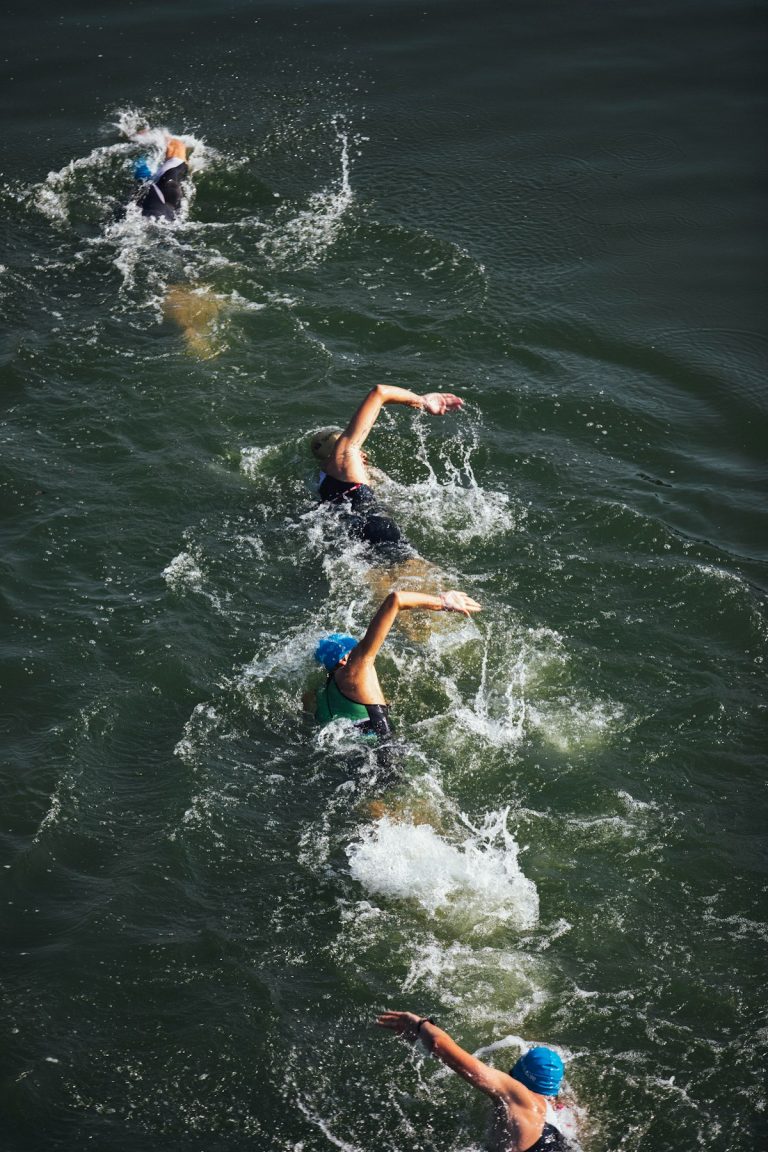
- Swimming: Heart rate response is dampened due to the horizontal position and cool water. Focus on perceived exertion and pace for swim zones rather than HR alone
- Cycling: Heart rate lags 30–60 seconds behind changes in effort. Use power (watts) alongside HR for the most accurate zone training on the bike
- Running: HR responds most immediately on the run — zones work well but watch for cardiac drift on long easy runs in warm conditions
The Most Common Training Mistake: Too Much Zone 3
The majority of age-group triathletes spend most of their training time in Zone 3 — moderately hard, never fully easy, never truly fast. This is known as the “grey zone” and it is where fitness gains plateau. Elite endurance athletes typically spend 80% of their training in Zone 1–2, and only 20% in Zones 4–5. Embracing genuine Zone 2 training — which feels deceptively easy — is the single biggest change most self-coached triathletes can make to accelerate their development.
Getting Started with Zone Training
- Invest in a chest strap heart rate monitor for accurate readings during training
- Establish your max HR with a field test before setting zones from a formula
- Track which zones you actually train in using your watch or cycling computer
- Aim for at least 2 Zone 2 sessions per week during base building periods
- Review your zone distribution monthly — are you genuinely doing easy days easy?