How to Break In New Cycling Shoes and Cleats Before Race Day
Race morning is the wrong time to discover a new pair of cycling shoes rubs, or that your cleats are angled just enough off to irritate your knee by the second lap. Both shoes and cleats need a proper break-in period, and rushing it — or skipping it entirely — is a common, entirely avoidable cause of a ruined bike leg.
Why Cycling Shoes Need Breaking In
Modern cycling shoes use stiff carbon or composite soles that don’t flex to accommodate your foot the way a running shoe does — instead, the upper (mesh, synthetic leather, or dial-closure panels) is what needs to mould to your foot shape over repeated wear. Skipping this and going straight into a long race puts pressure on the same few contact points for hours, which is exactly how hot spots and blisters develop.
Breaking In New Shoes
- Wear new shoes around the house for short spells before ever clipping in — this alone identifies obvious pressure points while you can still return them.
- Start with short rides of 30-45 minutes rather than jumping straight to a long ride. Pay attention to any specific hot spot; a recurring one usually means the shoe is the wrong shape for your foot, not just “not broken in yet.”
- Build up ride duration gradually over 3-4 weeks before racing in new shoes — never debut new shoes on race day itself, regardless of how comfortable they felt in the shop.
- If a shoe uses BOA or ratchet dials, experiment with tension across different rides — a fit that feels right for an easy spin can feel too tight after two hours of pedalling as your feet swell slightly.
Breaking In New Cleats
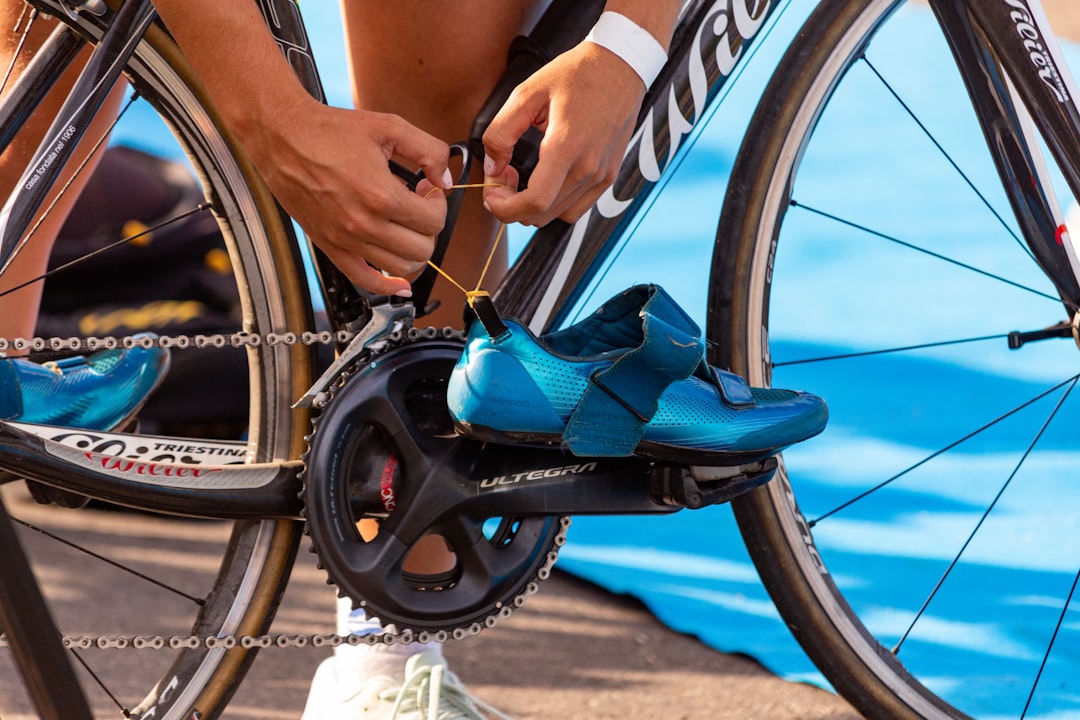
Cleats matter as much as the shoes themselves, and getting the position wrong causes knee pain that can take weeks to resolve. When fitting new cleats:
- Mark your old cleat position with a permanent marker or cleat-position tool before removing the old ones, so you can replicate the angle and fore-aft position exactly on the new pair.
- If you’re changing cleat brand or float amount (the degree your foot can rotate before disengaging), introduce the change on an indoor turbo session first — you can stop and adjust instantly without traffic or gradient to worry about.
- Ride at least two or three short sessions before trusting new cleats on a long ride — small position errors that feel negligible at 20 minutes can cause real knee discomfort by 90 minutes.
- If you experience any new knee pain (usually on the inside or outside of the knee, not the kneecap itself) after a cleat change, revert to the old position and make smaller adjustments — a few millimetres of fore-aft or rotational change is usually enough to fix it.
Race Week Timing
As a rule of thumb, any new shoes or cleats should be fully broken in and ridden at race intensity at least two weeks before your event — enough time to catch and fix problems, but not so close to race day that you’re still adapting when it matters. If you’re not confident a new pair is dialled in by then, race in the shoes and cleats you know rather than risk it.