Cold Water Shock in Open Water Swimming: What Triathletes Need to Know
Cold water shock is different from hypothermia, and it’s far more immediately dangerous for triathletes. Hypothermia takes 30 minutes or more to set in; cold water shock hits in the first 60–90 seconds of immersion, and it’s the reflex most likely to cause trouble on a cold race morning — even for strong swimmers.
What Actually Happens When You Hit Cold Water
In water below around 15°C (59°F), skin thermoreceptors trigger an involuntary gasp reflex the instant cold water hits your torso, followed by uncontrolled hyperventilation. It’s not something you can override by willpower or fitness — it’s a reflex response, separate from the gradual muscle cooling and coordination loss of hypothermia, which takes far longer to develop.
Why It’s Dangerous Even for Strong Swimmers
Hyperventilating makes it genuinely difficult to swim in a controlled, coordinated way, even over very short distances. The reflex also raises the risk of cardiac arrhythmia in vulnerable individuals. Cold-water safety research consistently finds that a majority of cold-water drowning victims were considered strong swimmers — the danger isn’t swimming ability, it’s an involuntary physiological reflex briefly overriding it.
How to Manage the Shock on Race Morning
- Enter slowly. Wet your face and neck before submerging your torso fully — a controlled entry blunts the reflex, which is triggered most strongly by sudden full-chest immersion.
- Use any race-morning water access. A short warm-up swim before the gun, where the event allows it, matters more in cold water than in a warm lake — the cold shock response measurably habituates with repeated exposure.
- Float first if it hits hard. If you feel the gasp/hyperventilation reflex mid-swim, roll onto your back and float rather than trying to power through it — the same “float first” principle used in open-water rescue guidance. The reflex reliably peaks at 60–90 seconds and fades within 2–3 minutes.
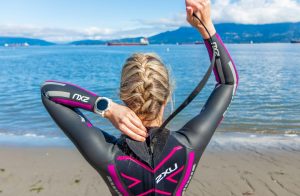
- Check your wetsuit’s neck seal. A flooded seal reintroduces cold water against your torso mid-race and can retrigger the response.
Training for It, Not Just Racing With It
Cold shock habituation is a real, researched effect: repeated brief cold-water immersions in the weeks before a cold race measurably blunt the gasp and hyperventilation response. That’s the reasoning behind a handful of short, controlled cold swims ahead of a cold-water event, rather than one long session or none at all. See our full guide to acclimatising to cold open water for a structured build-up, and our wetsuit thickness guide for matching your wetsuit to UK water temperatures.