How to Improve Your Triathlon Swim Without a Coach
Most triathletes build structured plans for cycling and running, but when it comes to swimming many assume you need a coach poolside to make meaningful progress. The reality is that with the right approach, tools, and feedback methods, you can improve your swim substantially as a self-coached athlete — and many age-groupers do exactly this.
Film Yourself Regularly
The single biggest unlock for self-coached swimmers is video analysis. Use a waterproof action camera or a poolside phone stand to film your stroke from the side and from above. Compare your footage against elite swimmer reference videos — look at hand entry angle, elbow position during the catch phase, and body rotation. Even a two-minute review after a technique session reveals faults that 20 hours of training alone won’t fix, because most problems are invisible from inside the water.
Use CSS to Structure Your Training
Critical Swim Speed (CSS) is the most effective pacing framework for self-coached swimmers. Calculate your CSS by completing a 400m and a 200m time trial with at least 30 minutes between efforts. Your CSS pace is your estimated sustainable pace over 1500m and forms the baseline for all your interval training. Building sessions around CSS intervals — for example 8-12 x 100m at CSS pace with 15 seconds rest — develops both fitness and pace awareness simultaneously without requiring any external input from a coach.
Prioritise Drills Over Distance
Distance metres don’t automatically make you a better swimmer — quality technique metres do. Replace at least one quarter of your weekly swim volume with drill-focused work. Drills like catch-up, fingertip drag, and the six-beat kick directly address the most common triathlete swim faults: crossing the centreline on entry, dropping the elbow during the catch, and insufficient kick engagement. Twenty minutes of focused drill work twice a week produces faster improvement than three kilometres of mindless laps at the same effort.
Join a Masters Swimming Group
You don’t need a personal coach to get coached swimming. Most local swimming clubs offer Masters sessions for adults of all abilities at a small fee. These sessions include written programmes, lane organisation by ability, and often a volunteer coach who can offer quick technique feedback. Attending even once a week gives you structured sets, competitive motivation, and occasional external feedback that drives improvement faster than solo training alone. Search for “Masters swimming” plus your town or city to find nearby clubs.
Track Your CSS Pace Every Month
Without a coach tracking your progress, you need to do it yourself. Run a CSS test at the start of each training block — the results tell you whether your training is working and what your target training paces should be. A one-second improvement per 100m over a training block is meaningful progress worth documenting. Logging pool times in a training diary or apps like Garmin Connect, TrainingPeaks, or even a basic spreadsheet also reveals patterns: which session types improve your speed most, and when in the season you perform at your best.
Use Open Water Time as a Skill Session
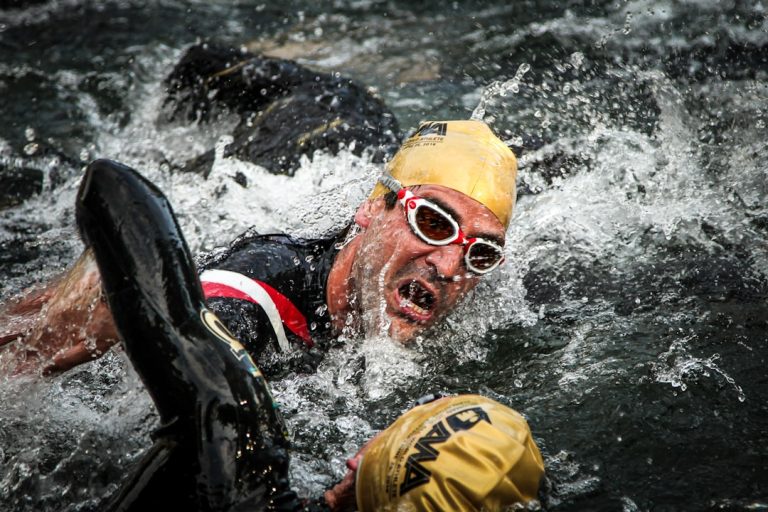
Every open water swim is a coaching opportunity. Practise sighting frequency, buoy turns, entry and exit techniques, and bilateral breathing under race-like conditions. Many triathletes treat open water purely as fitness work — but deliberate skill practice in open water is where some of the biggest race-day time gains come from, particularly in choppy conditions or mass-start events where positioning, drafting, and navigation matter as much as raw swim speed.