
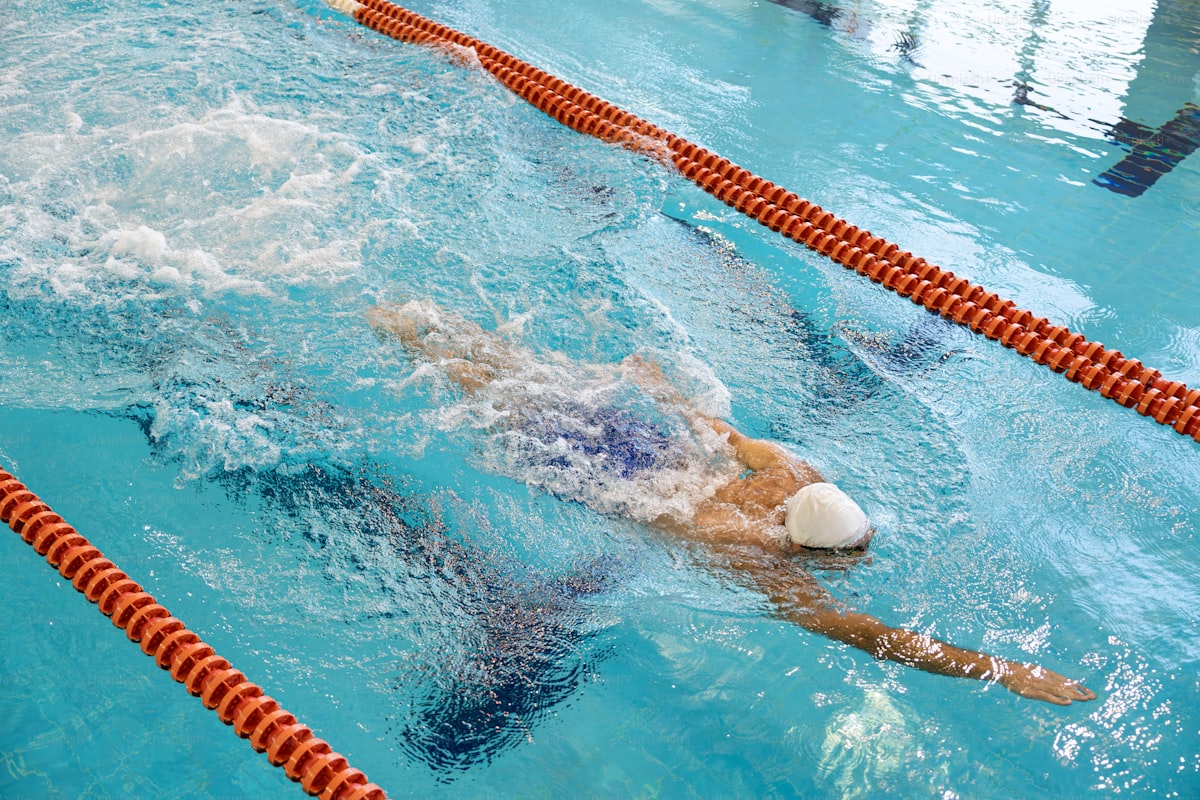
Medley Swim: All Four Strokes Technique Session
Session Overview
This pool technique session uses all four swimming strokes — freestyle, backstroke, breaststroke, and butterfly — as a structured workout. Medley swimming builds full-body strength, improves body rotation awareness, develops breath control across different stroke mechanics, and provides engaging variety during periods of high training load. Total volume approximately 1,800–2,000m. Suitable for intermediate swimmers who are comfortable with all four strokes and want to break from pure freestyle training.
What You’ll Need
- 25m pool access
- Pull buoy (for warm-up variety)
- Fins — optional, but helpful for butterfly technique work
- Pace clock or waterproof watch
Warm-Up (8 minutes)
300m easy freestyle at RPE 3, alternating 25m pull buoy and 25m standard. Follow with 4 × 25m as a stroke introduction: one length each of butterfly, backstroke, breaststroke, and freestyle at easy effort. This primes different muscle groups and gives you a feel for the stroke order you’ll repeat throughout the session.
Main Set
The main set is structured as individual medley (IM) repeats — each rep covers all four strokes in competition order: butterfly, backstroke, breaststroke, freestyle. Focus on technique and body position for each stroke rather than speed, particularly through the butterfly and breaststroke transitions.
- 6 × 100m Individual Medley (25m each stroke in order: fly, back, breast, free), RPE 6–7, 30 seconds rest
- 4 × 50m as 25m butterfly / 25m backstroke — focus on hip-driven undulation and clean rotation, 20 seconds rest
- 4 × 50m as 25m breaststroke / 25m freestyle — focus on glide phase and powerful push-off from the breaststroke turn, 20 seconds rest
Cool-Down (5 minutes)
200m easy backstroke at RPE 2. Backstroke is ideal for cool-down — it opens the chest, stretches the lats after butterfly work, and allows easy, unrestricted breathing. Finish with 2 × 25m relaxed freestyle focusing on stroke length and a long underwater glide off each turn.
Coaching Notes
- If butterfly is a weakness, use fins for the butterfly sections. This reduces fatigue and allows focus on the undulation pattern and high-elbow catch without falling apart mid-length.
- Common breaststroke mistake: pulling the kick through too wide with knees flaring outward. Keep the kick compact — heels drive to hips, not knees toward the chest.
- Easier version: replace butterfly with a second length of freestyle in each IM repeat, making it a 3-stroke medley.
- The primary benefit for triathletes is body rotation awareness, shoulder flexibility, and breath control under varied demands — not direct freestyle speed. Treat it as skill development and active recovery.
You Might Also Like




Training at your own risk. The information provided is for general guidance only and is not a substitute for professional medical advice. Please consult a doctor before starting any new exercise programme, especially if you have any pre-existing health conditions.