Suunto Race 3S vs Garmin Forerunner 970: Which Is Better for Triathlon?
Updated 22 November 2026. For most triathletes the Suunto Race 3S is the better buy: it costs £435 RRP against £629.99 for the Forerunner 970, lasts longer on dual-band GPS (Suunto quotes 38 hours to Garmin’s 21) and has a 2,000-nit screen in a slimmer case. The Forerunner 970 earns its premium if you want Garmin’s triathlon training tools, ECG, a built-in LED torch, a speaker, contactless payments and music streaming.
Suunto Race 3S vs Garmin Forerunner 970: where to buy
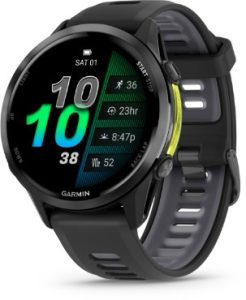
Garmin Forerunner 970 — £524.99
Garmin’s top Forerunner, with Pool Triathlon, Brick and Swimrun profiles, ECG and a built-in LED torch. RRP £629.99.
Suunto Race 3S — £435 RRP
A 46mm titanium-bezel watch weighing 56g on its silicone strap, with 38 hours of dual-band GPS and free offline maps.
Suunto Race 3S vs Forerunner 970: specs
| Suunto Race 3S | Garmin Forerunner 970 | |
|---|---|---|
| UK RRP | £435 | £629.99 |
| Launched | 15 October 2026 | May 2025 |
| Battery, dual-band / multi-band GPS | Up to 38 hours (32 with always-on display) | Up to 21 hours (all systems + multi-band) |
| Battery, other GPS modes | Up to 45 hours (Endurance mode) | Up to 26 hours (GPS only), 23 hours (SatIQ) |
| Battery, smartwatch | Up to 12 days (10 days with an hour of training a day) | Up to 15 days |
| Weight | 56g with silicone strap (38g watch only) | 56g |
| Case | 46 x 46 x 11.4mm, titanium bezel | 47 x 47 x 12.9mm, titanium bezel |
| Display | 1.32in AMOLED, 466 x 466, 2,000 nits, sapphire | 1.4in AMOLED touchscreen, 454 x 454, sapphire |
| Water rating | 5 ATM | 5 ATM |
| Storage | 64GB | 32GB |
| Maps | Free worldwide offline maps with contours | Full-colour maps, turn-by-turn directions, round-trip routing |
| Triathlon modes | Predefined Triathlon mode; switch sports mid-recording | Triathlon, Pool Triathlon, Brick, Duathlon, Swimrun; multisport workouts |
| Swim | Pool and open water | Pool and open water |
| Sensors | Optical HR (6 LEDs, 4 photodetectors), dual-band GNSS, barometric altimeter, compass | Elevate Gen 5 optical HR with ECG, multi-band GNSS with SatIQ, barometric altimeter, compass, thermometer, pulse ox |
| Extras | Screen flashlight mode | LED torch (white and red), speaker and mic, Garmin Pay |
Which lasts longer in a triathlon?
The Race 3S, by a wide margin. In dual-band GPS, the most accurate setting and the one you want for an open water swim, Suunto quotes up to 38 hours, or 32 hours with the always-on display. Garmin quotes 21 hours for the Forerunner 970 in its equivalent all-systems multi-band mode, 23 hours in SatIQ (which switches to multi-band only when it needs to) and 26 hours on GPS only.
For a 70.3 either watch has plenty in hand. For a full Ironman, 21 hours still covers a 17-hour cut-off plus setup time, but the Race 3S leaves far more margin if you forget to charge it during race week. Play music through the 970 and multi-band drops to 12 hours, which is too tight for a long Ironman day.
Away from racing, the Forerunner 970 lasts longer as a smartwatch: up to 15 days against up to 12 days for the Race 3S.
Triathlon features compared
Both watches record a swim, bike and run as one file. On the Race 3S you start the predefined Triathlon mode and hold the upper button for two seconds at each transition to move to the next sport; you can change sport as many times as you like in one recording. Suunto’s Race Planner, which builds a pacing plan from the route, weather and your goal time, arrives in a later app and firmware update.
Garmin gives you more profiles to choose from: Triathlon, Pool Triathlon, Brick, Duathlon and Swimrun, plus structured multisport workouts and Garmin Coach triathlon training plans. If you train with structured brick sessions or want a plan on the watch, this is the main reason to pay more for the 970.
Suunto’s answer is AI Coach in the Suunto app, which answers training questions and builds workouts, plans and routes that sync to the watch. Race 3S buyers who activate it by 31 December 2026 get three months free.
Swimming and open water
Both are rated to 5 ATM and both have pool and open water swim modes that use GPS for distance in open water. The watch only gets a fix when your wrist leaves the water, which is why dual-band matters for swim tracks. Suunto advises waiting at least three minutes after the watch finds GPS before you start swimming, so switch it on in the start pen rather than on the start line.
The Race 3S is the smaller, thinner watch at 46mm and 11.4mm against 47mm and 12.9mm, and the head alone weighs 38g. Under a wetsuit cuff, and on smaller wrists, it is the easier watch to live with.
Screen, maps and everyday use
Suunto gives the Race 3S a 1.32-inch AMOLED screen at up to 2,000 nits. The Forerunner 970’s AMOLED is larger at 1.4 inches and is a touchscreen; Garmin says it is brighter than the Forerunner 965’s but gives no figure. Both have sapphire lenses.
Both watches have offline maps. Suunto’s are free worldwide maps with contour lines and place names, stored in 64GB. Garmin’s full-colour maps add turn-by-turn directions and round-trip routing, which help when you plan bike routes on the watch, and the 970 has 32GB shared with music.
The Forerunner 970 is the more complete smartwatch: ECG through its Elevate Gen 5 sensor, an LED torch with white and red modes, a speaker and microphone for calls and voice commands, Garmin Pay, and music from Spotify, Deezer, Amazon Music or YouTube Music. Contactless payments on the Race 3S work in China only.
Which should you buy?
- Buy the Suunto Race 3S if battery for a long race matters most, you have smaller wrists, or you want a titanium-bezel AMOLED watch for £435. See our Suunto Race 3S review.
- Buy the Garmin Forerunner 970 if you want Brick, Pool Triathlon and Swimrun profiles, Garmin Coach triathlon plans, ECG, a torch and music streaming, or you already use Garmin Connect and a Garmin Edge. Read our Garmin Forerunner 970 review.
- Want more battery than the 970 without leaving AMOLED? Compare COROS Pace 4 Pro vs Garmin Forerunner 970.
- Still choosing a Suunto? Our best Suunto watches for triathlon covers the Race 2, Race S and Vertical 2.
FAQs
For battery and price, yes: Suunto quotes up to 38 hours of dual-band GPS for £435 RRP, against 21 hours of multi-band GPS for £629.99 on the Forerunner 970. The Garmin has more triathlon profiles, ECG, a torch and music streaming.
Both record swim, bike and run in one file with pool and open water swimming. Garmin adds Brick, Pool Triathlon and Swimrun profiles and Garmin Coach triathlon plans; Suunto gives more GPS battery for the money.
Yes. Suunto quotes up to 38 hours in dual-band GPS, or 32 hours with the always-on display, which covers a 17-hour Ironman cut-off with room to spare.
Yes, slightly. The Forerunner 970 measures 47 x 47 x 12.9mm with a 1.4-inch screen; the Race 3S is 46 x 46 x 11.4mm with a 1.32-inch screen. Both are quoted at 56g.
Weekly gear reviews
Triathlon gear reviews and training tips, every week.
Sources
- Suunto: Race 3S
- Suunto: Race 3S launch announcement
- Suunto Race 3S user guide: multisport exercise
- Suunto Race 3S user guide: swimming
- the5krunner: Suunto Race 3S
- the5krunner: Garmin Forerunner 970 specifications
- DC Rainmaker: Garmin Forerunner 970 review
- TechRadar: Garmin Forerunner 970 review
This article contains affiliate links. If you purchase through these links, we may earn a small commission at no extra cost to you. This helps support The Triathlete.