Garmin Edge 840 Solar Review for Triathlon: Complete 2026 Guide
What to Look For in a Triathlon Bike Computer
A bike computer for triathlon needs to do more than display speed and distance. You need accurate GPS, power meter compatibility, structured workout guidance, heart rate monitoring, navigation, and a display legible in full sunlight. Battery life matters too — a computer that dies at kilometre 80 of an Ironman ride is worse than no computer at all. Solar charging has become a meaningful differentiator for long-course athletes.
Key Features to Consider
- GPS accuracy — dual-band GPS (GPS + GLONASS/Galileo) is far more accurate in urban canyons and wooded terrain than single-band
- Power meter compatibility — ANT+ and Bluetooth dual connectivity ensures compatibility with virtually any power meter brand
- Battery life — aim for 20+ hours in GPS mode for Ironman; solar extends this meaningfully on sunny days
- Touchscreen vs buttons — touchscreens are intuitive but can be difficult to operate with wet or gloved hands; buttons never fail
Our Top Picks
Best Solar / Premium: Garmin Edge 840 Solar — £419.99
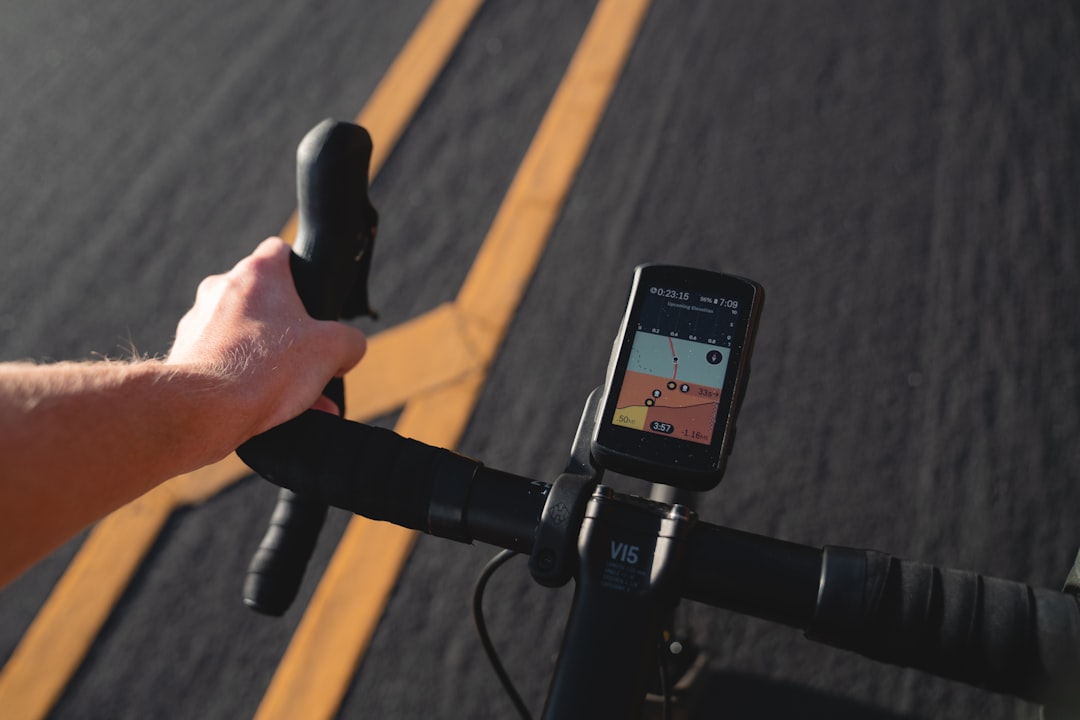
The Garmin Edge 840 Solar sets the benchmark for triathlon bike computers. Its dual-band GPS is exceptionally accurate in all conditions, the touchscreen is responsive even with sunscreen-coated fingers, and the mapped turn-by-turn navigation is flawless. The Solar lens adds meaningful runtime on sunny days — in full sun Garmin claims unlimited battery in GPS mode, though real-world use on UK days typically extends the 26-hour standard battery by 20–30%. The Climb Pro feature is invaluable on hilly Ironman courses like Bolton or Lanzarote, calculating remaining elevation on each climb in real time. Training status, VO2max tracking, and power-to-weight ratio analysis are all on board.
Best Non-Solar: Garmin Edge 840 (Standard) — £349.99
Identical internals to the Solar version — same dual-band GPS, same display, same navigation and training features — without the solar panel. The standard Edge 840 delivers 26 hours of GPS battery life, which is sufficient for all but the very longest Ironman efforts. If you’re primarily racing sprint and Olympic distances or live in the UK where overcast skies limit solar gain, the standard version represents excellent value and saves you £70.
Buying Tips
- If you race Ironman or 70.3 in hot, sunny climates (Lanzarote, Barcelona, Kona), the Solar version pays for itself in peace of mind alone
- Buy a mountain bike mount as well as the standard stem mount — the out-front mount puts the screen where you can read it in an aero position without lifting your head
- The Garmin Edge 840 integrates directly with Garmin Connect IQ — you can download triathlon-specific data fields for pace-to-target, power:HR decoupling, and race-day nutrition reminders
Care and Maintenance
The Edge 840 Solar is rated IPX7 (waterproof to 1m for 30 minutes), so it handles rain and sweat without issue. Clean the solar panel lens with a microfibre cloth — abrasive cleaning materials reduce solar efficiency over time. Keep firmware updated via Garmin Express to ensure GPS satellite databases are current; an outdated almanac noticeably degrades lock-on speed at the race start.
This article contains affiliate links. If you purchase through these links, we may earn a small commission at no extra cost to you. This helps support The Triathlete.