How to Race Triathlon in the Heat: Cooling Strategies That Actually Work
Why Heat Slows You Down
Racing in hot conditions forces your body to do two jobs simultaneously: fuel your muscles and cool your core. The result is earlier fatigue, elevated heart rate at the same pace, and a higher risk of heat illness. Core temperature above 40°C impairs decision-making and motor control — which is why pacing in the heat requires a different strategy, not just more willpower.
Pre-Cooling: Start the Race Cooler
Pre-cooling in the 30–60 minutes before your race start lowers your core temperature and extends the time before heat becomes a limiting factor. It costs nothing but a little planning and is one of the most evidence-based heat strategies available to age-group athletes.
- Cold towels: Drape an ice-cold wet towel around your neck and shoulders in transition while setting up
- Ice in your cap or vest: A mesh cycling cap with ice cubes keeps the head cool for several kilometres into the race
- Ice slushie: Drinking a slushie 30 minutes before the start reduces core temperature more effectively than cold water alone
- Cold water wade: Standing in cold water before the swim start (if possible) provides immediate pre-cooling with no extra effort
On-Course Cooling Strategies
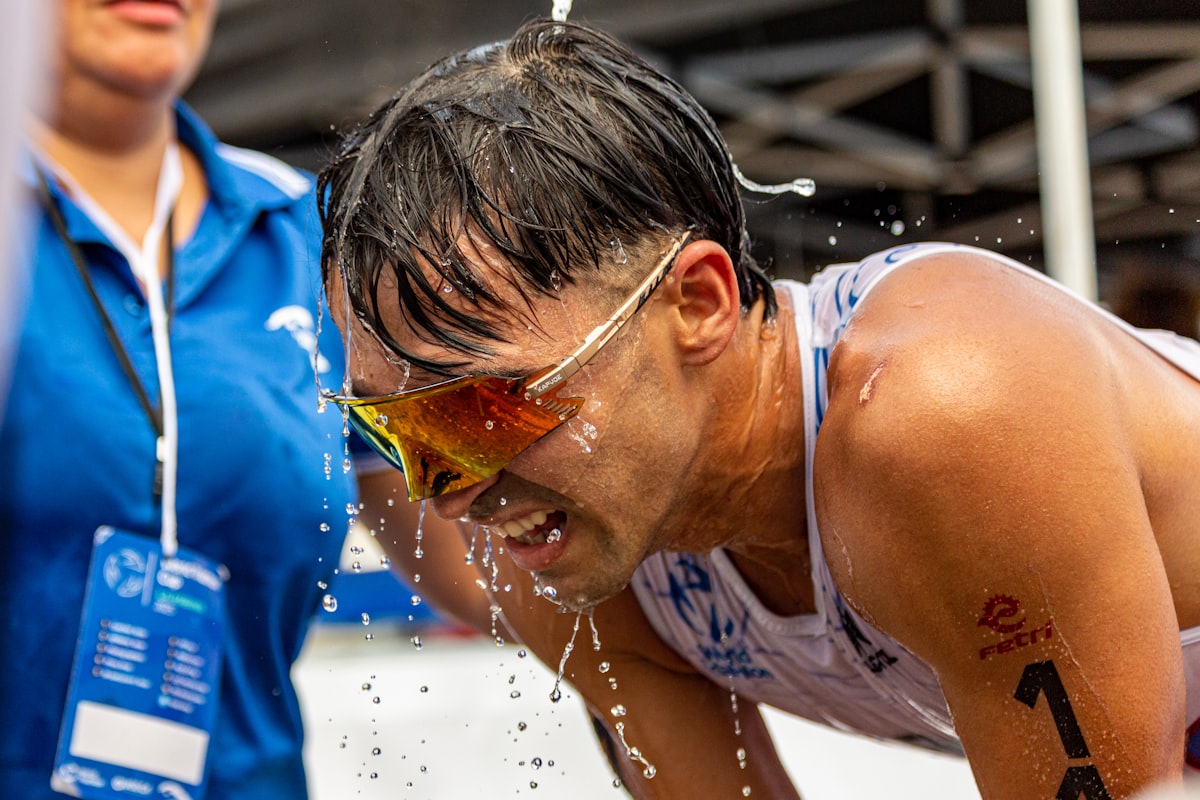
- Use every aid station: Pour water over your head, neck and wrists — not just into your mouth. Evaporative cooling on the skin surface is more effective than drinking alone
- Ice under your cap: Place ice cubes under your running cap at aid stations. They last 1–2km and dramatically reduce perceived effort
- Wet your shoes: Pouring water over the feet reduces perceived heat and core temperature on the run
- Use all the sponges: Hold one on the back of your neck between aid stations — the temperature difference provides genuine cooling benefit
Adjusting Your Pace in Hot Conditions
Your target run pace in 30°C heat should be 15–30 seconds per kilometre slower than you would run in cool conditions. This is physiology, not weakness. Athletes who ignore this and race to their usual splits almost always blow up spectacularly in the second half. A conservative first half that allows you to maintain pace to the finish is always the faster strategy on a hot day.
- Use heart rate as your primary guide — if your HR is 10+ beats above normal at a given pace, ease off immediately
- Walk the aid stations deliberately — every walk break is a cooling and fuelling break
- Know the warning signs of heat exhaustion: dizziness, nausea, stopping sweating, confusion — if any of these appear, stop racing and seek medical attention
- Accept that hot-day personal bests are rare — a successful finish in the heat is a strong result in itself
Hydration Strategy in the Heat
In hot conditions your sweat rate can exceed 1.5 litres per hour. Aim to drink 600–800ml per hour on the bike and 400–600ml per hour on the run. Critically, add sodium — aim for 400–1000mg of sodium per hour from electrolyte drinks or salt tablets. Plain water alone is insufficient in hot conditions and can cause dangerous hyponatraemia if consumed in large quantities without electrolytes.
Building Heat Tolerance in Training
If you have 2–4 weeks before a hot race, deliberate heat acclimatisation training accelerates the body’s adaptation. Exercising in the heat for 60–90 minutes per day for 10–14 days increases plasma volume, lowers resting core temperature and reduces sweat sodium concentration — all of which make racing in heat significantly more manageable. Even exercising in warmer clothing indoors provides a useful stimulus if a hot environment is not accessible.