Wahoo KICKR Rollr Smart Rollers Review 2026: Open Roller Feel Meets Smart Training
What to Look For in a Smart Roller Trainer
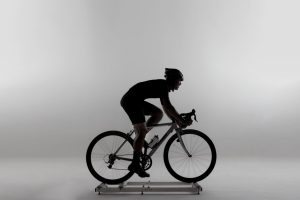
Smart rollers sit between traditional open rollers and direct-drive trainers. Unlike direct-drive units that lock your rear wheel into a fixed cassette, smart rollers let your bike roll naturally on open drums — preserving the balance challenge that makes rollers effective for bike handling and core engagement. Wahoo’s KICKR Rollr adds controlled resistance and full app connectivity to that open-roller experience.
KICKR Rollr: Key Specs
- Type — Open roller with smart resistance; rear wheel stays on drums
- Flywheel — 10.5 lb weighted flywheel for road-like momentum and inertia
- Connectivity — ANT+ and Bluetooth; compatible with Wahoo, Zwift, TrainerRoad, Rouvy
- Power — Native onboard power broadcasting; pairs with POWRLINK Zero pedals
- Setup — A-frame front mount keeps bike upright; no cassette swap needed
- RRP — £699.99
Performance and Ride Feel
Setup is the KICKR Rollr’s standout advantage. You place your bike on the rollers, slide the front wheel into the A-frame mount, tighten one knob, and you’re riding. No adapter, no cassette removal, no thru-axle puzzle. For triathletes who train at odd hours and want to be riding within two minutes, this matters.
The 10.5 lb flywheel delivers convincing road-feel momentum. Acceleration and deceleration mirror outdoor cycling in a way a light flywheel cannot manage. Sprint efforts and recovery periods feel natural rather than electronic. The balance demand of the open roller format also keeps your core and stabilisers engaged throughout every session — a quality that carries over to smoother, more controlled bike handling in races.
ERG mode functions, but with a limitation worth knowing: roller resistance is inherently less precise than direct-drive cassette engagement. Holding an exact target wattage in ERG is harder on the KICKR Rollr than on a KICKR Core 2 or Elite Justo 2. Train to power zones rather than single-watt targets, and this limitation becomes a non-issue for most triathlon training purposes.
One practical note: extended roller use applies friction to your rear tyre. Use a dedicated training tyre rather than your race rubber to avoid wear and potential warranty issues.
Who It’s Best For
The KICKR Rollr suits triathletes who compete in draft-legal formats (T100, British Triathlon sprint and Olympic events) and want to maintain sharp bike handling through winter and off-season blocks. The balance work from rollers genuinely transfers to race-day cornering confidence. At £699.99, it’s priced between budget rollers (£100–300) and premium direct-drive trainers (£900+). If maximum ERG precision is your priority, a direct-drive trainer wins on that metric. If you want both structured training data and the feel of real riding, the KICKR Rollr offers a compelling combination.
Check price and availability on Tredz
Buying Tips
- Fit a dedicated training tyre on the rear — not your race tyre — to protect performance rubber and avoid warranty complications
- The A-frame front mount folds flat for storage, but the overall footprint is large; measure your space before buying
- For the most accurate dual-sided power data, pair with the Wahoo POWRLINK Zero pedal system
This article contains affiliate links. If you purchase through these links, we may earn a small commission at no extra cost to you. This helps support The Triathlete.