

Shoulder Rotation Drill Session: Fixing a Flat Swim Catch
Session Overview
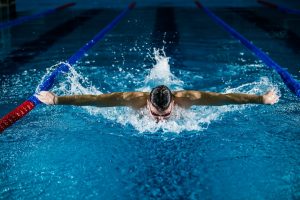
A flat, rotation-free stroke is one of the most common — and most fixable — faults in adult-onset swimmers, and it’s a common source of shoulder strain over high-mileage training blocks. This session isolates shoulder and body rotation with a progression of drills before rebuilding it into full stroke, aimed at triathletes whose swim feels effortful through the shoulders rather than driven from the core and hips.
What You’ll Need
- Pool access with clear lane space for drill work
- A pull buoy
- Optional: a snorkel, to keep focus on rotation rather than breathing timing during the drill sets
Warm-Up (10 minutes)
200m easy freestyle, then 4 x 50m alternating 25m front crawl / 25m sculling, focusing on feeling the water rather than pace.
Main Set
A drill progression from isolated rotation through to full-stroke integration, with rest built in to keep technique sharp rather than fatigued.
- 4 x 50m single-arm drill (one arm extended and still, the other completing full stroke cycles), 20 seconds rest — exaggerates the rotation needed to clear the recovering arm.
- 4 x 50m 6-1-6 drill (6 kicks on your side, 1 stroke cycle, 6 kicks on the other side), 20 seconds rest — builds the habit of rotating fully onto each side rather than swimming flat.
- 6 x 50m build, focusing on driving rotation from the hips rather than twisting from the shoulders alone, 15 seconds rest — this is where the drill work should start showing up in full stroke.
- 4 x 100m continuous swim at moderate effort, consciously carrying the rotation feel from the drills into full-speed swimming, 20 seconds rest.
Cool-Down (10 minutes)
200m easy swim, alternating 50m front crawl with 50m of whatever secondary stroke you’re comfortable with, letting the shoulders fully relax.
Coaching Notes
- Rotation should come from the hips and core, not from twisting the shoulders independently — if your head is rocking side to side more than your hips are rotating, the movement is coming from the wrong place.
- Common mistake: over-rotating past about 45 degrees from flat, which actually slows the stroke down and can add shoulder strain rather than reduce it. This isn’t a “roll as far as possible” drill.
- Scaling: beginners can do shorter reps (25m) with longer rest to keep form sharp; advanced swimmers can add fins to the 6-1-6 drill to maintain speed while still isolating the rotation pattern.
- Target RPE 4-5/10 throughout the drill sets, building to 6/10 on the 100m continuous swims — this is a technique session, not a fitness-testing one.
You Might Also Like




Training at your own risk. The information provided is for general guidance only and is not a substitute for professional medical advice. Please consult a doctor before starting any new exercise programme, especially if you have any pre-existing health conditions.