
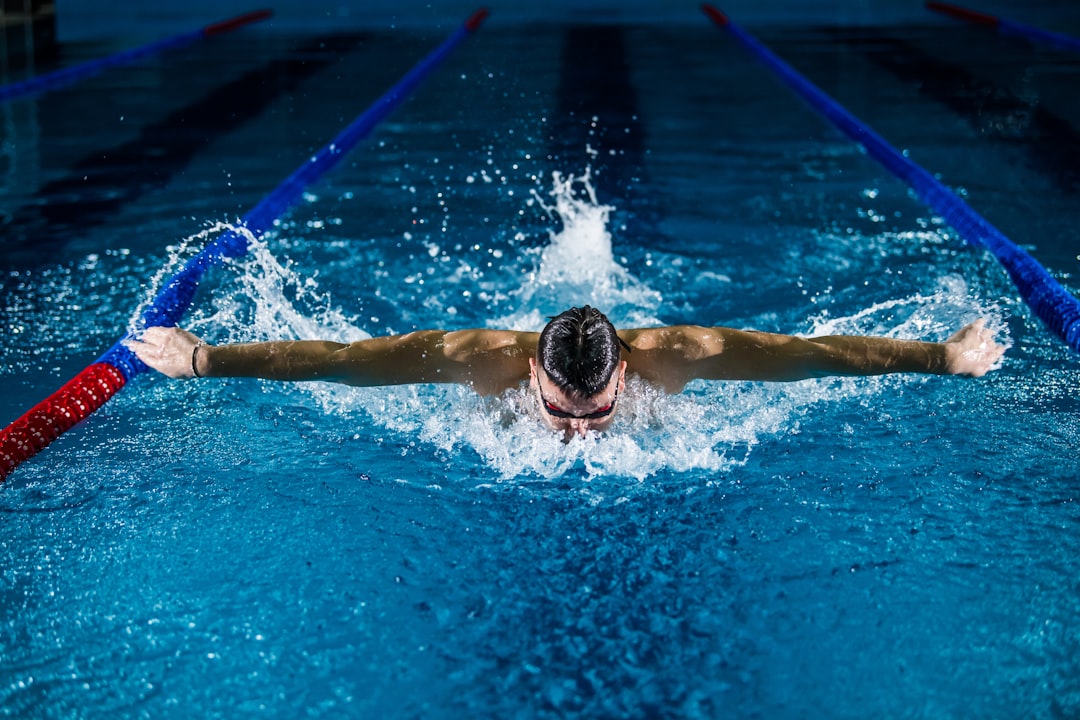
Pyramid Pull Buoy Swim: 100–400m Ascending and Descending Set
Session Overview
A pull buoy pyramid (100–200–300–400–300–200–100m) that progressively builds then reduces upper body load, improving arm endurance, pull strength and the ability to maintain stroke rate as fatigue accumulates — all critical for a strong swim leg when arms tire mid-race.
What You’ll Need
- Pull buoy (essential)
- Swim paddles — optional, increases resistance and power demand significantly
- Goggles and swim cap
- Pool lane
Warm-Up (10 minutes)
Swim 400m easy freestyle without pull buoy, focusing on hip rotation and catch position. Include 4 x 25m with deliberate high-elbow catch to prime lats and triceps for the pulling set ahead. Rest 30 seconds after the warm-up block.
Main Set
Perform the pull buoy pyramid with 20–30 seconds rest between each rep. Target steady CSS pace (Critical Swim Speed) or just below throughout:
- 100m pull buoy @ CSS pace — 20 seconds rest
- 200m pull buoy @ CSS pace — 20 seconds rest
- 300m pull buoy @ CSS pace — 30 seconds rest
- 400m pull buoy @ CSS pace — 45 seconds rest (the hardest rep)
- 300m pull buoy @ CSS pace — 30 seconds rest
- 200m pull buoy @ CSS pace — 20 seconds rest
- 100m pull buoy @ CSS or slightly faster to finish strong
Total main set: 1,600m. Full session including warm-up and cool-down: approximately 2,200–2,400m.
Cool-Down (5 minutes)
200m easy backstroke or relaxed freestyle without the pull buoy. Focus on controlled breathing and shoulder mobility. Do not skip the cool-down after sustained upper body effort.
Coaching Notes
- The 400m is the crux rep — if you hold target pace here, you have nailed the session.
- Position the pull buoy between your thighs, not ankles, for the most realistic body position in the water.
- Adding paddles significantly increases load — only use them if your shoulder health is robust.
- Beginner modification: shorten to 50–100–200–100–50m for a reduced pyramid.
- Watch for asymmetry as fatigue sets in — a lopsided catch or one-sided breathing is a common sign you need more recovery between reps.
You Might Also Like

Training at your own risk. The information provided is for general guidance only and is not a substitute for professional medical advice. Please consult a doctor before starting any new exercise programme, especially if you have any pre-existing health conditions.