
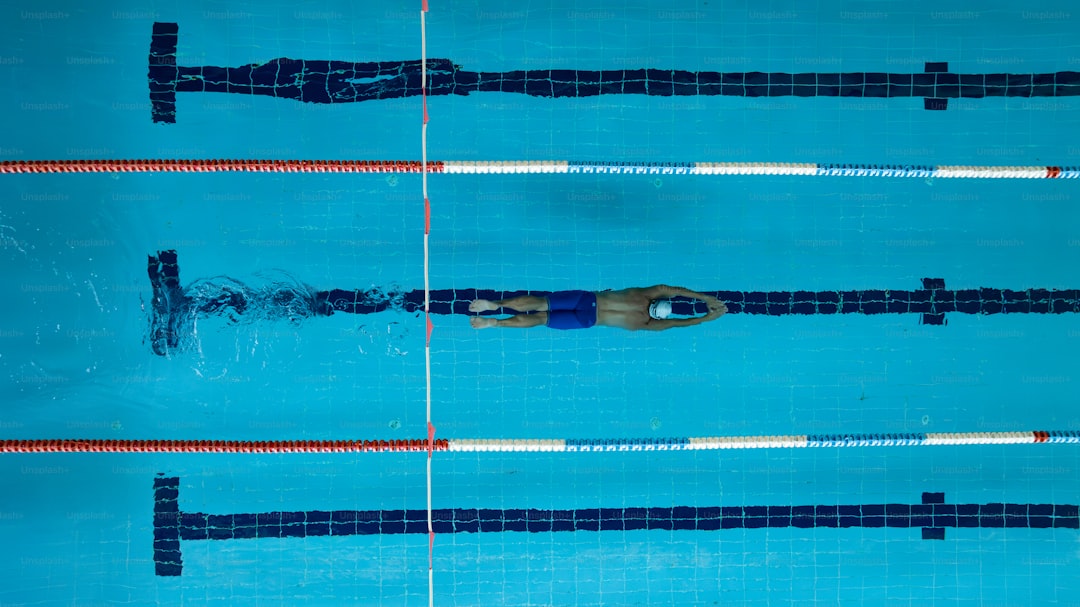
Pool 750m Sprint Triathlon Race Simulation: Warm-Up, Race Effort and Cool-Down
Session Overview
This pool session simulates the full 750m sprint triathlon swim from warm-up to race effort to cool-down, entirely in the pool. Unlike an open water practice, you control the exact pacing and distance, making this ideal for dialling in race pace, practising breathing patterns under pressure, and building confidence before a sprint tri. It’s a 45-minute session that works for both pool swimmers preparing for their first sprint and experienced triathletes who want structured race pace work in a controlled environment.
What You’ll Need
- 25m or 50m pool
- Swim cap and goggles
- Waterproof watch with lap counter
- Optional: pull buoy and paddles for warm-up drills
Warm-Up (10 minutes)
Swim 400m easy at a steady aerobic pace, mixing freestyle with 4 × 25m catch-up drill to establish your stroke. Rest 20 seconds every 100m. The goal is to arrive at the main set feeling loose and warm, not fatigued — don’t push the warm-up.
Main Set
The main set replicates the three distinct phases of a sprint triathlon swim start: the chaotic first 200m where pace is naturally elevated, the middle section where you settle into a sustainable rhythm, and the final approach where you build back toward race effort.
- 200m at race effort — go out hard as you would at a mass start. This should feel like 85–90% effort. Note your split.
- 15 seconds rest (simulating the slight breathing space you get after the initial surge).
- 350m at controlled race pace — sustainable but purposeful, roughly 80–85% effort. Focus on sighting every 6–8 strokes as you would in open water, even in the pool.
- No rest — straight into:
- 200m build to finish — accelerate through the final 200m, reaching near-maximum effort for the last 50m. This mirrors the push into the swim exit in a race.
- Record your total time for the 750m block. This is your pool race simulation benchmark.
Cool-Down (10 minutes)
Swim 300m very easy — mix backstroke and easy freestyle, focusing on slow, controlled breathing. This flushes lactate from the session and brings your heart rate back to a resting zone. Don’t skip this in the rush to exit the pool.
Coaching Notes
- Practice bilateral breathing (every 3 strokes) during the middle 350m section. Race day adrenaline pushes many athletes to breathe every 2 strokes, which elevates effort unnecessarily — training bilateral breathing creates a good default pattern.
- Don’t panic in the first 200m. In a race, it feels much harder than the pool because of the cold water, wetsuit, and physical contact. Practise slowing your stroke rate in the first 50m of the simulation to build this habit.
- Track your total 750m time across the season. Improvement of 20–30 seconds over a 12-week period is realistic with regular structured swim training.
- RPE: the overall session should average 7–8/10. The first 200m reaches 9/10; the middle 350m drops to 7/10; the final 200m builds back to 9/10.
You Might Also Like
Training at your own risk. The information provided is for general guidance only and is not a substitute for professional medical advice. Please consult a doctor before starting any new exercise programme, especially if you have any pre-existing health conditions.