
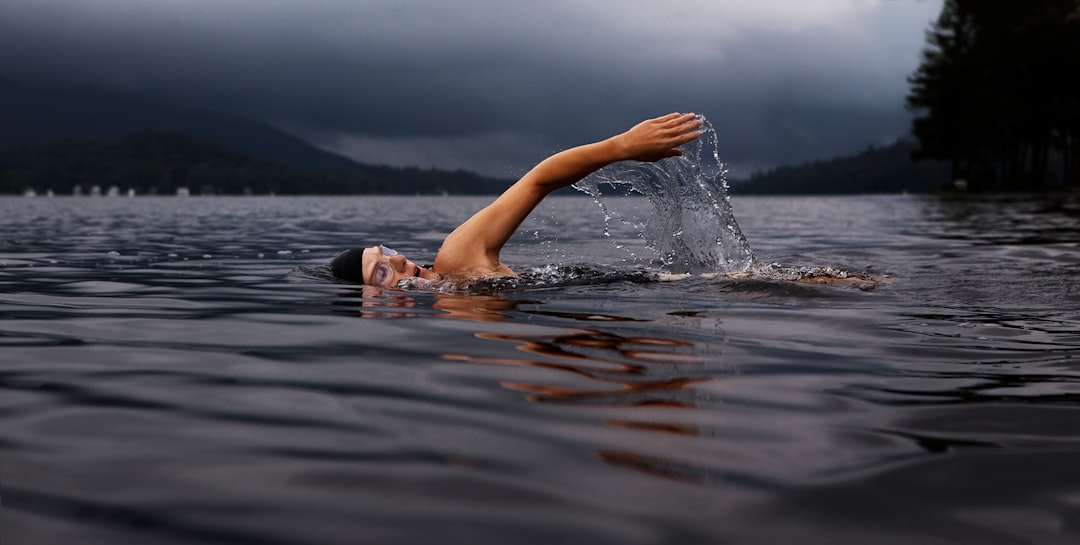
Open Water Two-Point Navigation Drill Session
Session Overview
This targeted open-water technique session develops two-point navigation — sighting between two fixed landmarks to swim in a straight line rather than drifting off course. Poor sighting is one of the most common race-day errors, adding hundreds of metres to your swim. Best done at a lake, reservoir, or calm coastal venue with two visible landmarks or buoys 300–500m apart.
What You’ll Need
- Open water venue with two visible landmarks or buoys
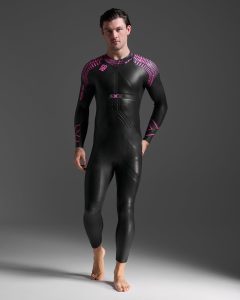
- Wetsuit (depending on water temperature)
- Open water goggles with UV tinting
- Safety tow float
- GPS watch (optional — to review your swim line post-session)
Warm-Up (10 minutes)
10 minutes easy freestyle to acclimatise to the water temperature. Practice three sighting methods: full-head lift (Tarzan), front-quadrant peek (minimal drag), and a quick half-lift within a bilateral breathing pattern. Also identify any current or drift in the water — you’ll compensate for this in your navigation during the main set.
Main Set
Identify two fixed landmarks 300–500m apart. Swim directly between them, using two-point alignment: sight landmark A ahead, swim towards it, then briefly check landmark B behind you to confirm you’re on a straight line. The goal is to cover the shortest possible distance between the two points.
- Set 1 — Free navigation: 3 lengths between the two points with no constraints on sighting frequency. Note how straight your line feels (GPS confirms this)
- Set 2 — Restricted sighting: Sight only every 8–12 strokes. Use peripheral vision and water feel between sights to hold your line
- Set 3 — Drafting practice: Swim behind a training partner and use them as your navigation reference. Stay close without touching feet. 3 lengths
- Set 4 — Race simulation: Swim the full course at race pace, sighting every 6–8 strokes, prioritising both speed and accuracy simultaneously
Cool-Down (10 minutes)
Easy 200m swim back to shore, focusing on a long catch and relaxed kick. Review your GPS track if available — this provides objective data on exactly how straight each set was.
Coaching Notes
- Choose two landmarks on opposite sides of your swim line (e.g., a tree and a distant church tower) — this gives you a reference axis to track along
- Common mistake: lifting your head too high and too long — each sight should take less than half a second
- If you consistently drift to one side, your dominant arm is pulling harder — address bilateral balance in pool sessions
- In races, always use two landmarks: one close (50m ahead) and one distant (the actual buoy) to triangulate your position accurately
You Might Also Like




Training at your own risk. The information provided is for general guidance only and is not a substitute for professional medical advice. Please consult a doctor before starting any new exercise programme, especially if you have any pre-existing health conditions.