SRAM Rival AXS vs Shimano 105 Di2: Best Budget Electronic Groupset for Triathlon 2026
What to Look For
Electronic shifting used to mean a four-figure bill just for the gruppo. That changed when SRAM pushed fully wireless AXS technology down to Rival, and Shimano followed with a semi-wireless 105 Di2. Both now put 12-speed electronic shifting within reach of an age-group triathlete’s road or TT build — but they solve the “no wires” problem in genuinely different ways, and that difference affects setup, maintenance and long-term cost.
Key Features to Consider
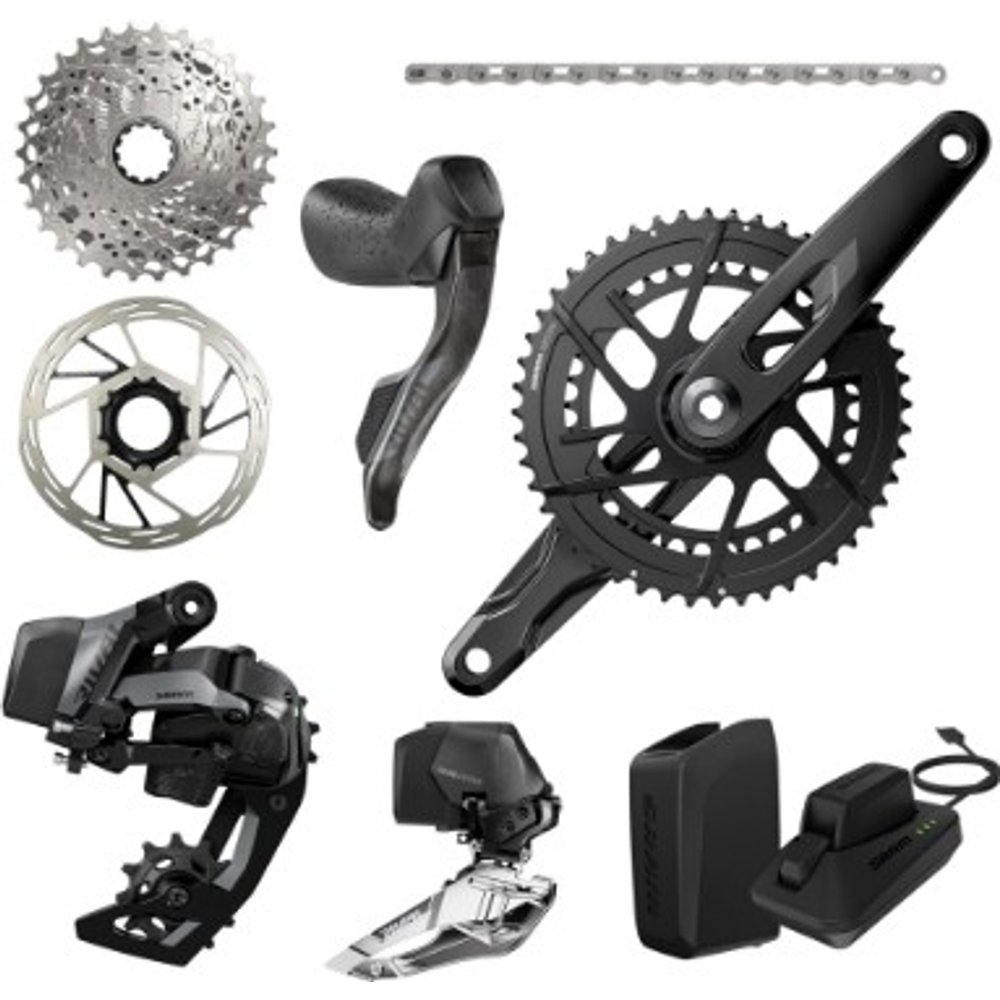
- Wireless architecture — SRAM Rival AXS is fully wireless: every shifter and derailleur has its own battery, with no wires anywhere in the system. Shimano 105 Di2 is semi-wireless — the shifters talk to the derailleurs wirelessly, but the front and rear derailleurs are still wired to a central battery, which needs a proper cable routing job at build time.
- Battery system — Rival’s derailleur batteries are the same swappable AXS units used across SRAM’s entire electronic range, so a spare costs little and swaps in seconds trackside. 105 Di2’s shifters run on two coin-cell batteries good for 3+ years, while a single internal battery (Shimano’s DN300, 3.7Wh) powers both derailleurs and needs charging via a cable.
- Speeds and gearing — Both are 12-speed. Rival is available as 1x or 2x, with 2026 spec options including an integrated power meter. 105 Di2 is 2x only, with 11-34T or 11-36T cassette options for hillier courses.
- Weight and feel — A complete 105 group weighs around 3,067g and shifts with the same crisp, near-Dura-Ace feel Shimano is known for. Rival’s 2026 update trims weight from the previous generation while keeping the same motors and switches as the pricier Force and Red groups, so shift quality doesn’t feel “entry level.”
Our Top Picks
Best for a wireless-only build: SRAM Rival AXS
If you want zero derailleur cables to route through your frame — a genuine advantage on a TT or tri-specific bike with internal storage compartments — Rival AXS is the simpler build. A complete 2x groupset officially retails from around £1,268 (non-power-meter spec); individual AXS components, like the derailleur/shifter kit below, can be bought and upgraded piece by piece.
Check price on Tredz — SRAM Rival AXS E1 2X component kit, £146.00 at time of writing (RRP £157.00)
Best value upgrade path: Shimano 105 Di2
105 Di2’s wired derailleurs mean a slightly fussier install, but you inherit decades of Shimano ergonomics and hood shape that many triathletes already know from mechanical 105 or Ultegra. It’s also the easier groupset to find compatible wheels, cranks and bottom brackets for, since Shimano’s standards are everywhere.
Check price on Tredz — Shimano ST-R7170 105 Di2 Hydraulic Disc STI shift/brake lever set, £199.00 at time of writing (RRP £349.99)
Buying Tips
- Price a complete groupset, not just the shifters — cranksets, cassettes, chains and calipers are sold separately by both brands and add up fast.
- If you’re retrofitting an existing frame, check your frame’s cable routing supports 105 Di2’s wired derailleurs before committing — some aero tri frames only have ports sized for wireless setups.
- Buy derailleurs and shifters from the same generation — SRAM AXS components pair across tiers, but mixing Di2 generations on Shimano can cause compatibility headaches.
Care and Maintenance
Charge AXS batteries every 2-4 weeks of regular riding and keep a spare in your kit bag for race weekends — they swap in seconds. For 105 Di2, top up the central battery via the E-Tube app before it drops below 25%, and replace shifter coin cells as a pair when one starts flagging low, even if the other still shows charge.
This article contains affiliate links. If you purchase through these links, we may earn a small commission at no extra cost to you. This helps support The Triathlete.