Merida Time Warp Tri Limited 2025 Review
What to Look For
A purpose-built triathlon bike gives you aerodynamic advantages no road bike can match — but only if the fit, frame geometry and groupset are right for the distance you are racing. The Merida Time Warp Tri Limited 2025 sits at the top end of the mainstream market, offering race-ready specification at a price below the flagship bikes from Cervélo and Trek. Here is our full assessment.
Key Features to Consider
- Frame aerodynamics — Deep-section, teardrop tube profiles and fully internal cable routing are the foundation of any race-competitive tri frame. Look for clean integration between the fork, head tube and cockpit.
- Cockpit adjustability — Your aerobar position needs to replicate your fit position exactly. Wide ranges of stem height, extension reach and pad width adjustment allow a true dialled-in fit.
- Electronic groupset — Shifting from the aerobars under fatigue is far easier with electronic gearing. On a technically demanding 90km bike leg, mechanical cable stretch or friction is the last thing you want.
- Storage integration — IRONMAN and 70.3 athletes need accessible nutrition. Integrated front-end storage and down tube bento boxes reduce aerodynamic drag versus external bag solutions.
Our Top Picks
Best Overall: Merida Time Warp Tri Limited 2025
The Merida Time Warp Tri Limited is one of the most accomplished triathlon bikes available at its price point. The monocoque carbon frame uses fully internal cable routing throughout, and the integrated cockpit system reduces frontal drag significantly compared to traditional clamped aerobar setups. Powered by a Shimano Ultegra Di2 electronic groupset, you get crisp, consistent shifting from the extensions with minimal effort — a real advantage on undulating courses or when your hands are tired after two hours in the aero position. The geometry delivers a genuine triathlon-specific fit with a forward saddle position and low-stack front end, and Merida’s wide range of seatpost angle and extension adjustment means most riders can achieve their fit data directly on the stock cockpit. At £6,750 it is a serious investment, but one that benchmarks competitively against bikes costing considerably more from rival manufacturers.
Best Budget Starting Point: Look KEO Classic 3 Pedals
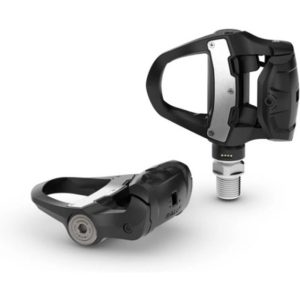
If you are building your triathlon bike setup from scratch, quality pedals are one of the highest-value upgrades you can make. The Look KEO Classic 3 offers the same reliable engagement mechanism and 9° of float as the more expensive Max variants at an entry-level price — a logical first investment before committing to a race-specific frame.
The Look KEO Classic 3 has sold out at Tredz; the current Look KEO 2 Max Carbon Pedals with KEO Grip Cleats are £97.99. Check price on Tredz
Best Premium Pedal Upgrade: Shimano PD-R7000 105 SPD-SL
Pairing the Time Warp with quality Shimano-compatible pedals makes sense if your tri shoes use SPD-SL cleats. The PD-R7000 105 offers a wide platform, carbon reinforcement and 6° of float — a proven, race-reliable pedal that complements Shimano Di2 groupsets seamlessly.
Buying Tips
- Always invest in a professional bike fit before purchasing a triathlon-specific frame — getting your position right matters more than any component specification
- Electronic groupsets are genuinely worth the premium for long-course racing; shifting under fatigue is significantly easier than with mechanical gearing
- Check whether your bike includes aerobar extensions in the listed price, or whether they are sold separately — this varies by build specification
Care and Maintenance
After each ride, wipe down the frame with a damp cloth and avoid high-pressure water near the integrated cable ports. Lubricate your chain after wet rides and service Di2 battery contacts every six months. Before race day, check all quick-release skewers, tyre pressures and aerobar clamp bolts are correctly torqued.
This article contains affiliate links. If you purchase through these links, we may earn a small commission at no extra cost to you. This helps support The Triathlete.