
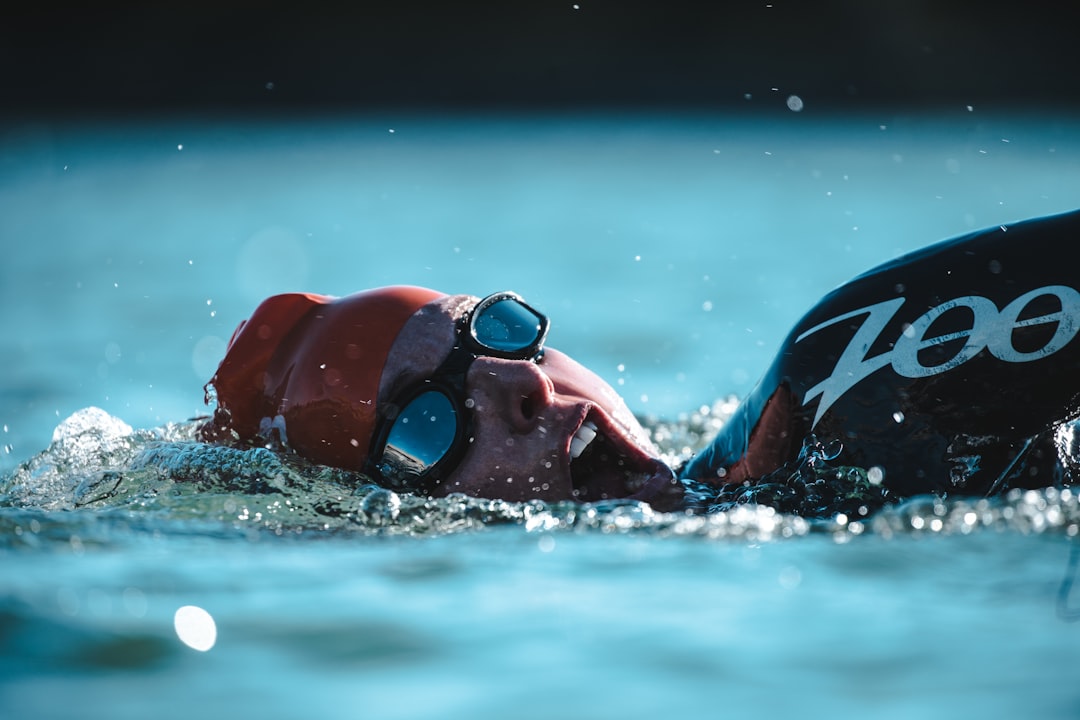
Open Water 6 × 250m Intervals: Race Pace Build Session
Session Overview
This open water session uses 6 × 250m intervals to develop the pacing ability triathletes need to manage the surge-and-settle rhythm of a race swim. Unlike long continuous efforts, intervals teach you to lift intensity, settle back, and repeat — a skill that is almost impossible to develop in pool training alone.
What You’ll Need
- Open water venue: lake, reservoir, or calm sea
- Wetsuit (recommended if water below 19°C)
- Tow float for safety — mandatory for solo swimmers
- GPS watch in open water swim mode for distance tracking
- Swim buddy or lifeguard supervision strongly recommended
Warm-Up (10 minutes)
Enter the water and swim easy for 10 minutes at RPE 3–4. Practice sighting every 6–8 strokes from the start — treat this as a non-negotiable habit. At the end of the warm-up, do 4 × 20-second build surges to prime your system for the main set.
Main Set
Swim 6 × 250m at race pace (RPE 7–8), with 45–60 seconds rest between each rep. Use buoys, the shoreline, or fixed landmarks to mark your 250m course. The key is holding consistent splits — not sprinting rep 1 and dying on rep 4.
- Reps 1–2: Controlled race pace at RPE 7, focus on sighting and stroke rate
- Reps 3–4: Hold the same effort — it may feel harder as fatigue builds; breathe bilaterally
- Reps 5–6: Maintain pace; if strong, lift the final 50m of rep 6 to race-start intensity (RPE 9)
- Rest: 45–60 seconds between each rep — tread water or hold a buoy
Cool-Down (10 minutes)
Swim 200m easy at RPE 2–3 with long, relaxed strokes and exaggerated hip rotation. Finish by practising your beach or pool exit — the swim-to-run transition is its own skill worth rehearsing every open water session.
Coaching Notes
- Sight every 6–8 strokes throughout. Frequent sighting corrects drift before it becomes costly.
- If GPS consistently shows less than 250m, you are drifting off course — increase sighting frequency.
- Make it easier: extend rest to 90 seconds or reduce to 4 reps. Make it harder: shorten rest to 30 seconds.
- Never swim alone in open water. A tow float is not a substitute for a swim buddy or lifeguard presence.
- RPE 7–8 in open water often feels harder than pool at equivalent speed — wetsuit buoyancy, current, and temperature all play a role.
You Might Also Like


Training at your own risk. The information provided is for general guidance only and is not a substitute for professional medical advice. Please consult a doctor before starting any new exercise programme, especially if you have any pre-existing health conditions.