
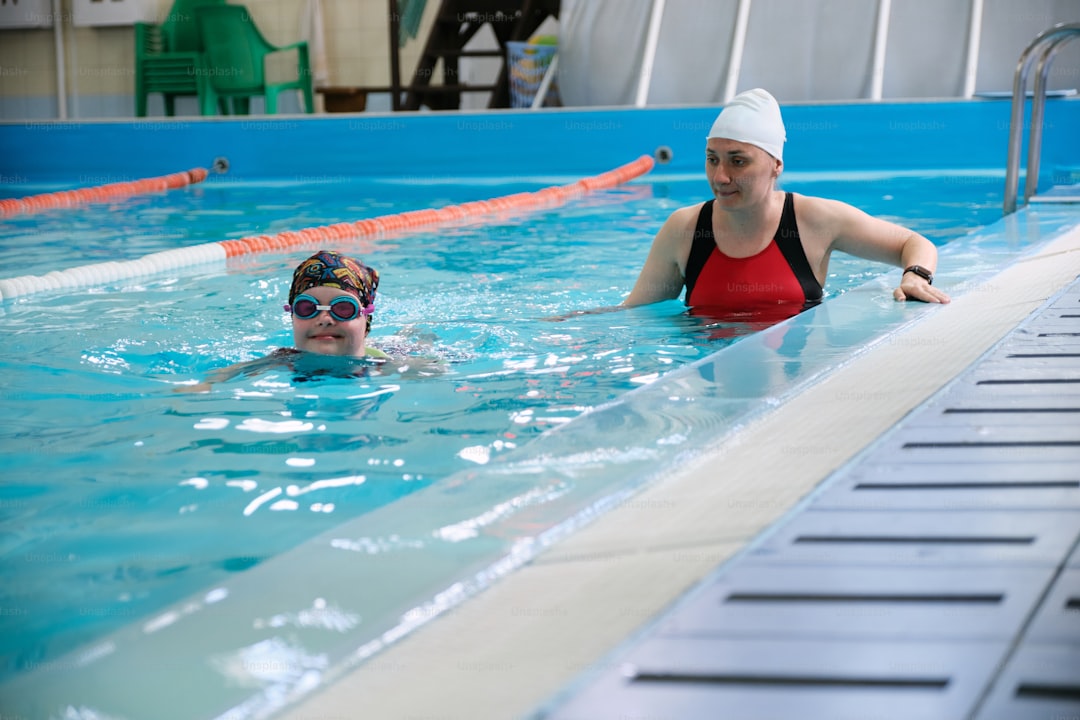
Technique-Focused Recovery Swim: Low-Intensity Drills
Session Overview
This 45-minute low-intensity recovery swim focuses on technique refinement rather than fitness gains. It’s ideal for the day after a hard session when your body needs active recovery but your mind wants purposeful movement in the pool.
What You’ll Need
- Access to a 25m or 50m swimming pool
- Kickboard
- Pull buoy
- Swim fins (optional, for the warm-up)
Warm-Up (10 minutes)
4 x 50m easy freestyle, focusing on long, smooth strokes. Rest 15 seconds between reps. Keep effort at RPE 2–3 — if you’re breathing hard, you’re going too fast. The goal is to arrive at the main set feeling loose, not tired.
Main Set
All reps are technique-focused at RPE 2–3. Prioritise form over pace throughout.
- 4 x 50m catch-up drill — let one arm fully extend forward before the other begins its pull. Rest 20 seconds.
- 4 x 50m fingertip drag — drag your fingertips along the water surface during recovery to promote a high elbow. Rest 20 seconds.
- 200m pull buoy only — focus on long bodyline and hip rotation. No kick at all.
- 4 x 25m single-arm drill — alternate sides each length. Rest 15 seconds.
- 100m backstroke — for shoulder decompression and cross-training variety.
Cool-Down (5 minutes)
200m very easy freestyle, no drills. Let your stroke flow naturally, applying the technique cues from the main set. Focus on feeling efficient rather than fast.
Coaching Notes
- This is a recovery session — if any rep feels genuinely hard, stop and rest longer.
- The catch-up drill exaggerates timing and can feel unnatural at first; this is normal.
- Fingertip drag is most useful if your elbow tends to drop during the recovery phase.
- Scale up by adding 100m to each drill block; scale down by halving the reps.
- Heart rate should stay in Zone 1 throughout — treat it like an active stretching session.
You Might Also Like

Training at your own risk. The information provided is for general guidance only and is not a substitute for professional medical advice. Please consult a doctor before starting any new exercise programme, especially if you have any pre-existing health conditions.