
Open Water Continuous Build Swim: 30-Minute Non-Stop Effort
Session Overview
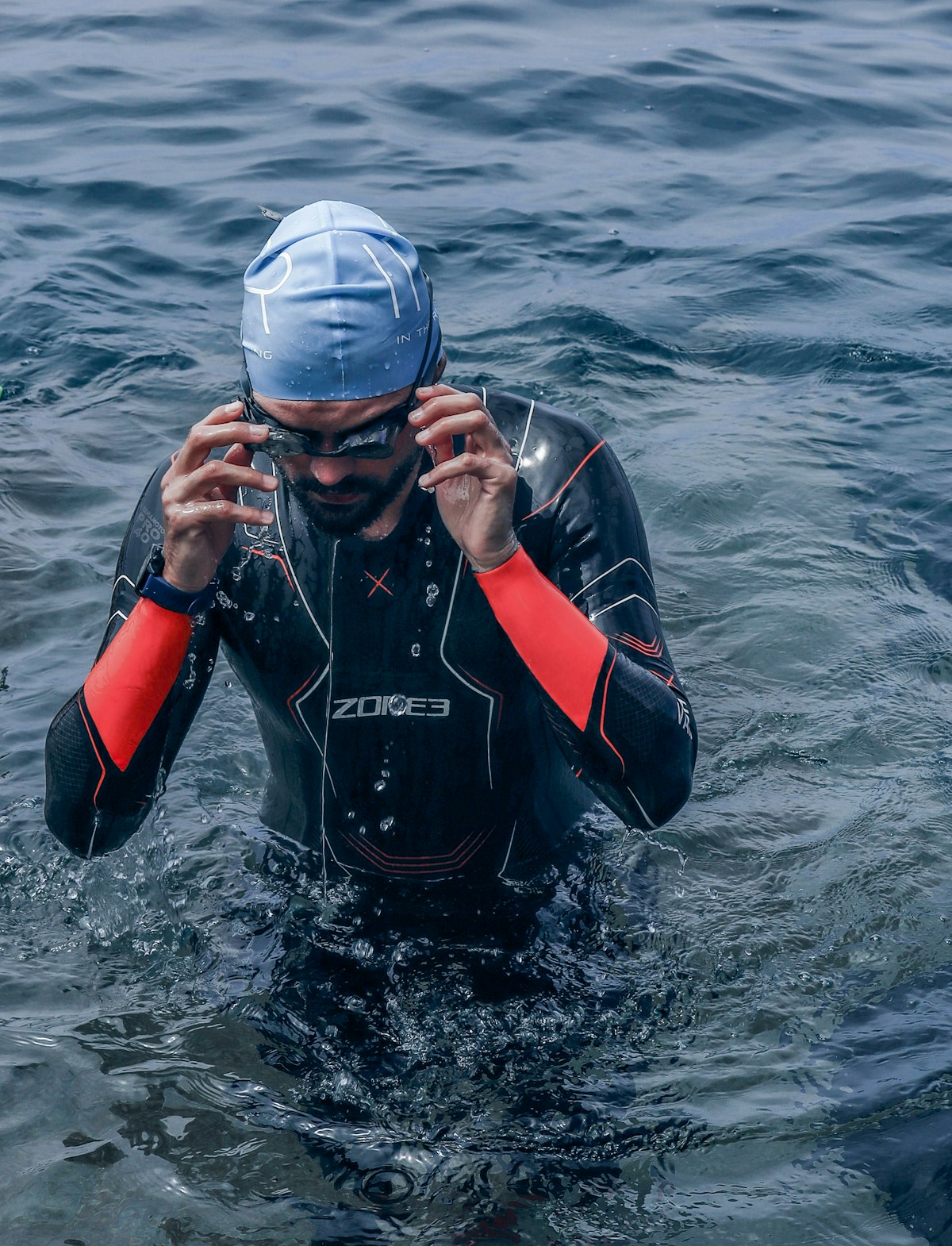
This beginner-friendly 30-minute open water session builds confidence and endurance for continuous non-stop swimming outdoors. Rather than focusing on speed, the goal is maintaining a relaxed, efficient stroke for the full duration without stopping — a skill that translates directly to a calmer, more controlled triathlon swim leg.
What You’ll Need
- Triathlon wetsuit — strongly recommended for UK open water, particularly early in the season
- Bright swim cap for visibility — a neon yellow or orange cap makes you easy to spot from shore
- Open water safety buoy (brightly coloured tow float) — non-negotiable for safety
- A swimming partner or supervised venue — never swim open water alone
- GPS watch with open water swim mode (optional but useful for tracking distance and route)
Warm-Up (5 minutes)
Wade in gradually and spend 2–3 minutes acclimatising before putting your face in the water. Take slow, controlled breaths and allow your heart rate to settle. Swim gently for 2 minutes at a very easy pace — this is acclimatisation, not the workout. Cold water shock is real and causes involuntary gasping; slow acclimatisation prevents it.
Main Set (22 minutes)
Swim a steady, continuous effort for 22 minutes without stopping. Use a simple course you can navigate confidently — a triangular loop between visible buoys is ideal. Focus on long, controlled strokes and consistent breathing rather than pace.
- Minutes 0–7: Very easy pace (Zone 1) — settle into a rhythm, breathe every 3 strokes, sight every 8–10 strokes
- Minutes 7–17: Moderate steady pace (Zone 2) — build effort slightly, maintain stroke length and rhythm
- Minutes 17–22: Return to easy pace — bring effort back down, finish relaxed
Cool-Down (3 minutes)
Reduce to very easy backstroke or a relaxed catch-up drill for 2 minutes, then wade out of the water carefully. Remove your wetsuit promptly in cool conditions and put on a warm layer immediately. Stretch the shoulders and neck — open water swimming uses more neck rotation for sighting than pool sessions.
Coaching Notes
- Sight every 8–10 strokes: lift eyes just above the waterline to spot your buoy. Any higher wastes energy and sinks the legs.
- Common mistake: sprinting the first 50m then panicking when out of breath — always start 20% slower than you think you need to
- If you feel anxious or cold, roll onto your back and float until breathing settles before continuing
- Progress this session weekly by adding 5 minutes until you can swim 45+ minutes non-stop without stopping
You Might Also Like




Training at your own risk. The information provided is for general guidance only and is not a substitute for professional medical advice. Please consult a doctor before starting any new exercise programme, especially if you have any pre-existing health conditions.