
Indoor Rowing Cross-Training Session for Triathletes
Session Overview
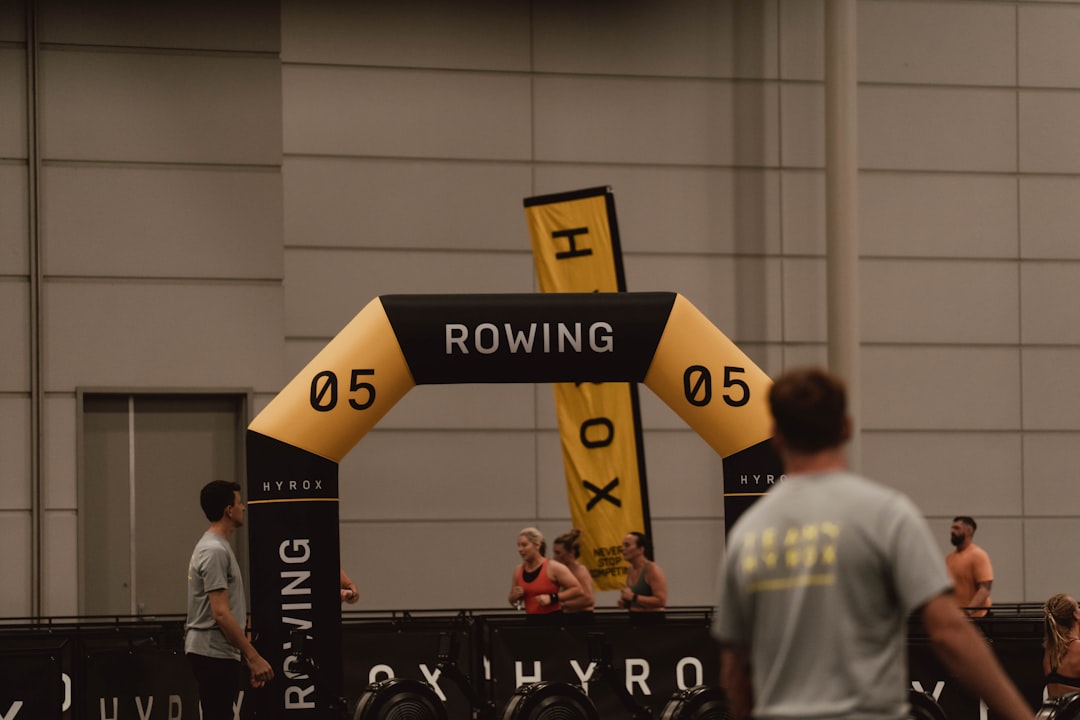
Rowing is one of the few cross-training options that genuinely rivals swim/bike/run for full-body aerobic demand, while putting almost no impact through your joints. It’s a useful off-season addition if you’re managing a running niggle, want extra aerobic volume without extra running load, or simply want variety from the usual three disciplines.
What You’ll Need
- An indoor rowing machine (rowing erg or a folding water rower)
- A way to track split times or watts if your machine has a monitor
Warm-Up (8 minutes)
Row easy for 5 minutes focusing purely on the sequence — legs, then back, then arms on the drive; arms, then back, then legs on the recovery. Follow with 3 x 20 strokes at a slightly higher rate to open the legs up.
Main Set (27 minutes)
Alternate steady rowing blocks with short technique resets, keeping the overall effort aerobic rather than all-out.
- 3 x 8 minutes at a steady, conversational effort (roughly 65-75% of max heart rate), with 90 seconds of very easy rowing between each block.
- Keep your stroke rate controlled — around 22-26 strokes per minute is a reasonable steady-state target for most triathletes new to rowing.
- Focus on driving with your legs first on every stroke — the most common beginner mistake is pulling with the arms and back too early.
Cool-Down (10 minutes)
5 minutes of very easy rowing, followed by hip flexor, hamstring and lower-back stretches — rowing loads the posterior chain and lower back differently to running or cycling, and it’s worth stretching accordingly.
Coaching Notes
- Technique matters more than effort here — poor sequencing (pulling with your arms too early) wastes energy and can aggravate your lower back.
- Scaling down: reduce to 2 x 8-minute blocks if you’re new to rowing and building tolerance for the movement pattern.
- Scaling up: add a fourth 8-minute block, or increase stroke rate to 26-28spm on the final block for a stronger aerobic finish.
- RPE guidance: steady blocks should feel like a 5-6/10 effort — comfortably hard, not a time-trial pace.
You Might Also Like



Training at your own risk. The information provided is for general guidance only and is not a substitute for professional medical advice. Please consult a doctor before starting any new exercise programme, especially if you have any pre-existing health conditions.