
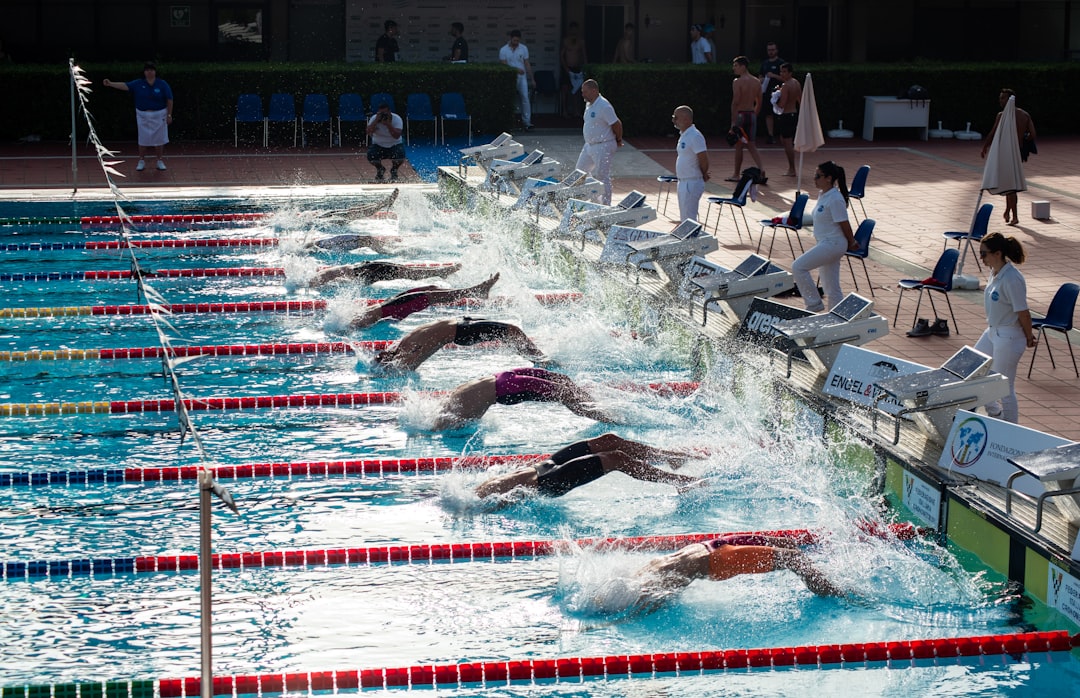
CSS Descending Ladder Swim: 200/400/600/800 Session
Session Overview
This 60-minute pool session builds critical swim speed and endurance through a descending CSS ladder — four intervals of 200, 400, 600, and 800 metres, all held at or just above your critical swim speed. It trains both pace control and the ability to sustain threshold effort when tired, making it ideal for intermediate triathletes targeting Olympic and 70.3 distances.
What You’ll Need
- Pool lane (25m or 50m)
- Pace clock or waterproof GPS watch
- Pull buoy (optional, for warm-up variety)
Warm-Up (10 minutes)
400m easy freestyle at conversational effort, alternating 50m freestyle with 50m backstroke. Then 4 × 25m build swims, starting at 60% effort and finishing at 90%. Rest 15 seconds between each build.
Main Set
The ladder descends in distance but each interval is held at CSS pace (the pace you could sustain for a 1500m time trial). Rest periods increase to match: longer swims get more recovery so you hit pace on every interval.
- 800m at CSS pace — rest 90 seconds
- 600m at CSS pace — rest 75 seconds
- 400m at CSS pace — rest 60 seconds
- 200m at CSS pace — rest 45 seconds
Cool-Down (10 minutes)
300m easy choice of stroke — no pace targets, just flush the lactate. Focus on long, slow strokes and relaxed breathing. Optional: 100m backstroke to open up the shoulders.
Coaching Notes
- Don’t know your CSS pace? Swim a 400m and 200m time trial, then use the formula: (400m time – 200m time) × 0.01667 gives your pace per 100m.
- The 800m is the most important interval — resist going out too hard or you’ll blow up by the 600m.
- Make it easier: add 15 seconds rest after each interval and target 5 seconds per 100m slower than CSS.
- Make it harder: reverse the order (200 first) and try to hold negative splits through the ladder.
- Target RPE 7–8 throughout the main set — threshold effort, not all-out.
You Might Also Like





Training at your own risk. The information provided is for general guidance only and is not a substitute for professional medical advice. Please consult a doctor before starting any new exercise programme, especially if you have any pre-existing health conditions.