
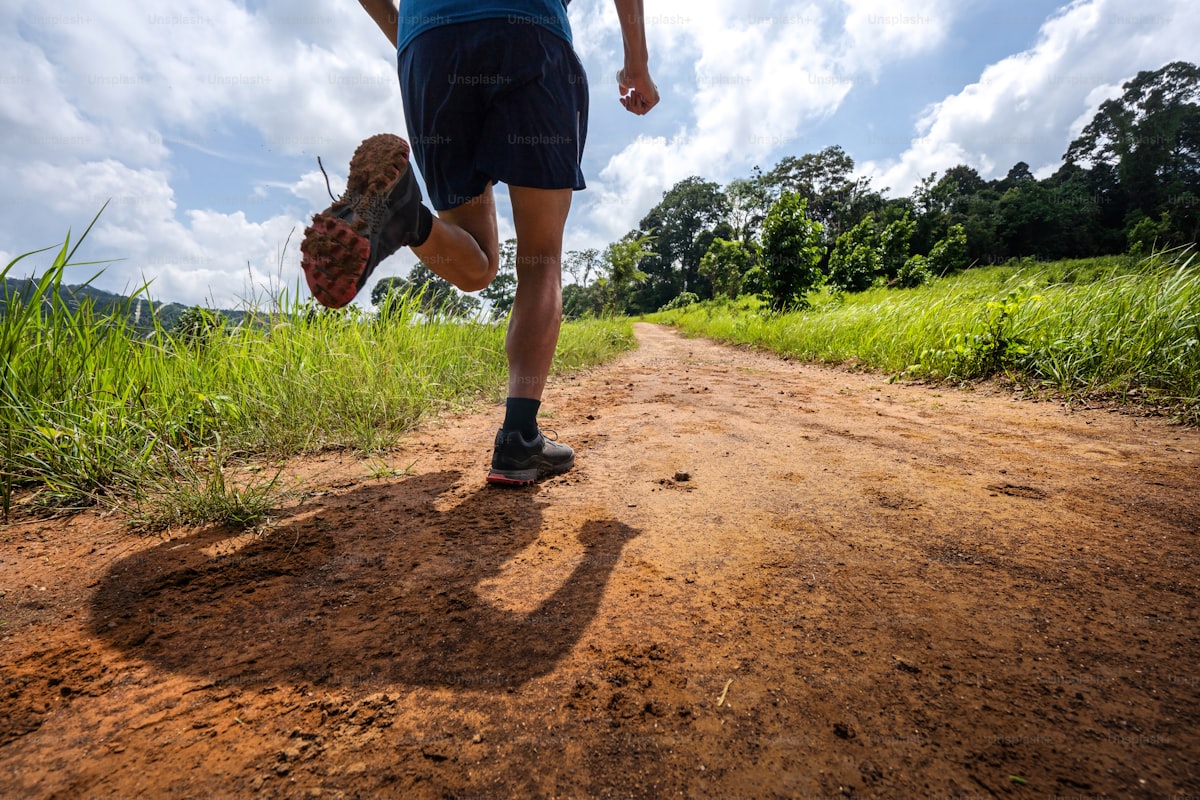
Cross-Country Run: 60-Minute Off-Road Terrain Adaptation Session
Session Overview
This 60-minute off-road run session develops muscular strength, ankle stability, and the mental toughness that road-only training cannot replicate. Running on uneven terrain activates stabiliser muscles in the hips, glutes, and ankles, reducing injury risk over a long season while building power that transfers directly to hilly triathlon run courses. Suitable for intermediate athletes looking to vary their training environment and build well-rounded running fitness beyond tarmac.
What You’ll Need
- Trail running shoes or well-cushioned road shoes with grip — not carbon-plate race shoes on uneven ground
- A local park, forest trail, or cross-country loop (ideally 2–4km per lap)
- GPS watch for time-based session targets
- Phone for safety on remote trails
Warm-Up (10 minutes)
10 minutes easy jog on flat or gently rolling terrain at RPE 3–4. Include 6 × 20-second activation drills: high knees, lateral shuffles, heel flicks, and ankle circles. Slow down deliberately on any wet or slippery sections — stability is more valuable than warm-up speed.
Main Set
The main set is effort-based rather than pace-based — pace is irrelevant on variable terrain. Use RPE to guide intensity. Focus on short, quick steps over rough ground rather than the long powerful strides that work on tarmac.
- 3 × 8-minute cross-country efforts at RPE 7, 2 minutes easy jog between each
- Each 8-minute block should include mixed terrain: grass, mud, gentle climb, and descent
- Optional: add 4 × 30-second fast hill surges at the end of the final block, walking back down between each
Cool-Down (10 minutes)
10 minutes easy jog, gradually slowing over the final 3 minutes to a walk. Return to flat ground or a running track for the cool-down to reduce the ankle load from sustained trail work. Follow with hip flexor stretches, calf stretches, and a brief glute stretch — trail running loads these muscles significantly harder than road running.
Coaching Notes
- Don’t check your pace — terrain-based running will always show much slower splits than road. Judge entirely by effort and breathing, not numbers.
- Common mistake: maintaining road pace through slippery or technical sections. Slow down on mud and wet roots — injury prevention takes absolute priority.
- Easier version: replace the 3 × 8-minute efforts with a continuous 40-minute easy cross-country run at RPE 4–5.
- This session works well once per week during the build phase — particularly effective in April and May to build the leg strength needed for summer racing on mixed terrain.
You Might Also Like




Training at your own risk. The information provided is for general guidance only and is not a substitute for professional medical advice. Please consult a doctor before starting any new exercise programme, especially if you have any pre-existing health conditions.