
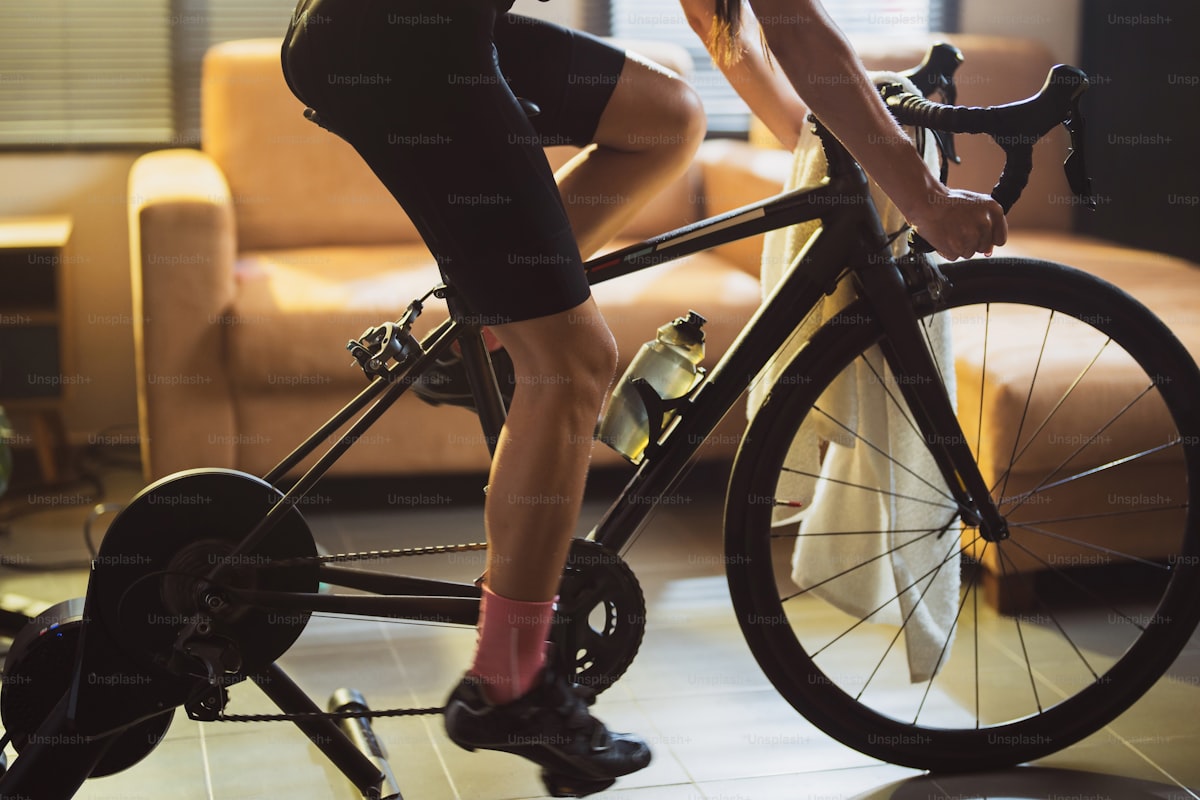
Single-Leg Turbo Drills: Build Pedalling Efficiency in 45 Minutes
Session Overview
Single-leg turbo drills isolate each leg independently to identify and correct pedalling imbalances, smooth your stroke, and build neuromuscular efficiency on the bike. This session is ideal for intermediate cyclists looking to improve power transfer and pedalling economy without adding more volume to their week.
What You’ll Need
- Turbo trainer or smart trainer
- Road or tri bike
- Fan for cooling
- Water bottle
- Optional: heart rate monitor or power meter
Warm-Up (10 minutes)
Spin easy at 85–90 rpm for 8 minutes at low resistance (Zone 1–2). Include 3 x 10-second leg speed bursts at high cadence (100+ rpm) to prime the neuromuscular system before drill work begins.
Main Set
The main set alternates between single-leg efforts and normal two-legged pedalling. Unclip or rest one foot on the frame during single-leg efforts. Focus on a smooth, circular motion — avoid the natural tendency to mash down through 6 o’clock.
- Left leg only — 30 seconds, then right leg only — 30 seconds, then both legs — 60 seconds. Repeat 4 times. (8 minutes total)
- 2-minute easy spin recovery
- Left leg only — 45 seconds, then right leg only — 45 seconds, then both legs — 90 seconds. Repeat 3 times. (10.5 minutes total)
- 2-minute easy spin recovery
- Left leg only — 60 seconds, right leg only — 60 seconds, both legs — 2 minutes. Repeat 2 times. (8 minutes total)
Cool-Down (5 minutes)
Spin both legs easy at 85–90 rpm for 5 minutes, reducing resistance progressively. Focus on relaxed shoulders and a smooth, fluid stroke to finish.
Coaching Notes
- The key feeling to aim for is scraping mud off the bottom of your shoe at 6 o’clock — this activates your hamstrings through the pull phase
- Most people find their weaker leg “clunks” rather than circles — this is completely normal at first
- Reduce resistance if you cannot maintain a smooth circular motion — quality beats resistance here
- RPE during single-leg efforts should be 5–6 out of 10; this is a technique session, not an interval workout
You Might Also Like


Training at your own risk. The information provided is for general guidance only and is not a substitute for professional medical advice. Please consult a doctor before starting any new exercise programme, especially if you have any pre-existing health conditions.