
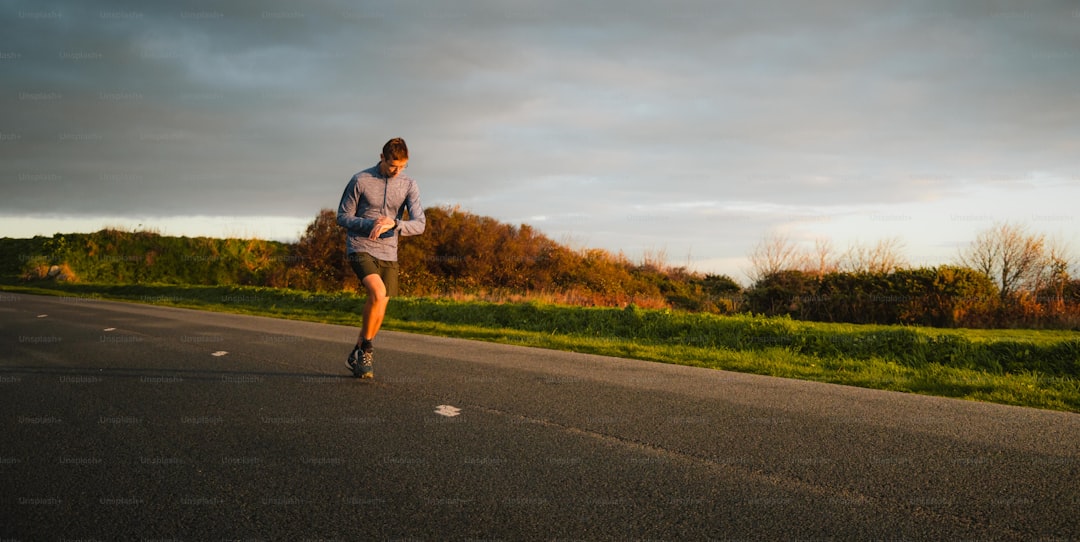
Sprint Finish 5km Run: Build Pace with a Fast Final Kilometre
Session Overview
This 35-minute run session trains your ability to finish fast — an underrated but race-defining skill. By practising a hard negative split with a genuinely fast final kilometre, you build both the physical capacity and the mental confidence to pass rivals in the closing stages of any race.
What You’ll Need
- GPS watch with pace feedback
- Flat or gently undulating route of at least 5km
- Race shoes or training shoes
Warm-Up (8 minutes)
8 minutes at easy conversational pace (Zone 1–2). Final 90 seconds: 3 x 15-second strides at 5km effort with 15 seconds walk between each. This recruits fast-twitch fibres before the main set.
Main Set
Run a continuous 5km with the following pace structure:
- First 1km — Easy-moderate (Zone 2–3, ~75% effort): Controlled start. Resist the urge to go too fast. Note your pace.
- Km 2–3 — Steady build (Zone 3–4, ~80–85% effort): Settle into a rhythm that’s comfortably uncomfortable. 30 seconds faster per km than your opening kilometre.
- Km 4 — Hard (Zone 4, ~88–90% effort): Push into the uncomfortable zone. Maintain form: tall posture, relaxed shoulders, quick turnover.
- Final km — Race effort (Zone 4–5, 90–95%): Empty the tank. This is the kilometre that matters. Count your arm swings if you need to keep focus.
Cool-Down (5 minutes)
5 minutes very easy walking or slow jogging. Follow with 5 minutes of hip flexor and quad stretches while your heart rate returns to resting.
Coaching Notes
- Log your split times. You should see each kilometre faster than the last. If km 4 or 5 is slower than km 3, you went too hard in the early section.
- This trains your brain as much as your legs — practising the decision to push when fatigued is as important as the physical output.
- Aim to repeat this session fortnightly. Your final kilometre pace will improve measurably within 4–6 weeks.
- RPE progression target: 6 → 7 → 8 → 9 across the four kilometres.
You Might Also Like


Training at your own risk. The information provided is for general guidance only and is not a substitute for professional medical advice. Please consult a doctor before starting any new exercise programme, especially if you have any pre-existing health conditions.