
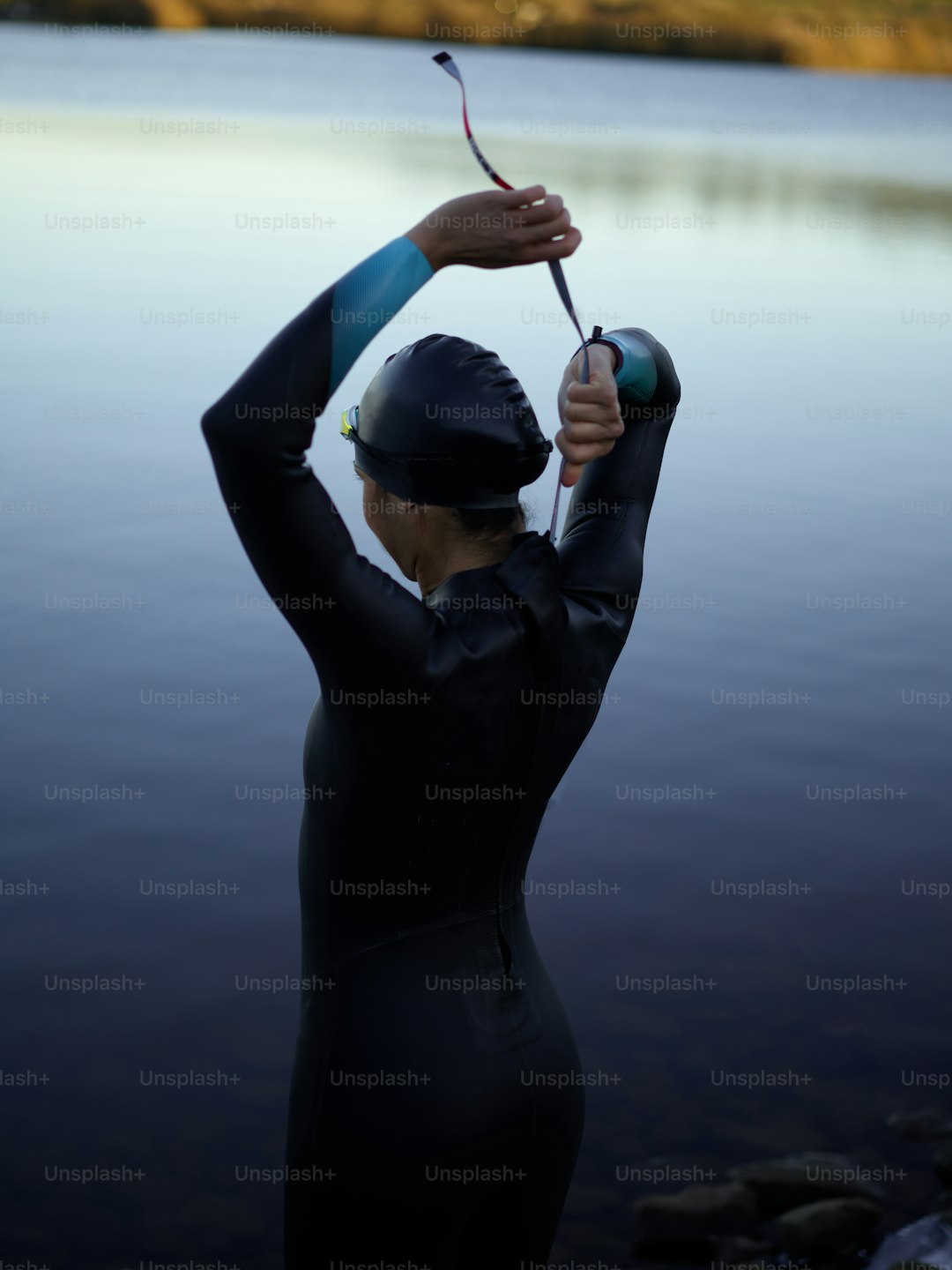
Open Water Dolphin Dive Entry Practice Session
Session Overview
This 30-minute open water technique session develops the dolphin dive — the fastest technique for entering and exiting shallow water during a beach-start race. Used correctly, dolphin diving through ankle-to-chest-deep water is significantly faster than wading or attempting to swim before depth allows. Practise in a safe, supervised environment in calm water before attempting in race conditions.
What You’ll Need
- Shallow open water entry — a beach or lake shore with a gradual sandy or smooth rocky bottom
- Wetsuit if you plan to race in one (always practise in race kit)
- Swim cap and goggles
- Training partner — never practise open water drills alone
Warm-Up (5 minutes)
Acclimatise to the water temperature with 5 minutes of wading and easy entry. Adjust your wetsuit if wearing one, check your goggles seal, and practise a basic gentle walk into the water. Get comfortable with the footing — you need to be confident in the bottom conditions before diving.
Main Set
The dolphin dive has three phases: entry, press, and resurface. Practise each phase before combining them.
- Entry drills — 5 reps: From standing in ankle-deep water, jump forward with hands pressed together above your head. Enter headfirst at a shallow 20–30° angle. Focus on a clean streamlined hand entry — not too steep (you’ll crash the bottom) and not flat (you’ll skip off the surface).
- Press and resurface — 5 reps: From the entry position, press both hands into the bottom and arch your back to push yourself forward and upward to a standing position. The goal is forward momentum, not depth. Keep the movement continuous — entry, press, resurface, step forward.
- Full sequence — 8 reps: Combine entry, press, and resurface in a continuous sequence, moving from ankle-deep toward chest-deep water. At chest depth, immediately transition into full front crawl.
- Beach start simulation — 3 reps: Start 10–15m up the beach, sprint into the water, dolphin dive through the shallows, and transition to swimming as fast as possible. Time each attempt and aim to improve your entry-to-swimming time.
Cool-Down (5 minutes)
Swim 200m easy away from shore and back at a relaxed pace. Focus on long, smooth strokes without pressure. Exit slowly — your legs will be tired from the sprinting and diving.
Coaching Notes
- Never practise dolphin dives in murky or unfamiliar water where the bottom depth or texture is unknown — a shallow rocky dive can cause serious injury.
- In ocean conditions with waves, time your dives between breaking waves. Diving into a wave face causes a backward ejection that loses all your momentum.
- Once the water reaches chest depth, dolphin diving becomes slower than swimming — transition immediately at that point regardless of how far you are from the buoy line.
- For deep water race starts (no beach entry), skip this session and practise surge starts from treading water instead.
You Might Also Like





Training at your own risk. The information provided is for general guidance only and is not a substitute for professional medical advice. Please consult a doctor before starting any new exercise programme, especially if you have any pre-existing health conditions.