
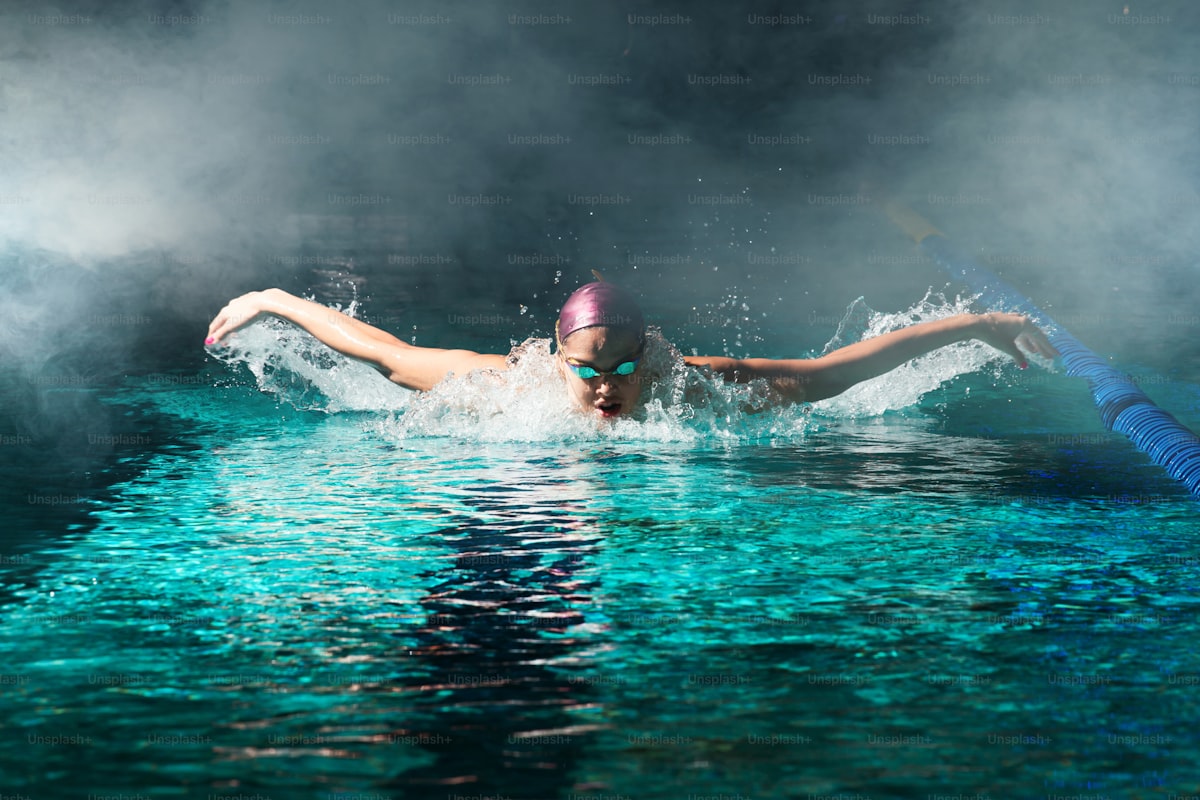
Lactate Tolerance Swim: 8×100m Speed Session
Session Overview
This advanced pool session develops lactate tolerance — the ability to sustain hard effort even as lactic acid accumulates in your muscles. Using 8 × 100m at or just above your CSS (Critical Swim Speed) pace with minimal rest, it pushes your anaerobic threshold and builds the capacity to race hard from the opening strokes. Total volume approximately 2,200m. Designed for advanced swimmers preparing for sprint or Olympic distance open water racing.
What You’ll Need
- 25m or 50m pool access
- Waterproof watch or pace clock
- Knowledge of your CSS pace per 100m
- Pull buoy (optional, for warm-up variety)
Warm-Up (10 minutes)
400m easy freestyle at RPE 3–4. Include 4 × 25m as drill work: catch-up drill, high-elbow catch, fingertip drag, and one relaxed freeform length. Focus on feeling long and relaxed in the water before the intensity begins. The warm-up should leave you feeling activated but not fatigued.
Main Set
The core of this session is 8 × 100m at CSS pace minus 3–5 seconds per 100m — i.e., slightly faster than threshold. Rest is deliberately short (just 15 seconds between reps) to force your body to clear lactate quickly and maintain effort under accumulated fatigue. This is what builds race-specific tolerance.
- 8 × 100m at CSS−5 sec/100m pace, 15 seconds rest between each
- 200m easy recovery swim after the main block at RPE 3
- Optional finisher: 4 × 50m at sprint pace (RPE 9–10), 40 seconds rest — a lactate clearance block that builds finishing speed
Cool-Down (5 minutes)
200m easy backstroke or mixed strokes at RPE 2–3. Shake out your arms and focus on long, slow strokes. Finish with 100m pull buoy-only freestyle to bring your heart rate down and loosen your shoulders after the sustained effort.
Coaching Notes
- Know your CSS before this session — calculate it from a 400m and 200m time trial on separate days, or use the Swim Smooth CSS Calculator online.
- Don’t go out too hard on rep 1. Reps 3–6 are where lactate really builds — if you’ve faded by rep 5, slow the target by 2–3 seconds and rebuild from there.
- Easier version: extend rest to 25–30 seconds per rep, or reduce to 6 × 100m for your first attempt at this session format.
- Target RPE 8–9 during the main reps. You should be breathing hard at the wall and have just enough time to push off cleanly for the next rep.
You Might Also Like




Training at your own risk. The information provided is for general guidance only and is not a substitute for professional medical advice. Please consult a doctor before starting any new exercise programme, especially if you have any pre-existing health conditions.