

Pool Technique Swim: Catch and Pull Focus
Session Overview
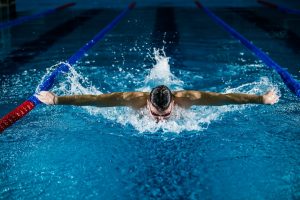
This 45-minute pool session focuses on improving your catch and pull — the two phases of the freestyle stroke where you generate the most propulsion. Ideal for intermediate swimmers looking to move more water with each stroke and reduce wasted energy.
What You’ll Need
- Swim goggles and cap
- Pull buoy
- Paddles (optional — small or finger paddles recommended)
Warm-Up (10 minutes)
Swim 400m at an easy pace. Focus on long, relaxed strokes and bilateral breathing. Include 4 x 25m catch-up drill to prime the catch pattern: complete one full arm stroke before starting the next.
Main Set
The main set is split into two blocks. Rest 30-60 seconds between each block.
- Block 1 — Catch Focus: 6 x 50m with pull buoy. On each length, think about tipping your fingertips down early and pressing your forearm into the water. Hold a high elbow position throughout the catch. Rest 15 seconds between each 50m
- Block 2 — Pull Focus: 4 x 100m with paddles (or without if technique breaks down). Focus on accelerating your hand through the pull phase — start slow at the catch and finish fast past your hip. Rest 20 seconds between each 100m
- Block 3 — Putting It Together: 4 x 75m freestyle at a moderate effort, no equipment. Count your strokes per length and try to reduce by one each round. Rest 15 seconds between each 75m
Cool-Down (5 minutes)
200m easy backstroke or freestyle. Focus on relaxation and smooth breathing. Finish with 4 x 25m single-arm freestyle to reinforce the catch pattern.
Coaching Notes
- The catch should feel like you are reaching over a barrel — fingertips down, elbow high
- Avoid pulling with a straight arm. A bent elbow at 90-110 degrees is more efficient
- If your stroke count is not dropping, slow down. Technique work should not be done at race pace
- RPE for the main set should be 5-6 out of 10. This is a skills session, not a fitness session
You Might Also Like



Training at your own risk. The information provided is for general guidance only and is not a substitute for professional medical advice. Please consult a doctor before starting any new exercise programme, especially if you have any pre-existing health conditions.