

Open Water Deep Water Start: Race Simulation Drills
Session Overview
Many open water sessions focus on endurance or sighting — but few athletes practise the deep water start itself. This session builds your ability to tread water confidently, react to a start signal, and accelerate quickly to race pace from a stationary floating position. It’s essential preparation for any race that uses a water start format rather than a beach or pontoon entry.
What You’ll Need
- Open water access — lake, reservoir, or sheltered bay
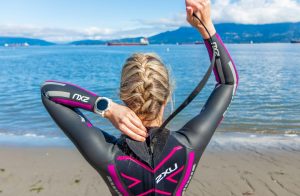
- Wetsuit (recommended for buoyancy and confidence)
- Tow float/swim buoy — mandatory for solo open water swimming
- Swim cap and goggles in race configuration
- Training partner or coach on the bank (strongly recommended)
Warm-Up (10 minutes)
Swim 400m easy freestyle, focusing on long relaxed strokes and controlled bilateral breathing. After completing 400m, practise treading water for 60 seconds — arms sculling at your sides, legs kicking steadily, head above water and looking forward. Get comfortable with the sensation of being stationary in open water before the drill sets begin.
Main Set
For each start drill, tread water for 20 seconds to simulate waiting at the start line, then explode into a race-pace effort for the prescribed distance. Your focus should be on your body position transition — the first three strokes should rotate you from vertical to near-horizontal as fast as possible. High elbow catch from stroke one.
- 6 × deep water start → 50m sprint (20 sec tread, 60 sec rest between efforts)
- 4 × deep water start → 100m at race pace (20 sec tread, 90 sec rest)
- 2 × deep water start → 200m sustained effort with sighting every 10 strokes (2 min rest)
- 300m easy continuous swim between the main blocks
Cool-Down (10 minutes)
Finish with 200m of easy backstroke or breaststroke to release shoulder tension from the explosive starts, followed by 200m of relaxed freestyle at a very easy pace. Exit the water carefully — your legs may feel heavy after the high-intensity start efforts, and water exits can be slippery.
Coaching Notes
- The most common error is looking down at the water during the start — keep your eyes on the buoy line from the first stroke
- Use a high elbow catch from stroke one — your first three strokes set the rhythm for the entire race start
- Practise in the exact wetsuit and goggle setup you’ll race in — the tread-to-swim transition feels different depending on buoyancy
- If the full deep water start feels overwhelming, begin from a standing chest-depth position first
- Never practise alone in open water — always have a spotter on the bank
You Might Also Like



Training at your own risk. The information provided is for general guidance only and is not a substitute for professional medical advice. Please consult a doctor before starting any new exercise programme, especially if you have any pre-existing health conditions.