
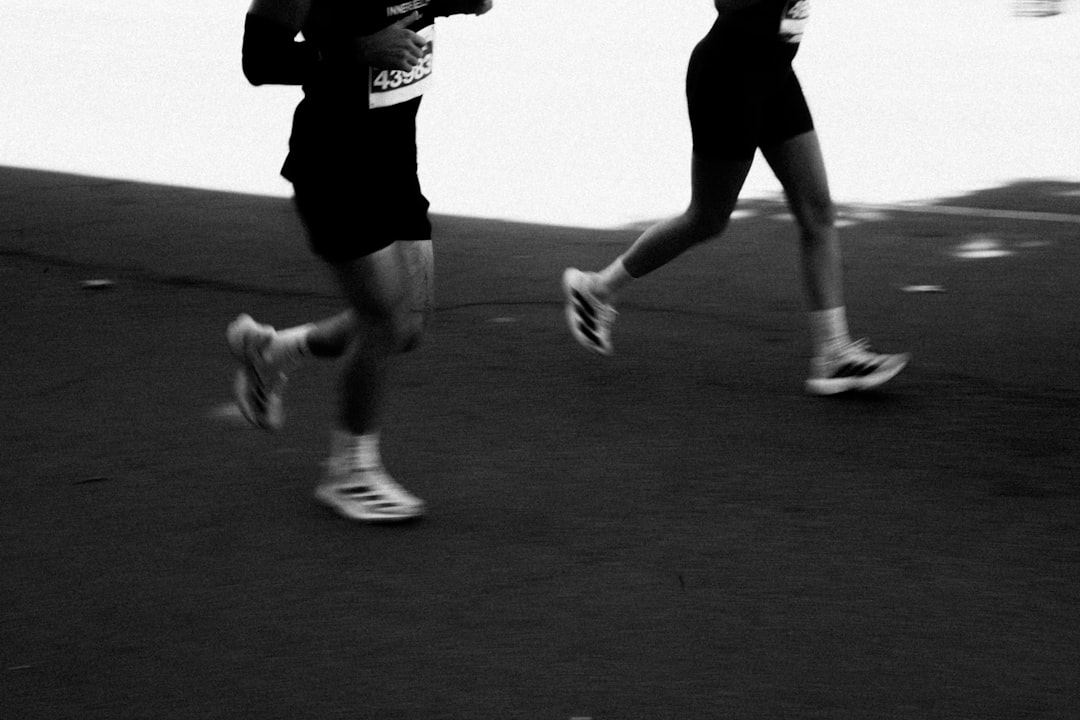
800m Race Pace Run Intervals: Speed Endurance Session
Session Overview
This 45-minute track session uses 800m repeats at race pace to build the speed endurance that separates good triathletes from great ones. Running 800m intervals after swimming and cycling conditions your body to maintain leg speed under fatigue — the exact demand of the triathlon run leg.
What You’ll Need
- Running track (400m) or flat measured road section
- GPS watch with pace alerts
- Race-day or training shoes
- Water bottle
Warm-Up (15 minutes)
2km easy jog at conversational pace, followed by dynamic stretching (leg swings, hip circles, high knees). Finish with 4 x 100m strides building progressively from 70% to 85% of max effort, with a slow walk back between each. This primes your fast-twitch fibres for the intervals ahead.
Main Set
5 x 800m at your goal triathlon run pace (or 5–10 seconds per km faster than your 10K race pace). Take a 90-second easy recovery jog between each rep. Focus on consistent splits across all 5 reps — aim to finish the last two reps the same speed or faster than the first.
- Rep 1: conservative — 5 seconds slower than target pace (settle in)
- Reps 2–3: lock onto target pace, RPE 7–8
- Reps 4–5: maintain or slightly faster — controlled aggression, RPE 8–9
- Recovery: 90-second easy jog between each rep — resist the urge to walk
Cool-Down (10 minutes)
1km easy jog bringing heart rate below 130 bpm, followed by 5 minutes of static stretching focusing on quads, calves, hip flexors and IT band. Fuel with carbohydrates and protein within 30 minutes of finishing.
Coaching Notes
- Target pace guide: if your 10K race pace is 5:00/km, target 800m intervals at 4:45–4:50/km
- Do this session on fresh legs — not after a hard bike or swim day
- Common mistake: sprinting rep 1 and blowing up — start conservatively
- Scale down: 4 x 400m for beginners working on run speed for the first time
- Scale up: add a 6th or 7th rep for advanced runners, or reduce recovery to 60 seconds
You Might Also Like



Training at your own risk. The information provided is for general guidance only and is not a substitute for professional medical advice. Please consult a doctor before starting any new exercise programme, especially if you have any pre-existing health conditions.