
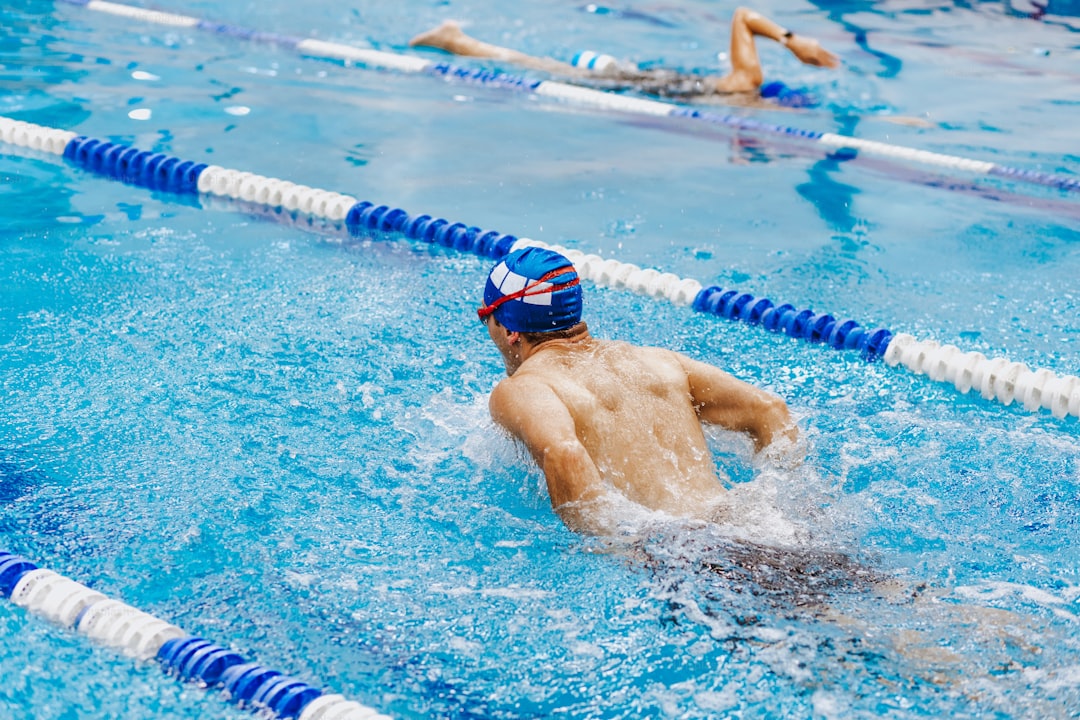
2km Swim Time Trial: Test and Benchmark Your Swim Fitness
Session Overview
A 2km swim time trial is one of the most valuable sessions in any triathlete’s training week — it gives you a clear benchmark of your swim fitness, helps you calculate your Critical Swim Speed (CSS), and tests your ability to hold pace under pressure. This 45-minute session is structured to get you in the water, ready, and holding your best sustainable effort for 2,000 metres.
What You’ll Need
- Pool lane access (50m or 25m)
- Waterproof watch or poolside timer
- Swimming cap and goggles
- Optional: pull buoy and paddles for warm-up drills
Warm-Up (10 minutes)
Start with 400m at an easy, flowing pace — focus on long strokes and relaxed breathing. Then swim 4 x 50m as: 25m drill (catch-up or fingertip drag) + 25m swim, with 15 seconds rest between each. Finish the warm-up with 2 x 50m at your target race pace to prime your engine — rest 30 seconds after each.
Main Set
After a 3-minute rest following the warm-up, push off and swim 2,000m (2km) continuously at your hardest sustainable effort. This means you should be working hard throughout — the pace should feel uncomfortable but controlled. Aim to negative split: swim the second kilometre fractionally faster than the first.
- 2,000m continuous time trial — record your total time
- Aim for even splits every 250m if possible; check the clock at the 1,000m mark
- Don’t go out too hard — the most common mistake is swimming the first 500m too fast
- Note your pace per 100m at completion (total time ÷ 20 = pace/100m)
Cool-Down (5 minutes)
Swim 200m easy backstroke or catch-up drill to bring your heart rate down and flush your arms out. Focus on breathing deeply and letting your technique fall apart naturally — this is full recovery, not more work.
Coaching Notes
- Use your 2km time to calculate CSS: compare this time to a 400m TT and use the CSS formula
- Typical 2km benchmark for sprint triathlon: 34–42 minutes; Olympic distance: 30–38 minutes
- Don’t wear a pull buoy during the time trial — test real, unassisted swimming fitness
- Repeat this test every 6–8 weeks to track progress over the season
- Breathing pattern: aim for bilateral (every 3 strokes) throughout for better balance and oxygen efficiency
You Might Also Like




Training at your own risk. The information provided is for general guidance only and is not a substitute for professional medical advice. Please consult a doctor before starting any new exercise programme, especially if you have any pre-existing health conditions.