Shimano RC9 S-PHYRE Road Shoes Review 2026: Race-Stiff Power Transfer
What It Is
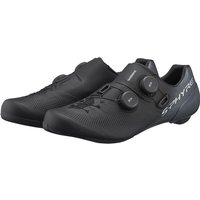
The RC9 S-PHYRE (model RC903) is Shimano’s flagship road race shoe, and it’s worth a look for triathletes who ride a road bike with clip-on bars rather than a dedicated tri shoe with a single strap. Where triathlon-specific shoes trade some stiffness for fast transitions, the RC9 is built purely for power transfer — useful if your priority is long-course bike splits over T2 speed.
Key Features
- Ultra-stiff carbon sole — built to Shimano’s highest stiffness rating, designed so effectively none of your pedalling force is lost to sole flex on hard efforts.
- Dual Boa L6 dials — micro-adjustable tension across two separate zones of the shoe, so you can fine-tune fit around the midfoot and forefoot independently instead of one blanket pull.
- Lightweight woven upper — a snug, low-stretch upper that holds its shape through a full race distance rather than loosening as the material warms up.
- Race-specific fit — a narrower, more aggressive last than Shimano’s endurance-focused shoes, so it rewards a precise size rather than a “roomy” fit.
Who It’s For
Best suited to triathletes racing 70.3 and full-distance events on a road bike, where a few extra seconds in transition matter far less than several hours of efficient power transfer. If you’re chasing the fastest possible T2 in sprint or Olympic racing on a dedicated tri bike, a single-strap tri-specific shoe like Shimano’s own TR9 will still serve you better.
Check price on Tredz — currently £299.99 (RRP £349.99).
Buying Tips
- Try before you commit if at all possible — the S-PHYRE last runs narrower than most riders expect, and Boa dials can’t fix a fundamentally wrong-width shoe.
- Break the shoes in over several shorter rides before race day; a stiff, low-stretch upper needs some time to mould to your foot.
- Match cleat position carefully on first fit, since the stiff sole transmits any misalignment more noticeably than a softer training shoe.
Care and Maintenance
Wipe the woven upper down after wet or gritty rides rather than machine washing it, and let the shoes air dry away from direct heat. Check the Boa dial cables periodically for fraying — they’re replaceable, but catching wear early avoids a dial failure mid-race.
This article contains affiliate links. If you purchase through these links, we may earn a small commission at no extra cost to you. This helps support The Triathlete.