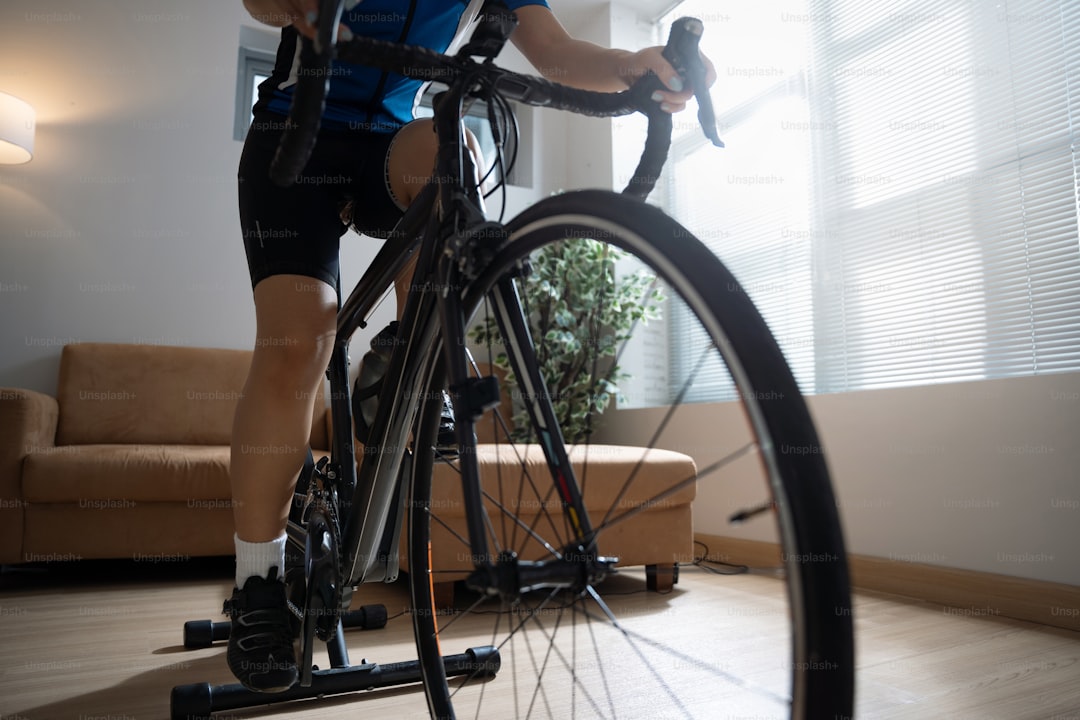
Wahoo KICKR Move Review 2026: Is the Moving Smart Trainer Worth the Upgrade?
What to Look For
The Wahoo KICKR Move is the brand’s flagship indoor trainer, adding built-in dual-axis movement to the KICKR’s class-leading flywheel and power accuracy. Whether the movement matters to you depends on how much time you spend on the trainer — for athletes doing sub-60-minute sessions, a standard KICKR V6 is excellent. For long-course triathletes grinding through three-to-five-hour rides, the KICKR Move’s natural fore-aft and lateral motion can genuinely reduce saddle pressure, hip fatigue, and lower back tension.
Key Features to Consider
- Dual-axis movement — an 8-inch gravity track allows your bike to move fore-aft and side-to-side naturally with your pedalling stroke, mimicking real-road feel and reducing hip discomfort over long sessions
- Power accuracy — ±1% accuracy matches the KICKR V6, with automatic spindown calibration via the Wahoo App — no manual calibration needed after setup
- Connectivity — Wi-Fi, Bluetooth (up to 3 simultaneous connections), ANT+, and Direct Connect wired port for lag-free response during Zwift races
- Platform compatibility — works with Zwift, TrainerRoad, Rouvy, Wahoo SYSTM, and most other major platforms; supports ERG mode, simulation mode, and resistance mode
Our Top Picks
Best Overall: Wahoo KICKR Move
If you’re a long-course triathlete spending multiple hours on the trainer each week, the KICKR Move’s movement system is a genuine game-changer for comfort. The gravity track feels natural immediately and eliminates the dead, locked-in feeling of a fixed trainer. Power accuracy is outstanding, ERG mode response is fast and smooth, and the Wi-Fi connection via the Wahoo app is reliable. The movement also loads your core and hip stabilisers in a way that carries over to real-road performance. At around £1,200 it’s a significant investment, but for serious athletes it replaces a standard trainer plus an aftermarket rocker plate.
Best Value Alternative: Wahoo KICKR Core 2
If the KICKR Move is out of budget, the KICKR Core 2 delivers the same ±1% power accuracy and seamless app connectivity at around £700. It lacks the movement system but is an excellent trainer for Olympic and sprint-distance athletes who don’t need to replicate long-course specificity. It also supports Zwift Cog and Click for a near-bike feel at a more accessible price point.
Premium Option: Wahoo KICKR Bike V2
For athletes who want the ultimate indoor training setup and never want to wheel their road or tri bike onto a trainer again, the KICKR Bike V2 offers an all-in-one platform with simulated gradient, adjustable geometry to replicate your bike fit, and integrated power at around £3,200. Overkill for most triathletes, but for Ironman athletes training 10+ hours weekly on the trainer it removes all the friction of repeated bike swaps.
Buying Tips
- Check your bike’s rear dropout type before buying — most modern frames are compatible, but some older QR-only frames may need adapters
- Buy the correct cassette if your drivetrain doesn’t match Wahoo’s included cassette — an 11-speed Shimano 105 or 105-level cassette fits the majority of road triathlon bikes
- Set the KICKR Move to locked mode for sprint intervals or standing efforts where you want a stable platform
Care and Maintenance
Wipe the flywheel and frame monthly with a dry cloth — sweat is highly corrosive to metal components over time. Keep the rubber feet clean for stability on hard floors, and store the trainer on a dry surface. Perform a spindown calibration every 10–15 rides or when ambient temperature changes significantly. Always accept firmware updates via the Wahoo App to maintain accuracy and platform compatibility.
This article contains affiliate links. If you purchase through these links, we may earn a small commission at no extra cost to you. This helps support The Triathlete.